How Does an Air Compressor Work? Complete Beginner-Friendly Guide
Many homeowners, mechanics, contractors, and DIY enthusiasts ask, “how does an air compressor work?” The answer is simpler than most people think. An air compressor takes ordinary air from the environment, compresses it, and stores it for later use.
Over the years, I have worked with portable compressors in garages and larger systems in workshops. Once you understand how does an air compressor work, it becomes easier to choose the right model, use it safely, and keep it running efficiently.
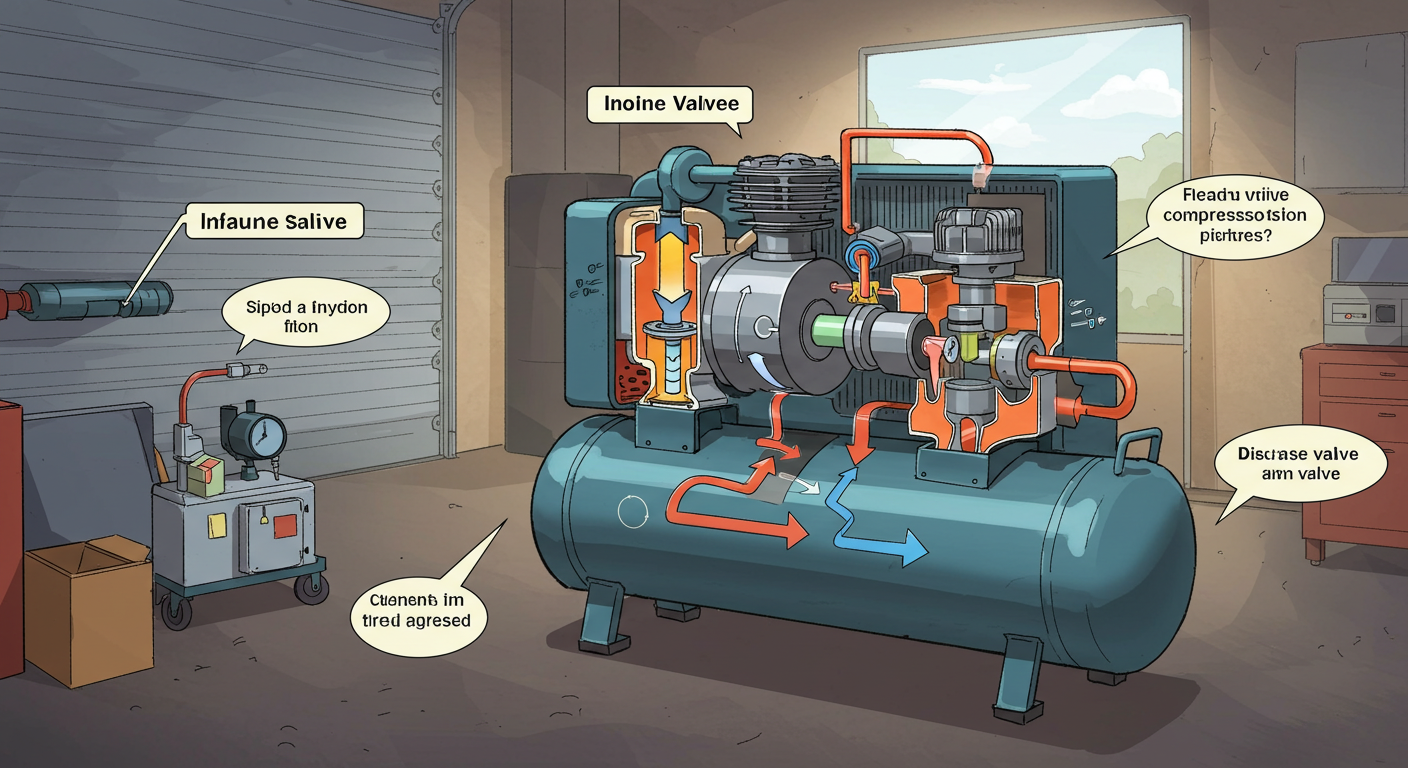
What Is an Air Compressor?
An air compressor is a machine that converts power into potential energy stored in compressed air. The power may come from electricity, gasoline, or diesel fuel.
Instead of storing energy in batteries or fuel, the compressor stores energy in pressurized air. When released, that air can power tools, inflate tires, operate machinery, and perform many other tasks.
If you have ever used an impact wrench, nail gun, spray painter, or tire inflator, you have already seen how does an air compressor work in real life.
- ✦ Primary Function
Compress and store air for later use.
- ✦ Energy Source
Typically electricity, gasoline, or diesel engines.
- ✦ Common Uses
Power tools, automotive work, construction, manufacturing, and inflation tasks.
Why Compressed Air Is Useful
Compressed air is often called the fourth utility because many industries rely on it every day. It is clean, versatile, and easy to distribute through hoses and piping systems.
- ✦ Portable Power
Air can be delivered almost anywhere through hoses.
- ✦ Reliable Operation
Many pneumatic tools have fewer moving parts than electric tools.
How Does an Air Compressor Work Step by Step?
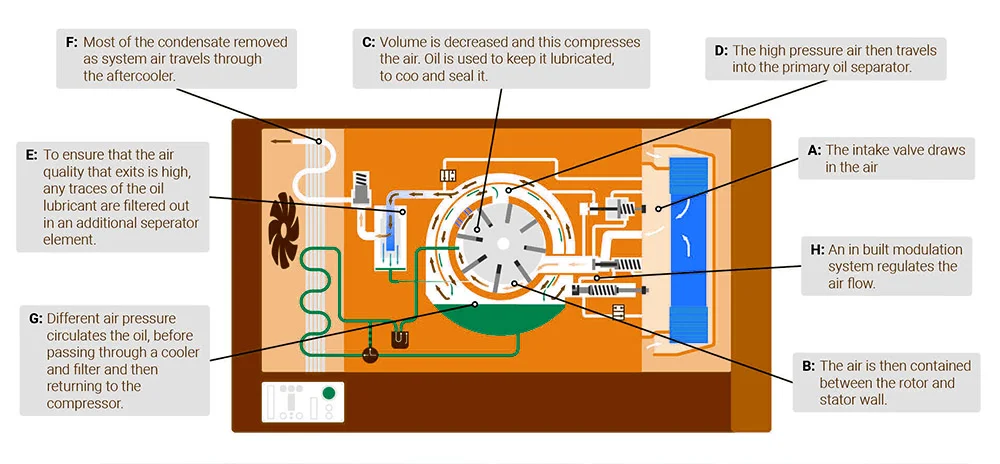
To understand how does an air compressor work, it helps to break the process into simple stages. Every compressor follows the same basic cycle of intake, compression, storage, and delivery.
The machine pulls in atmospheric air and reduces its volume. As the volume decreases, the pressure increases. The compressed air is then stored until needed.

- ✦ Air Intake
Outside air enters through an intake filter.
- ✦ Compression
Mechanical components squeeze the air into a smaller space.
- ✦ Storage
Compressed air moves into a storage tank.
- ✦ Delivery
Air flows through hoses and fittings to power equipment.
Step 1: Air Enters the Compressor
Air enters through an intake valve and passes through a filter. The filter removes dirt, dust, and debris before compression begins.
- ✦ Clean Intake
Filters protect internal components from contamination.
Step 2: Air Gets Compressed
The compressor pump reduces the volume of the air. As the air occupies less space, pressure rises rapidly.
- ✦ Pressure Increase
Smaller volume creates higher pressure.
Step 3: Air Is Stored
Most compressors store compressed air in a tank. The tank acts like a reservoir that holds energy until needed.
- ✦ Energy Storage
Pressurized air remains ready for immediate use.
Step 4: Air Powers Equipment
When you pull a trigger or open a valve, compressed air leaves the tank and powers the connected tool or machine.
- ✦ Controlled Release
Regulators help manage pressure output.
Main Parts of an Air Compressor
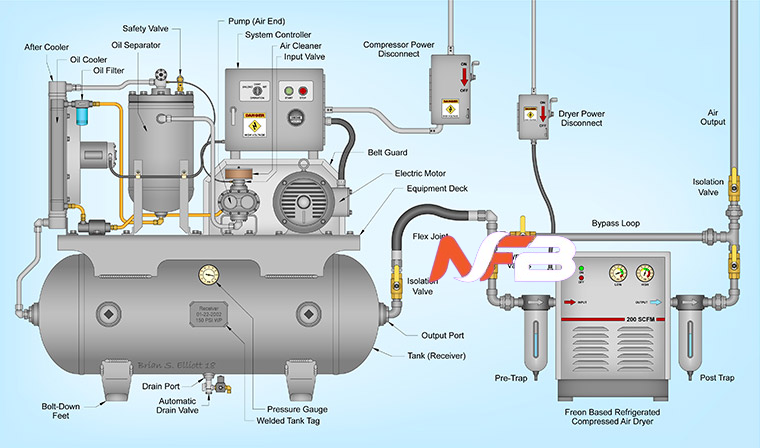
Understanding the major components makes it easier to see how does an air compressor work. Each part performs a specific role in the compression cycle.
While designs vary, most compressors share several key components that work together.
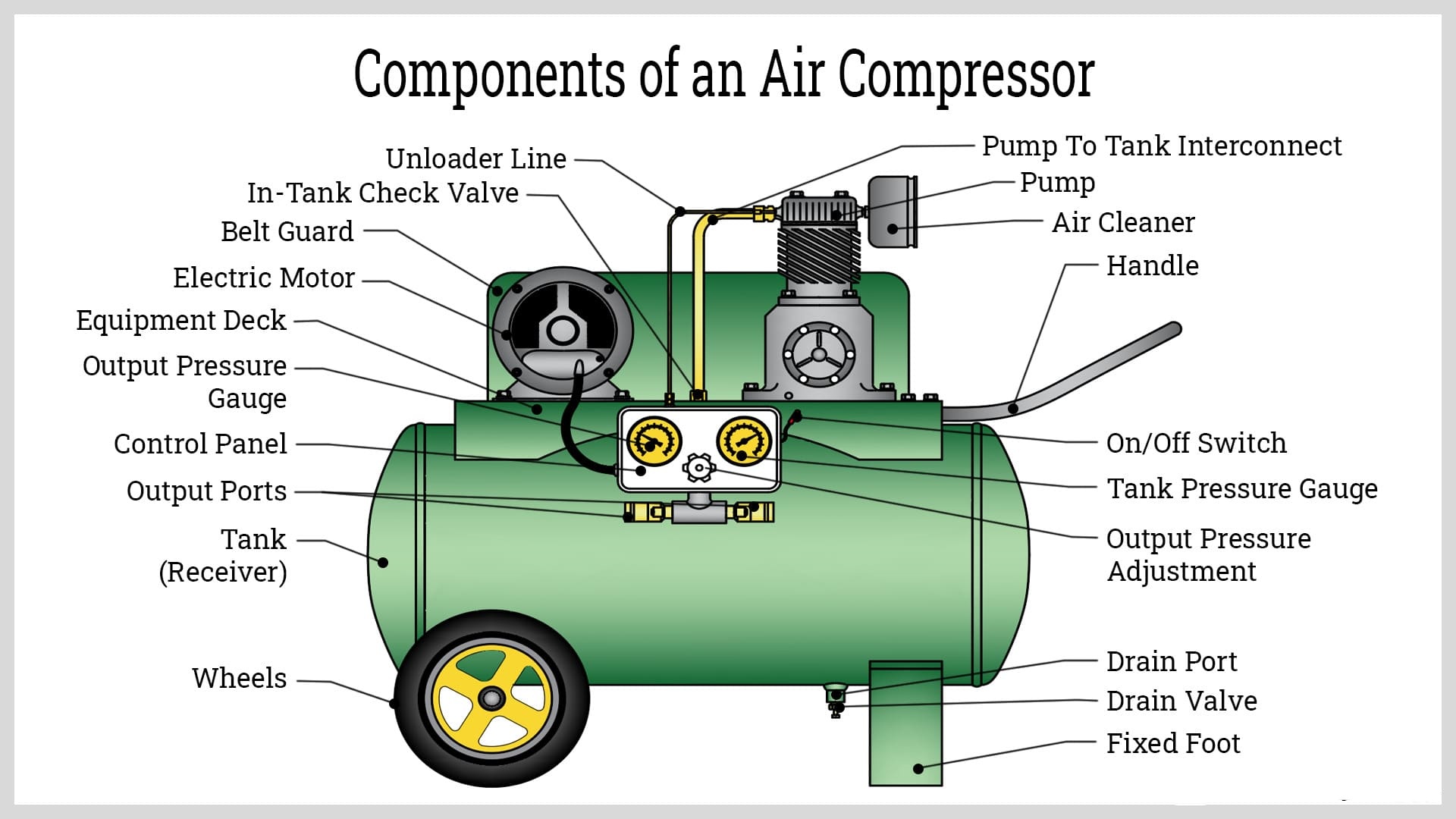
- ✦ Motor
Provides the power needed to drive the compressor pump.
- ✦ Pump
Compresses incoming air.
- ✦ Tank
Stores compressed air until it is needed.
- ✦ Pressure Switch
Turns the compressor on and off automatically.
Intake Valve
The intake valve allows outside air to enter the compressor during the intake stage.
- ✦ Air Entry
Controls airflow into the compression chamber.
Pressure Regulator
The regulator adjusts output pressure so connected tools receive the correct amount of air.
- ✦ Pressure Control
Protects tools from excessive pressure.
Types of Air Compressors and How They Work
Different compressor designs achieve the same goal in different ways. Knowing these designs helps answer how does an air compressor work in specific situations.
The most common categories are reciprocating compressors and rotary screw compressors.
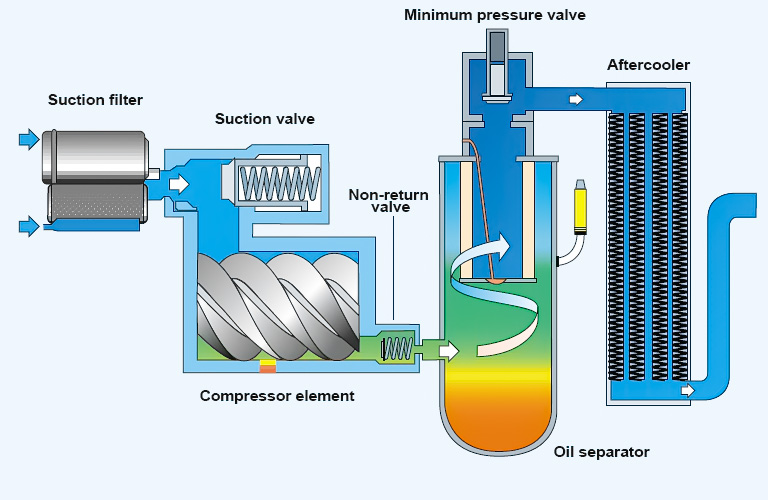
- ✦ Reciprocating Compressors
Use pistons to compress air.
- ✦ Rotary Screw Compressors
Use rotating screws to compress air continuously.
Reciprocating Piston Compressors
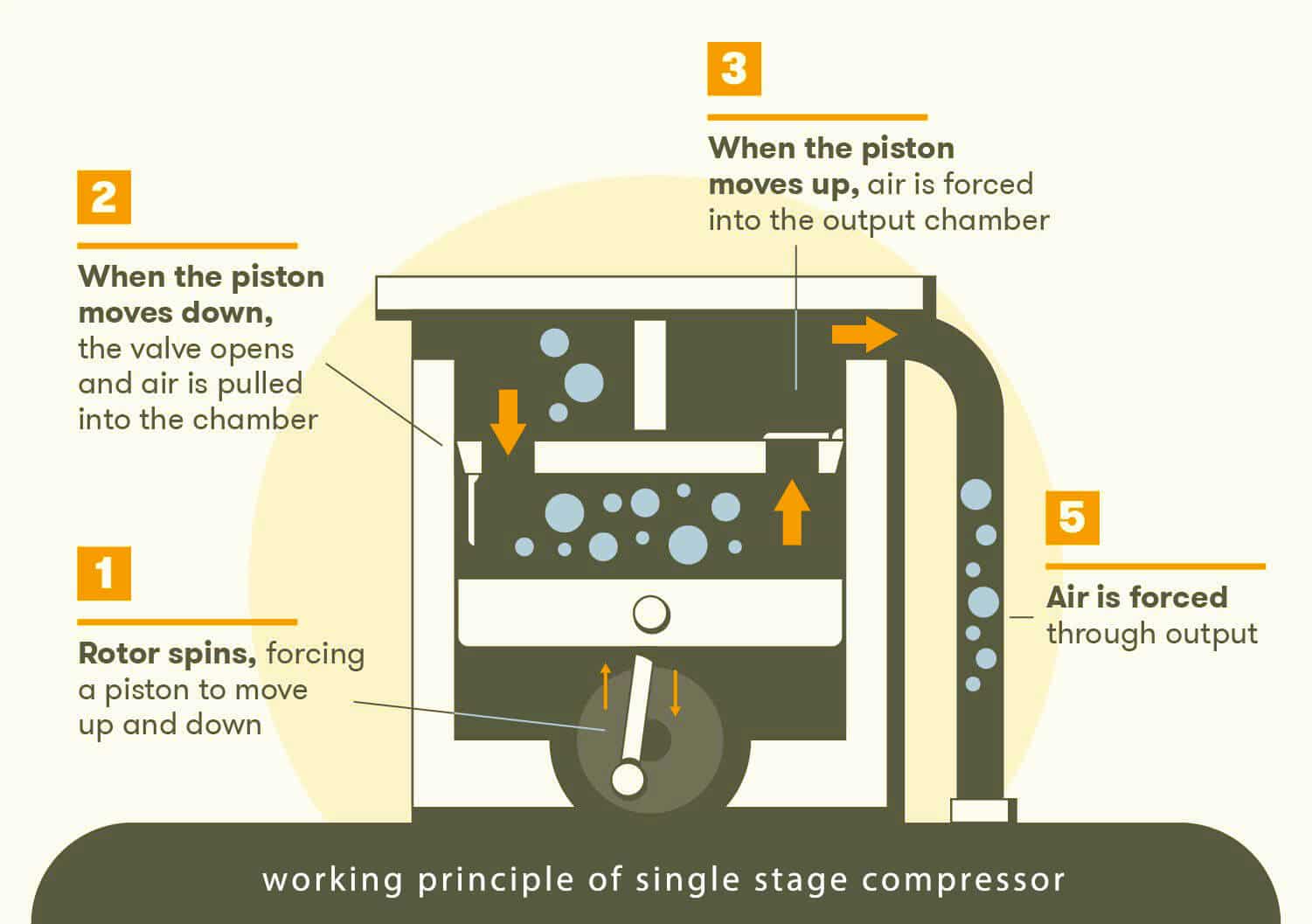
A piston moves up and down inside a cylinder. Air enters during one stroke and gets compressed during the next. This design is common in garages and workshops.
- ✦ Best For
Homeowners, DIY users, and automotive work.
Rotary Screw Compressors
Two interlocking rotors trap and compress air continuously. These systems are popular in manufacturing because they provide a steady airflow.
- ✦ Best For
Industrial facilities and continuous-duty operations.
What Happens to Air During Compression?
When discussing how does an air compressor work, understanding air behavior is important. Compression changes both pressure and temperature.
As air molecules move closer together, they create greater pressure. Heat is also generated during the process.
- ✦ Higher Pressure
Compressed air contains more energy in less space.
- ✦ Heat Generation
Compression naturally creates heat.
- ✦ Cooling Stage
Many systems cool the air before storage or use.
Why Cooling Matters
Hot compressed air can carry moisture and affect system performance. Cooling improves efficiency and protects equipment.
- ✦ Better Air Quality
Cooling helps remove excess moisture.
Common Uses for Air Compressors
Once people understand how does an air compressor work, they often discover how many jobs it can handle. Compressed air is useful in homes, garages, construction sites, and factories.
Many American households keep a small compressor for tire inflation and basic maintenance tasks.

- ✦ Inflating Tires
Cars, trucks, bicycles, and recreational equipment.
- ✦ Powering Tools
Nail guns, impact wrenches, ratchets, and sanders.
- ✦ Painting
Spray guns create smooth and even finishes.
- ✦ Manufacturing
Automated equipment often relies on compressed air.
Home and Professional Applications
The same basic principles apply whether the compressor sits in a home garage or a large production facility.
- ✦ Versatility
One compressor can support many different tasks.
Benefits and Limitations of Air Compressors
Understanding both advantages and limitations provides a complete picture of how does an air compressor work in real-world settings.
Most users appreciate the flexibility and power of compressed air systems, but maintenance remains important.
- ✦ Strong Performance
Compressed air delivers reliable power to many tools.
- ✦ Long Tool Life
Many pneumatic tools last a long time with proper care.
- ✦ Regular Maintenance
Filters, drains, and inspections are necessary.
- ✦ Noise Levels
Some compressors can be loud during operation.
Maintenance Tips
Drain tank moisture regularly, inspect hoses, and replace air filters when needed. Simple maintenance can extend compressor life significantly.
- ✦ Routine Checks
Prevent breakdowns and improve efficiency.