What Kind of Sanding Belt Is Best for Metal? Grain & Grit
For most metal grinding, a ceramic or zirconia alumina belt is the strongest choice. Ceramic is usually the better pick for hard steel, stainless steel, heavy stock removal, and high-pressure grinding. Zirconia works very well for mild steel and general fabrication. Aluminum oxide suits lighter sanding and finer finishing, while silicon carbide has useful roles on nonferrous metals and fine surface work.
Choosing the wrong abrasive can slow material removal, glaze the belt, load it with metal, or put too much heat into the workpiece. The issue is not just grit size. Abrasive grain, backing, coating, pressure, belt speed, and the metal itself all affect how a belt cuts.
A well-matched belt removes metal with less rubbing, leaves a more predictable scratch pattern, and usually needs fewer belt changes. That matters when grinding welds, shaping knife blanks, deburring parts, stripping mill scale, or preparing steel for paint.
Metal dust also deserves attention. OSHA’s U.S. general-industry ventilation rule lists an exhaust volume of 220 cubic feet per minute for grinding and polishing belts up to 3 inches wide, with higher listed volumes for wider belts. That requirement shows why dust collection and local exhaust should be part of a metal-sanding setup, not an afterthought.
From the manufacturer information and abrasive guidance I reviewed, the answer to what kind of sanding belt is best for metal changes mainly with the metal, the amount of stock being removed, and the pressure the machine can apply. Ceramic grain tends to lead for demanding grinding, while zirconia often gives a strong balance of cut, belt life, and cost on common steel work. 3M and Norton both place ceramic and zirconia abrasives prominently in metal grinding and fabrication work.
One detail I would check before buying is the machine itself. A premium ceramic belt may disappoint on a light-duty sander if there is not enough pressure to keep the grain cutting. A less costly zirconia or aluminum oxide belt may suit that setup better.
The sections below compare ceramic, zirconia, aluminum oxide, and silicon carbide belts, then match them to steel, stainless steel, aluminum, common grit ranges, backing types, pressure levels, and finishing goals.
What Kind of Sanding Belt Is Best for Metal for Each Job?
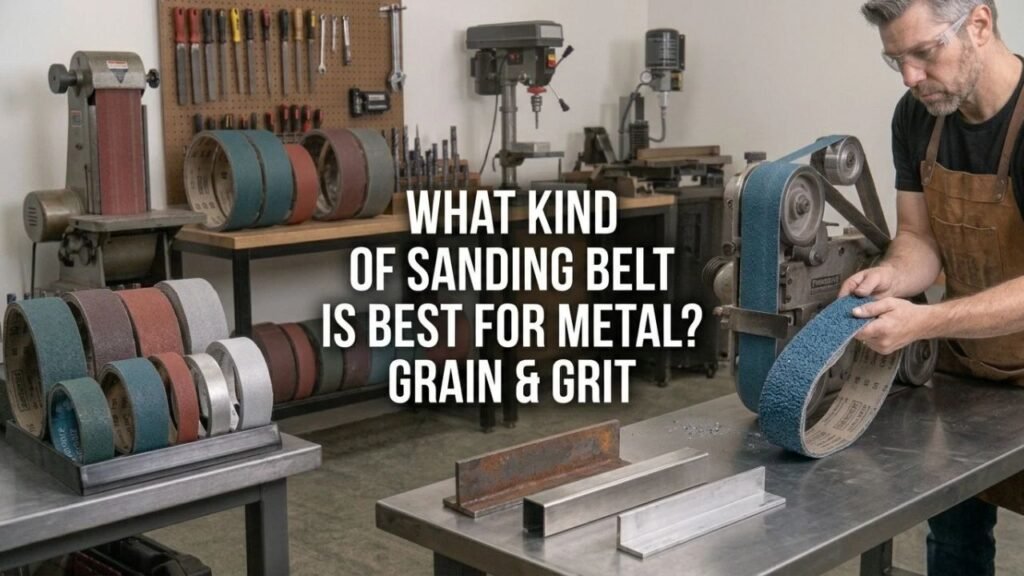
There is no single abrasive grain that wins every metal-sanding job. The strongest general rule is simple: use ceramic for demanding grinding, zirconia for general steel work, aluminum oxide for lighter or finer sanding, and silicon carbide for selected nonferrous and finishing tasks.
| Abrasive grain | Best match | Typical jobs | Main limitation |
| Ceramic alumina | Stainless, hardened steel, tool steel, titanium, tough alloys | Heavy stock removal, weld grinding, beveling, knife grinding | Costs more and performs best with enough pressure |
| Zirconia alumina | Mild steel, carbon steel, stainless | Weld removal, shaping, deburring, general fabrication | Less useful for very fine grits |
| Aluminum oxide | Mild steel, aluminum, brass, general metal work | Light grinding, cleanup, surface prep, finer finishing | Dulls sooner during hard grinding |
| Silicon carbide | Aluminum, brass, cast iron, titanium, fine finishing | Surface smoothing and specialized finishing | More brittle under heavy pressure |
Ceramic Belts for Heavy Metal Removal
Ceramic abrasive is usually the top choice when the job involves hard metal, high contact pressure, or a lot of material removal. The grain fractures during use and exposes fresh cutting edges instead of simply rounding over.
3M describes its precision-shaped ceramic belts as suited to metal grinding and reports use on stainless steel, mild steel, and other metal substrates. Norton also lists ceramic alumina for hard-to-grind alloys, stainless steel, heavy stock removal, and fabrication work.
Ceramic belts are a strong fit for a rigid 2 x 72-inch grinder, backstand grinder, or other machine that can press the work firmly into the belt. They are often chosen for knife bevels, weld knockdown, hardened steel, and stainless parts where a standard belt may lose its bite quickly.
Zirconia Belts for General Steel Fabrication
Zirconia alumina is a durable self-renewing abrasive that works well under moderate to heavy pressure. It is often the practical middle choice between basic aluminum oxide and premium ceramic.
For mild steel, carbon steel, weld cleanup, and routine fabrication, zirconia is hard to dismiss. Norton lists zirconia alumina for fast stock removal and rough cutting, plus stainless and other ferrous-metal tasks.
My preference for a general-purpose shop belt would usually be zirconia if the work is mostly steel and the grinder has enough power to keep the belt moving under load. It gives a strong cut without requiring the same budget as many ceramic belts.
Aluminum Oxide Belts for Lighter Sanding and Fine Grits
Aluminum oxide is the common all-purpose abrasive. It works on many metals and is available in a broad grit range, which makes it useful after coarse grinding is finished.
Norton lists aluminum oxide for general-use metal work and maintenance or repair operations. Some belt suppliers also offer aluminum oxide far into the finer grit range, where zirconia and ceramic choices become less common.
Use it for scratch removal, paint preparation, smoothing edges, light rust cleanup, and finishing passes where aggressive stock removal is no longer the goal.
Silicon Carbide Belts for Selected Metals and Fine Finishing
Silicon carbide is very hard and sharp, but it is more brittle than ceramic, zirconia, or aluminum oxide. That sharp fracture pattern can work well on aluminum, brass, cast iron, titanium alloys, and fine surface-finishing tasks.
It is not my first pick for heavy grinding on ordinary steel. For that job, ceramic or zirconia usually offers better belt life. Silicon carbide makes more sense when a sharp cutting action or a finer finish matters more than maximum durability.
Key Takeaway: For hard grinding, start with ceramic. For everyday steel fabrication, zirconia is often the best balance. Use aluminum oxide for lighter and finer work, and reserve silicon carbide for jobs where its sharp, brittle grain fits the metal and finish.
Best Sanding Belt by Metal Type
The metal itself changes the answer because hardness, heat sensitivity, and chip behavior are different from one alloy to another.
Mild Steel and Carbon Steel
For mild steel and carbon steel, zirconia is a strong all-around choice. It handles welds, scale, edges, and shaping without the fast dulling that basic aluminum oxide can show during harder grinding.
Use ceramic when removal rate matters more, such as heavy weld grinding, beveling thick plate, or shaping steel on a high-powered grinder. Aluminum oxide still has a place for lighter sanding and final scratch refinement.
Stainless Steel
For stainless steel, I would favor a ceramic belt with a grinding aid when the machine and budget support it. Stainless tends to hold heat near the grinding zone, so a sharp abrasive that keeps cutting is preferable to a dull belt that rubs.
3M specifies ceramic belt products for stainless steel, titanium, and high-nickel alloys, and notes that resin bonding and grinding-aid designs are used to limit heat buildup and discoloration.
Zirconia is still a sound choice for general stainless fabrication, especially at moderate pressure. For decorative finishes, move through finer belts and finish with a surface-conditioning or structured-abrasive belt if the required finish calls for it.
Aluminum
Aluminum is soft compared with steel, but it creates a different problem: belt loading. Small particles can pack between abrasive grains and reduce cutting action.
An open-coat aluminum oxide belt can work well for many aluminum jobs. Silicon carbide is also common for nonferrous metal finishing. Some modern ceramic belts are specifically made for aluminum and low-to-medium pressure metal sanding, so the product specification matters more than grain name alone. 3M lists certain precision-shaped ceramic belts for aluminum as well as mild and stainless steel.
For aluminum, I would prioritize a belt advertised for nonferrous metal, low loading, or use with a suitable grinding aid. A belt that stays clear often matters more than buying the hardest abrasive grain.
Cast Iron, Brass, Copper, and Titanium
Cast iron can be sanded with zirconia, aluminum oxide, or silicon carbide, with the job type deciding the grit. Brass and copper usually need less aggressive pressure and may respond well to aluminum oxide or silicon carbide.
Titanium deserves more care because heat can build quickly. Ceramic belts made for heat-sensitive alloys are commonly used, and a suitable grinding aid can reduce rubbing at the contact zone.
Key Takeaway: Match the abrasive to the metal before choosing grit. Zirconia fits most steel work, ceramic suits stainless and hard alloys, and softer nonferrous metals need close attention to belt loading and heat.
What Grit Sanding Belt Should You Use on Metal?
Grit controls how deep the abrasive scratches and how quickly it removes material. Lower grit numbers are coarser. Higher numbers leave finer scratches.
A simple progression for metal work is:
| Grit range | Typical metal-sanding use |
| 24–36 grit | Heavy stock removal, thick welds, rough shaping, scale |
| 40–60 grit | Weld cleanup, beveling, rust removal, shaping |
| 80–120 grit | Deburring, blending, smoothing, surface preparation |
| 150–220 grit | Finer scratch removal and preparation for finishing |
| 320 grit and finer | Cosmetic finishing, polishing preparation, refined surface work |
Norton places coarse abrasive ranges around weld removal and heavy stock removal, while 3M uses 80- and 120-grade belts in several stainless finishing sequences.
Do not jump from a very coarse belt straight to a very fine one if the coarse scratches are still visible. The finer belt will spend much of its life trying to remove deep scratches left by the previous step.
A useful approach is to move through sensible grit stages. For example, after 36 grit, move to 60 or 80 before 120. The exact sequence can change with the metal, the finish target, and how deep the first scratches are.
Pro Tip: Stop and inspect the scratch pattern under good light before moving finer. If deep lines from the previous grit remain, stay at the current grit a little longer rather than trying to hide them with a finer belt.
Belt Backing, Coat, and Grinding Aid Matter Too
Two belts with the same abrasive grain and grit can behave very differently. Backing stiffness, abrasive density, and grinding aids all change how the belt contacts metal.
Cloth Backing for Metal Sanding
For powered metal sanding, cloth-backed belts are usually preferable to paper-backed belts. Cloth tolerates bending, heat, edge work, and higher grinding loads better.
Common cloth designations include J-weight, X-weight, and Y-weight. J-weight is more flexible and better suited to contours. X-weight is a medium-heavy backing used for many general grinding jobs. Y-weight is stiffer and tougher, making it common in heavy stock-removal belts.
A stiff backing gives stronger support on a flat platen or contact wheel. A flexible backing conforms better to curves, tubes, and shaped parts.
Closed Coat Versus Open Coat
A closed-coat belt has abrasive grain covering most of the surface. It provides more cutting points and is common for steel grinding.
An open-coat belt leaves more space between grains. That extra space gives debris somewhere to go, which can reduce loading on softer materials such as aluminum.
The coating pattern is one reason two aluminum oxide belts can act very differently on the same piece of metal.
Grinding Aids and Heat Control
A grinding aid is an added coating or ingredient that reduces friction and heat at the grinding interface. It is common on premium belts for stainless steel, titanium, and other heat-sensitive alloys.
3M lists grinding aids on several metal belts and describes them as part of the heat-control design for stainless, mild steel, and aluminum work.
If blue discoloration appears quickly on steel or stainless, do not assume a finer grit is the answer. Check belt sharpness, belt speed, pressure, contact time, and the presence of a grinding aid first.
Key Takeaway: Grain and grit are only part of belt selection. Cloth backing, coat density, flexibility, and grinding aids can change belt life, heat, loading, and surface finish.
How Machine Type and Pressure Change the Best Belt
Ceramic and zirconia abrasives depend on pressure to keep exposing fresh cutting edges. The grinder therefore changes which belt makes sense.
Handheld Belt Sanders
A typical handheld belt sander may not put enough focused pressure into metal to get the full benefit from a heavy ceramic belt. For light steel cleanup, rust removal, or paint stripping, zirconia or aluminum oxide may feel more controllable.
Use a belt rated for the machine’s speed and size. Metal sparks and dust also mean the sander’s dust system must be suitable for the work.
Bench Belt Grinders and 2 x 72 Grinders
A rigid bench grinder or 2 x 72 belt grinder can apply much more pressure at a platen or contact wheel. That is where ceramic belts often make the most sense.
Heavy pressure stresses ceramic grain enough to fracture and renew its cutting edges. With the right machine, ceramic can stay sharp through demanding steel and stainless work. 3M markets its ceramic metal belts for backstands, centerless grinders, weld grinding, and other demanding applications.
Band Files and Narrow Belts
Band files concentrate pressure into a small contact area, so zirconia and ceramic belts can work very well for welds, corners, fabrication cleanup, and tight spaces.
The backing also matters more on small contact arms. A belt that is too stiff may not track or conform well around tight shapes.
Key Takeaway: A premium abrasive needs a machine that can use it properly. Ceramic shines on rigid grinders with real contact pressure; zirconia is often more forgiving on lighter machines and general fabrication tools.
Common Mistakes When Choosing a Metal Sanding Belt
The grain name alone does not guarantee a good result. Most poor belt performance comes from a mismatch between the belt, machine, metal, grit, or pressure.
Buying Ceramic for Light-Pressure Sanding
Ceramic grain needs enough force to fracture and expose fresh edges. If the pressure is too light, the belt may glaze and begin rubbing rather than cutting.
That can make a costly ceramic belt feel worse than a basic aluminum oxide belt. If the machine is light-duty, zirconia or aluminum oxide may be the smarter match.
Starting Too Coarse
A 24- or 36-grit belt removes metal fast, but it also leaves deep scratches. If only light rust, paint, or minor surface marks need removal, starting at 60, 80, or even 120 grit may save later finishing work.
Use the coarsest belt that the job truly requires, not the coarsest belt available.
Ignoring Belt Loading
A belt packed with aluminum or other soft metal stops cutting cleanly. Heat rises, scratch quality drops, and the operator may push harder to compensate.
Choose an abrasive and coating suited to nonferrous metal, and replace or clean the belt according to the belt maker’s instructions if loading becomes severe.
Staying in One Spot Too Long
A stationary contact point builds heat quickly. Keep the work moving across the belt and watch for discoloration, sharp temperature rise, or a change from cutting to rubbing.
A fresh sharp belt is often kinder to the workpiece than a dull belt pushed harder.
Key Takeaway: Do not judge a belt by price or grain alone. The correct abrasive, grit, pressure, and machine setup must work together.
Metal Sanding Safety and Dust Control
Metal sanding produces sparks, hot particles, sharp edges, and airborne dust. Eye protection and hearing protection should be standard, and respiratory protection may be needed when dust exposure cannot be controlled through extraction and work practices.
OSHA’s ventilation standard specifically addresses grinding and polishing belts and gives exhaust-volume values based on belt width. For belts up to 3 inches wide, the table lists 220 cfm; for belts over 11 to 13 inches, it lists 740 cfm.
Keep sparks away from flammable materials, and do not let metal sparks enter a dust collector that is not rated for that hazard. Metal dust and wood dust should not be treated as interchangeable debris.
Inspect the belt before use. Do not run a belt with a damaged joint, torn edge, severe fraying, or a size that does not match the machine. Follow the sander maker’s belt-speed and guarding instructions.
Conclusion
For most readers asking what kind of sanding belt is best for metal, the practical answer is ceramic for demanding grinding and zirconia for general steel fabrication. Aluminum oxide remains useful for lighter work and finer grits, while silicon carbide fits selected nonferrous and finishing jobs.
Match the grain to the metal first, then choose the grit. Coarse 24–60 grit belts remove stock and welds, 80–120 grit belts blend and smooth, and finer grits refine the scratch pattern. Backing stiffness, open or closed coat, grinding aids, machine power, and contact pressure can change the result just as much as the abrasive name.
If I were choosing one belt type for a shop that works mostly with mild steel, I would start with zirconia in the grit needed for the job. For stainless, hardened steel, knife grinding, or repeated heavy stock removal on a rigid grinder, I would move toward ceramic.
A sharp belt that matches the machine is usually a better choice than an expensive belt being used outside the conditions it was built for.
FAQs About Sanding Belts for Metal
Is Ceramic or Zirconia Better for Metal?
Ceramic is usually better for hard metals, heavy grinding, and high-pressure stock removal. Zirconia is an excellent choice for mild steel, carbon steel, weld cleanup, and general fabrication.
Ceramic often lasts longer under demanding conditions, but zirconia can be a better match for lighter machines and moderate pressure. The machine and job matter as much as the grain.
What Grit Sanding Belt Is Best for Steel?
For heavy shaping or weld removal, start around 36 to 60 grit. For general smoothing and deburring, 80 to 120 grit is a useful range. For finer surface preparation, move to 150 to 220 grit or finer.
Start only as coarse as needed. Deep scratches from a 36-grit belt take more work to remove later.
Can I Use an Aluminum Oxide Sanding Belt on Metal?
Yes. Aluminum oxide works on steel, aluminum, brass, and many other metals. It is a good choice for general maintenance, lighter sanding, surface preparation, and finer finishing.
For repeated heavy stock removal on steel, zirconia or ceramic will usually stay sharp longer.
What Sanding Belt Is Best for Stainless Steel?
A ceramic belt with a grinding aid is one of the strongest choices for stainless steel, especially for weld grinding, beveling, and heavy material removal. Zirconia also works well for general stainless fabrication.
Keep the belt sharp and avoid dwelling in one spot. Excess heat can discolor the stainless surface and shorten belt life.
What Sanding Belt Is Best for Aluminum?
For aluminum, look for an open-coat aluminum oxide, silicon carbide, or a metal-rated ceramic belt made to resist loading. The product specification matters because aluminum can pack into the spaces between abrasive grains.
A belt that stays clear and cuts without smearing is more useful than simply choosing the hardest grain.
Are Ceramic Sanding Belts Worth the Extra Cost?
They can be, especially on stainless steel, hardened steel, tool steel, titanium, and heavy stock-removal work. Ceramic belts renew their cutting edges under enough pressure and can stay sharp during demanding grinding.
For light sanding on a small machine, the extra cost may not pay off. Zirconia or aluminum oxide may suit that work better.
How Do I Make a Sanding Belt Last Longer on Metal?
Use the correct grain for the metal, avoid excessive dwell time, keep the belt tracking properly, and replace it before it becomes badly glazed. Do not push harder just because a dull belt has stopped cutting well.
For soft metals such as aluminum, choose a belt designed to resist loading. For heat-sensitive metals, a grinding aid and suitable belt speed can also reduce rubbing and heat.