Biscuit Joiner vs Domino Joiner: Which Is Worth Buying?
For most DIY woodworkers, the biscuit joiner vs domino choice is simple: buy a biscuit joiner for lining up boards, cabinet parts, and trim during glue-ups. A Festool DOMINO joiner earns its higher cost when you regularly build furniture that needs strong, repeatable joints between legs, rails, and frames.
These tools look similar on a shelf, but they don’t do the same job. A biscuit joiner cuts shallow slots for thin, oval wood pieces. A DOMINO joiner cuts deeper pockets for thicker wood inserts that act more like traditional joinery.
That difference matters if you’re building a tabletop this weekend and a dining chair next month. One tool may make your work easier without offering much extra holding strength. The other can save time on joints that carry weight, but it asks for a much larger budget.
This guide compares how the joints work, how accurately the tools cut, what they cost to use, and which projects suit each one. You’ll also see when neither machine is necessary, so you can spend money on tools you’ll actually use.
Quick Answer
- Buy a biscuit joiner for lower-cost alignment during panel and cabinet assembly.
- Buy a DOMINO joiner for frequent furniture builds that need stronger loose-tenon joints.
- Buy neither yet if you mostly make simple edge-glued panels and already get flat joints with clamps.
Biscuit Joiner vs Domino: What’s the Actual Difference?
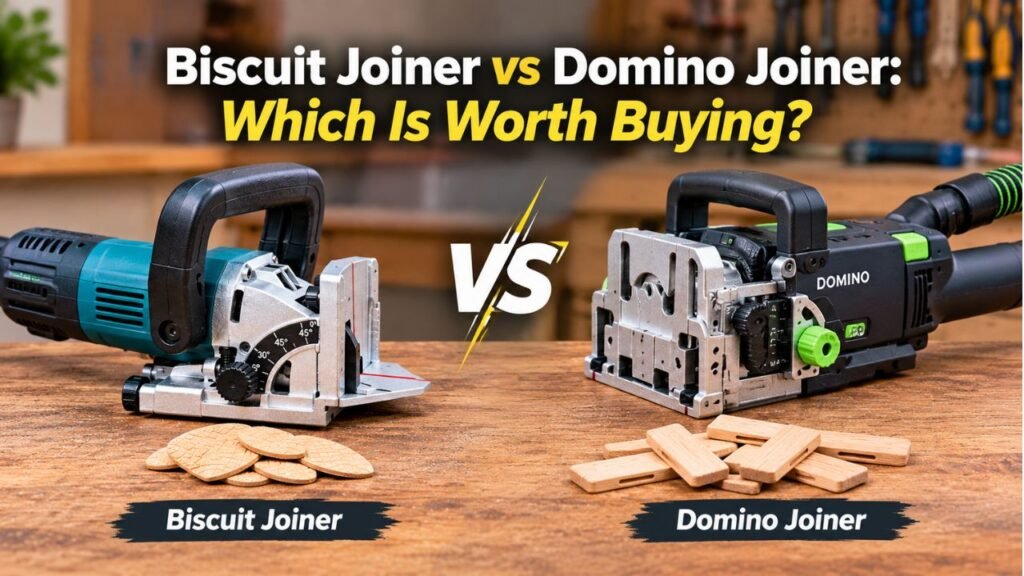
A biscuit joiner cuts shallow, curved slots for thin wooden biscuits, mainly to align parts as glue dries. A Festool DOMINO joiner cuts deeper, oblong pockets for solid-wood loose tenons, making it better suited to furniture frames and other joints that face repeated stress.
| Feature | Biscuit joiner | Festool DOMINO joiner |
|---|---|---|
| Cutter | Small circular blade | Rotating cutter that sweeps sideways |
| Insert | Thin, oval compressed-wood biscuit | Solid wood, rounded rectangular tenon |
| Best use | Aligning parts during glue-up | Alignment plus stronger joint design |
| Typical projects | Panels, cabinets, trim | Tables, chairs, doors, frames |
| Setup | Fence and slot depth | Fence, cutter, mortise depth and width |
| Supplies | Common biscuits | Matching tenons and cutters |
| Cost | Lower | Much higher |
What Does a Biscuit Joiner Cut?
A biscuit joiner plunges a spinning blade into wood to create a curved slot. You cut a matching slot in the next piece, add glue and a biscuit, then clamp the joint. The compressed-wood biscuit swells with moisture from the glue and helps keep the faces even.
Common sizes include #0, #10, and #20. Bigger isn’t always better because the slot must fit safely inside the wood. See our guide to biscuit sizes for choosing the right insert.
What Makes a DOMINO Joint Different?
A mortise is a pocket in wood. A tenon is a piece that fits into it. The Festool DOMINO cuts matching mortises and joins them with a separate, solid-wood loose tenon. Its shape helps resist twisting and gives glue more contact area.
You can use a snug first mortise to locate a joint, then wider ones for a little assembly adjustment. Festool describes the process on its DOMINO joiner information page.
Which Tool Makes Stronger Wood Joints?
A properly sized DOMINO joint generally offers more strength potential than a biscuit joint where a rail meets a leg or a frame must resist twisting. Biscuits can reinforce some joints, but they mainly aid alignment, and neither insert can make up for poor fit or weak wood.
Glued Tabletops Don’t Always Need Inserts
Imagine gluing several hardwood boards edge to edge for a tabletop. With straight, well-fitted long-grain edges, wood glue can already make a strong joint. Biscuits may help hold the top faces level while you clamp, but they aren’t required for strength.
A DOMINO can align the boards too, yet cutting deeper mortises often adds work without solving a real problem. Start with straight edges and even clamping pressure.
Furniture Frames Are Different
A table rail joining a leg faces sideways force whenever the table gets bumped. A properly sized loose tenon reaches into both parts and can help resist that movement. A thin biscuit isn’t the same type of connection.
Strength still depends on grain direction, wood species, tenon size, glue, and how much material remains around the mortise. Follow a proven joint design for anything that must safely carry weight.
Which Joiner Is Easier to Use and More Accurate?
A biscuit joiner is generally easier to learn for basic alignment because you set the fence, select slot depth, and plunge. A DOMINO provides more choices for fit and joint size, but its cutter, tenon, depth, and wood thickness must agree before you make the cut.
A reference face is the surface you measure from for every matching cut. If you hold the fence against the top face on one board and the bottom on another, the finished surfaces may sit at different heights.
Test the setup on two scraps:
- Mark the same visible face on both pieces.
- Keep the fence firmly against that face for both cuts.
- Put the pieces together without glue, called a dry fit.
- Check for stepped faces or gaps before cutting good wood.
Tight DOMINO mortises locate parts accurately; wider follow-up mortises let the joint move slightly, as biscuit slots do.
Which One Is Faster for Real Projects?
A biscuit joiner is often quicker for basic, repeated alignment cuts in panels or cabinets, while a DOMINO may save more time on furniture frames by cutting matching loose-tenon joints without several router or hand-tool steps. Compare the whole assembly time, not just the speed of one plunge.
On a plywood bookcase, shallow biscuit slots are quick to mark and cut. On a batch of matching table bases, setting one tenon size and repeating mortises across many rails and legs may save more effort.
Pro Tip: Count the time spent marking, cutting, checking the fit, gluing, and clamping. Faster cutting means little if you struggle to put the joint together.
How Much Does Each Joiner Cost to Own?
A biscuit joiner costs much less to buy and generally uses cheaper inserts, while a Festool DOMINO is a major purchase with pricier tenons, cutters, and dust-extraction needs. The higher price makes sense only when stronger joint options or faster, repeatable setup will matter in your own work.
Compare the full cost of ownership:
- Tool: Check the selling price of the actual model and kit.
- Inserts: Biscuits are widely sold; DOMINO tenons must match your cutter and joint.
- Cutters: Both wear, while different DOMINO sizes can require additional cutters.
- Dust extraction: Include a suitable extractor, hose, and adapter if needed.
- Power: Check the cost of batteries and a charger on cordless models.
- Workload: Frequent furniture building can justify saving setup time.
Festool offers corded DOMINO machines and an 18V cordless version, so check kit contents before buying. Furniture shops may recover costs through time saved; occasional users might not.
Which Projects Suit a Biscuit Joiner or DOMINO Best?
Choose biscuits when the main task is keeping flat parts aligned as glue dries, and choose DOMINO loose tenons for carefully designed joints between rails, legs, and frames that face more movement. Simple builds may need neither machine, especially if other fasteners already suit the design.
| Project | Best fit | Main reason |
|---|---|---|
| Edge-glued tabletop | Biscuit, if needed | Helps keep board faces flush |
| Plywood cabinet | Biscuit joiner | Quick alignment at lower cost |
| Trim or picture-frame miter | Depends on thickness | Small slots can help, but space is limited |
| Table legs and aprons | DOMINO | Stronger loose-tenon joint design |
| Chair or bench frame | DOMINO or traditional tenon | Joints face repeated stress |
| Utility shelf | Often neither | Simple fasteners may be enough |
Cabinet and Panel Work
Biscuits help position shelves, dividers, and panels. Check that the slot won’t break through a thin plywood face. A DOMINO works in sheet goods too, but a larger mortise can leave too little material around the pocket.
Cabinet backs, screws, or dadoes (panel-supporting grooves) may do more for stiffness than added inserts.
Tables, Chairs, and Outdoor Pieces
Loose tenons are useful in furniture frames, but using an oversized tenon can weaken a narrow leg. Outdoor furniture still needs suitable wood, glue, and connectors; the joiner doesn’t make it waterproof.
Can a Cheaper Tool Replace a DOMINO Joiner?
A dowel jig, router, or traditional mortise-and-tenon method can create strong joints without a DOMINO, often for less money. Those methods may take longer to lay out and repeat, but they can be a better value for anyone who builds furniture only now and then.
A dowel jig guides a drill to make matching holes for round wooden pins. A router with a suitable guide can cut mortises for loose tenons. Both demand careful setup but use tools you may already have.
Pocket-hole screws can suit utility cabinets, but visible holes and repeated twisting may limit their use in furniture.
What Should You Check Before You Buy?
Choose the joiner that fits your next few real projects, checking stock thickness, joint type, fence accuracy, dust connections, and the full cost of supplies. If you can’t point to specific joints the machine will make, you’re probably better off keeping your money for now.
Use this checklist:
- List upcoming projects. Cabinets favor alignment; tables and chairs need stronger frame joints.
- Check the fence. It should sit flat and lock securely.
- Measure your stock. Thin trim limits the safe slot or mortise size.
- Make test cuts. Check the fit and repeatability on scraps.
- Plan dust control. Find a compatible extraction hose and fitting.
- Price the full kit. Include inserts, cutters, glue, and clamps.
If biscuits fit your work, follow our biscuit joiner setup and cutting steps before starting a finished project.
Common Mistakes and Safety Notes
The most costly mistake is expecting an insert to rescue a poorly fitted joint, because crooked edges, mismatched reference faces, or an oversized mortise can leave weak or uneven work. Check the cut on scrap, dry-fit the parts, and leave enough solid wood around each slot or pocket.
Common Mistakes
- Cutting matching slots from different reference faces.
- Choosing the biggest insert without checking stock thickness.
- Filling a mortise with excess glue so the joint won’t close.
- Skipping the dry fit until after glue is spread.
- Relying on biscuits for a heavily stressed chair joint.
Safety Note: Both machines have fast-moving cutters. Clamp work securely, keep hands clear, and wait for the cutter to stop before putting the tool down. Unplug the machine or remove its battery before cutter changes or jam clearing. Wear eye and hearing protection, and follow the manual.
Use effective dust extraction. OSHA’s wood dust guidance explains the risks of breathing airborne wood particles. Use suitable respiratory protection when needed, and consult a qualified medical professional about personal breathing or hearing concerns.
Frequently Asked Questions
Both joiners make hidden connections, but they do not cut interchangeable slots, and their joints solve different problems. Biscuits mainly help align parts, while DOMINO tenons suit stronger frame-joint designs; the answers below address compatibility, strength, and which tool makes sense for an occasional woodworker.
Are Domino Joints Stronger Than Biscuit Joints?
In many furniture joints, a properly sized DOMINO loose tenon offers greater strength potential because it reaches into both pieces and has more glue contact area. A biscuit can provide reinforcement, but its main benefit is alignment. Grain direction, stock thickness, joint design, and good glue coverage still affect strength.
Can You Use Domino Tenons With a Biscuit Joiner?
No. A biscuit joiner cuts a thin, curved slot shaped for a flat biscuit. A DOMINO cutter makes a deeper, oblong mortise sized for its matching loose tenon. The cuts and inserts are not interchangeable. Forcing one into the other’s opening won’t produce a proper joint.
Do You Need Biscuits When Gluing a Tabletop?
No. Straight, well-fitted long-grain edges can make a strong glued tabletop without biscuits. Biscuits may help the boards sit level during clamping, particularly on wider glue-ups. They can’t fix bowed boards, rough edges, or uneven clamp pressure. Good stock preparation comes before any alignment insert.
Is a DOMINO Joiner Worth It for a Hobby Woodworker?
It can be if you often build tables, chairs, or other furniture with many similar loose-tenon joints. For occasional shelves, plywood cabinets, and flat panels, it may cost more than the work requires. Try a dowel jig or router method first if your main concern is saving money.
Can a Biscuit Joiner Make Furniture Joints?
Yes. Biscuits can align panels, miters, cabinet parts, and some light furniture assemblies. Their limit is how much stress the joint must handle. For a heavily loaded table apron, chair leg, or other frame corner, choose suitable structural joinery instead of depending on a thin biscuit alone.
Which Joiner Is Worth Buying for Your Shop?
For most homeowners and weekend DIYers, a biscuit joiner is the sensible purchase if keeping boards and cabinet parts lined up is the job, because it costs less and takes little setup for simple work. It uses easy-to-find biscuits and helps with tidy shelves, panel glue-ups, and cabinet assemblies without buying a furniture-focused machine.
A Festool DOMINO makes more sense when you build tables, chairs, doors, or frames often enough to benefit from fast, repeatable loose-tenon joints. It offers greater joint-design options, but the machine and supplies cost much more. You’ll still need accurate layout, suitable stock, glue, and clamps.
The practical next step is to write down your next three builds and circle the joints that need either alignment or real structural support. If most circles mark panel alignment, start with biscuits. If they mark load-bearing rails and legs, consider a DOMINO or a lower-cost mortise-and-tenon method before purchasing.