How Does a Bagless Vacuum Cleaner Work? A Simple Step-by-Step Guide
If you have ever looked inside a modern vacuum and wondered where the dirt goes, the answer is fairly simple. A bagless vacuum cleaner pulls air and debris through an intake, separates the dirt from the moving air, stores the dirt in a bin, and sends filtered air back out.
Understanding how does a bagless vacuum cleaner work can make daily cleaning much easier. It also helps you spot problems such as weak suction, a full dust bin, blocked filters, or a clogged brush roll before they reduce cleaning performance.
Unlike a traditional bagged vacuum, a bagless model does not need a disposable collection bag. Instead, it uses a removable dust cup or bin. Many models also use cyclonic action, which spins the incoming air so dirt moves away from the airflow and settles in the bin.
The exact design varies by brand and model. Some machines use one cyclone, while others use several smaller cyclones. Some have washable filters, while others use filters that need periodic replacement. The basic process, however, stays much the same.

What Is a Bagless Vacuum Cleaner?
A bagless vacuum cleaner is a vacuum that stores collected dirt in a reusable container instead of a disposable bag. The container is often called a dust cup, dust bin, or dirt container. You remove it when it becomes full and empty the contents into a trash can.
The key idea is not simply that the vacuum has no bag. The machine must also separate dirt from the air it pulls in. This lets the vacuum keep moving air through its system while the dirt stays inside the collection bin.
Most modern bagless vacuums combine several parts to do this job. These include an intake, brush roll or floor head, motor, fan, air path, separator, dust bin, and one or more filters.
- ✦ Dust bin
The dust bin collects dirt, hair, dust, and other debris removed from floors and surfaces.
- ✦ Motor and fan
The motor powers the fan, which creates the pressure difference that moves air through the vacuum.
- ✦ Separator
A separator removes much of the dirt from the moving air before the air reaches the final filter.
- ✦ Filters
Filters catch fine particles that remain in the air after the larger debris has been separated.
Bagless vs. Bagged Vacuum Cleaners
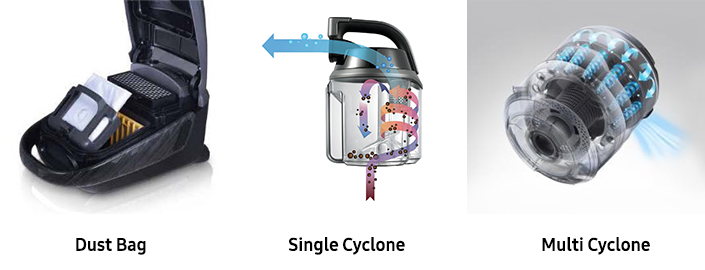
Both types rely on moving air to pick up dirt. The main difference is where the dirt goes. A bagged vacuum sends collected debris into a replaceable bag, while a bagless vacuum sends it into a reusable bin.
This design means bagless users do not need to buy replacement bags. It also lets you see how much dirt the vacuum has collected. However, emptying a dust bin can release some dust into the air, especially if the bin is opened indoors.
- ✦ Bagless design
Uses a removable dust bin and usually requires regular filter cleaning or replacement.
- ✦ Bagged design
Uses a disposable bag that stores dirt and often acts as part of the filtration system.
How Does a Bagless Vacuum Cleaner Work Step by Step?
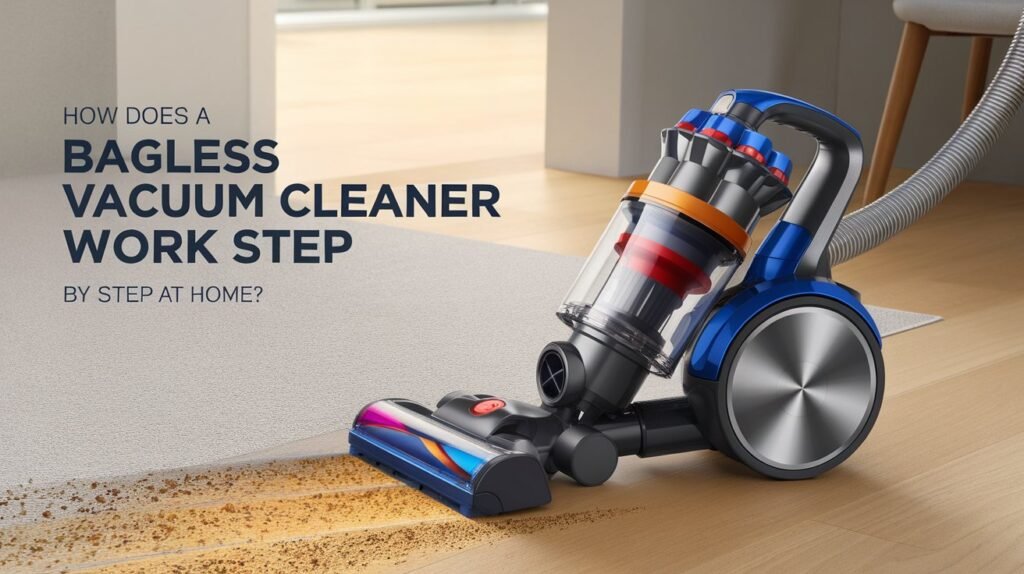
To understand how does a bagless vacuum cleaner work, follow the path of the air. The process starts at the floor and ends when filtered air leaves the machine. Each part has a role in keeping dirt inside while allowing air to keep moving.
The vacuum does not simply suck dirt into an empty container. It creates a controlled airflow, separates particles from that airflow, and then filters the remaining air. This multi-step process allows the machine to collect both visible debris and much smaller particles.
- ✦ 1. Air enters the floor head
The vacuum creates airflow through an opening near the floor. A brush roll may loosen dirt, hair, and debris so the airflow can carry them into the machine.
- ✦ 2. Dirt travels through the air path
The moving air carries dust and debris through a hose, tube, or internal passage toward the dust separation system.
- ✦ 3. The air spins or changes direction
Many bagless vacuums use a cyclone or similar separator. The fast-moving air helps move larger particles away from the main airflow.
- ✦ 4. Dirt falls into the bin
Separated debris loses its path through the airflow and settles in the dust bin.
- ✦ 5. Fine particles reach the filters
Very small particles can remain in the air after separation. Filters capture these particles before the air leaves the vacuum.
- ✦ 6. Filtered air exits
After passing through the filtration system, the air moves through the exhaust side of the vacuum and returns to the room.
Why Airflow Matters So Much
Airflow is central to how does a bagless vacuum cleaner work. If air cannot move freely, the vacuum may collect less dirt even when the motor is still running. A blocked hose, full bin, dirty filter, or tangled brush roll can all affect the airflow path.
This is why a loud motor does not always mean strong cleaning. The motor can run normally while a restriction prevents enough air from reaching the floor.
- ✦ Open airflow path
Helps the vacuum move air and debris efficiently.
- ✦ Blocked airflow path
Can reduce pickup, increase noise, and place more strain on the vacuum system.
How the Motor and Fan Create Suction
The motor is the power source behind the vacuum’s airflow. When you turn the machine on, electricity powers the motor, which spins a fan at high speed. The spinning fan moves air through the vacuum system.
This creates a pressure difference between the air near the floor opening and the air inside the vacuum. Air naturally moves toward the lower-pressure area. That moving air carries loose dirt with it.
The word suction is useful for everyday use, but airflow is the bigger part of the story. A vacuum needs both enough pressure difference and enough air movement to pick up and carry debris.

- ✦ Electric motor
Turns electrical energy into mechanical motion that drives the fan.
- ✦ Fan
Moves air through the vacuum and helps create the pressure difference used for pickup.
- ✦ Air pressure
The pressure difference causes surrounding air to move into the vacuum through the intake.
- ✦ Airflow
Moving air carries dust and debris from the cleaning surface toward the collection system.
Does the Vacuum Really Suck Up Everything?
No. A vacuum works best when the airflow and floor head are suited to the type of debris and surface. Large objects, wet material, and some fine powders can cause problems or may be unsuitable for a particular machine.
A vacuum also depends on contact with the surface. If the floor head sits too far above the floor, air can enter from the sides instead of moving through the intended pickup area.
- ✦ Good floor contact
Helps direct airflow toward dust and debris instead of allowing air to enter from unwanted gaps.
- ✦ Wrong material
Wet debris, sharp objects, or certain fine powders may damage parts or clog the system.
How Cyclonic Separation Works in a Bagless Vacuum
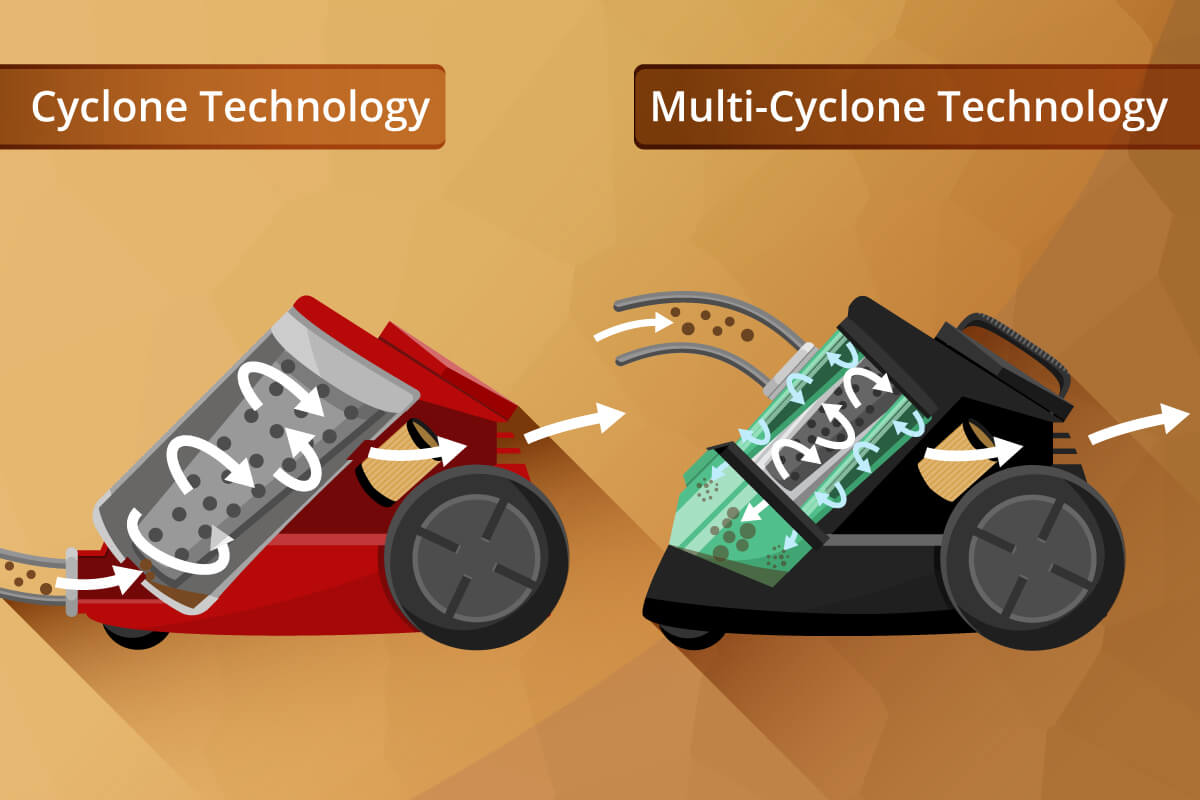
Cyclonic separation is one of the most important ideas behind how does a bagless vacuum cleaner work. In a cyclone system, incoming air enters the separator in a way that makes it spin. The spinning motion helps separate dirt from the air.
The heavier particles tend to move away from the center of the spinning airflow. They then travel toward the collection area and settle in the dust bin. The cleaner air continues toward the next stage of the vacuum.
Some machines use a single large cyclone. Others use multiple smaller cyclones to improve separation of fine particles. The exact design differs between models, so not every bagless vacuum works in precisely the same way.
- ✦ Air enters the cyclone
Dust-filled air enters a specially shaped chamber that creates a spinning airflow.
- ✦ Particles move outward
The spinning air helps larger and heavier particles move away from the center of the airflow.
- ✦ Debris drops
Separated dirt moves into the collection area instead of continuing toward the exhaust.
- ✦ Cleaner air continues
Air with fewer particles moves toward the filter stages.
Single-Cyclone and Multi-Cyclone Systems
A single cyclone uses one main separation chamber. A multi-cyclone design uses several smaller cyclones, often in sequence, to separate finer particles from the airflow.
Cyclonic separation reduces the amount of dirt that reaches the main filter. This can help maintain airflow, but the filter still matters because no cyclone removes every particle.
- ✦ Single cyclone
Uses one main spinning chamber to separate debris from the airflow.
- ✦ Multi-cyclone
Uses several smaller cyclone paths to improve separation of fine debris.
What Happens Inside the Dust Bin?
The dust bin is the part that makes a bagless vacuum easy to recognize. It stores the dirt separated from the airflow. Many bins are made from clear plastic so you can see when the container needs to be emptied.
As debris enters the bin, larger pieces such as crumbs, hair, lint, and grit collect at the bottom or around the sides. The exact pattern depends on the shape of the bin and the vacuum’s separation system.
A full bin can interfere with airflow in some designs. That is why you should follow the manufacturer’s instructions and empty the container before it reaches its stated limit.
- ✦ Empty before overfilling
A bin filled past its recommended level can reduce the room available for incoming debris and may affect airflow.
- ✦ Handle with care
Open the bin slowly to reduce the chance of dust spreading into the room.
- ✦ Clean the container
Follow the manual when washing or wiping the bin because some parts may not be designed for water.
- ✦ Check for hidden debris
Hair and lint can collect around seals, screens, or internal parts and may need manual removal.
Why a Clear Dust Cup Is Useful
A clear bin gives you a quick view of the collected dirt. This makes it easier to notice when the container is full and can also help you see if the vacuum picked up an object by mistake.
The downside is that emptying a dusty bin can create a small cloud of particles. If you are sensitive to dust, empty the bin outdoors when practical and follow the cleaning guidance in the vacuum manual.
How Filters Work in a Bagless Vacuum Cleaner
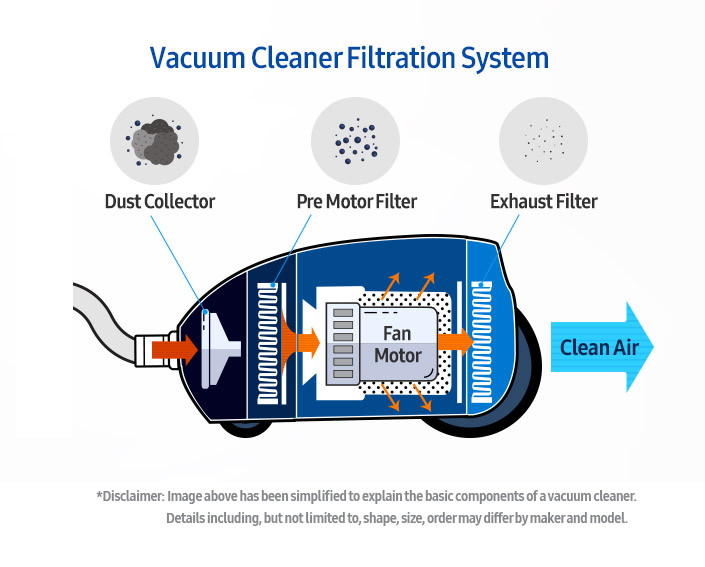
Filters are the final defense against particles that remain in the airflow. Even a strong cyclone system cannot remove every tiny particle. The filter catches much of the remaining dust before the air leaves the machine.
Many bagless vacuums have more than one filter. One filter may protect the motor, while another catches fine particles near the exhaust. Some models use HEPA filters, but you should check the product manual rather than assume every bagless vacuum has one.
A dirty filter can restrict airflow. This can reduce cleaning performance and may cause the vacuum to sound different or work harder. Cleaning or replacing filters at the correct time is therefore a key part of understanding how does a bagless vacuum cleaner work.

- ✦ Pre-motor filter
Helps protect the motor by catching particles before air reaches the motor area.
- ✦ Post-motor filter
Filters air after it has passed through the motor before that air returns to the room.
- ✦ HEPA filter
A high-efficiency filter designed to capture very small airborne particles when the vacuum is built and tested for that filtration level.
- ✦ Washable filter
A reusable filter that can be cleaned when the manufacturer allows washing. It must be fully dry before reuse.
Why a Dirty Filter Reduces Performance
A filter works by allowing air to pass while trapping particles. As dust builds on the filter material, the path for air becomes more restricted. The vacuum may then move less air through the system.
Do not wash every filter by default. Some filters are designed to stay dry or be replaced. Always use the care method and schedule listed for your specific model.
- ✦ Check the manual
Filter materials and cleaning methods differ between vacuum models.
- ✦ Dry washable filters fully
Moisture left inside the vacuum can cause damage or other problems.
The Role of the Brush Roll and Floor Head
The floor head is the first part of the vacuum that interacts with the surface. On many upright and stick vacuums, a rotating brush roll helps lift dirt from carpet fibers. The airflow then carries the loosened material into the vacuum.
Brush rolls can be especially useful for hair, crumbs, and embedded debris. However, hair and thread can wrap around the brush. A tangled brush roll can make the vacuum harder to use and may reduce pickup.
Some bagless vacuums use different floor settings for carpet and hard floors. These settings can change brush height, brush action, or airflow around the floor head.
- ✦ Carpet cleaning
A rotating brush can agitate carpet fibers and help release trapped dirt.
- ✦ Hard floors
Some floor heads reduce or stop brush action to limit scattering of debris.
- ✦ Hair pickup
Brush rolls can collect hair well, but they may also need regular cleaning.
- ✦ Air seal
A good floor-head seal helps direct airflow toward the area being cleaned.
Why the Vacuum Can Pick Up Less Dirt Over Time
Reduced pickup does not always mean the motor has failed. A wrapped brush roll, clogged hose, full bin, dirty filter, or blocked intake can all change how the machine cleans.
A simple inspection can often find the problem. Turn the vacuum off and unplug it when the design requires access to moving parts, then check the brush, hose, bin, filters, and visible air paths according to the manual.
Why Bagless Vacuums Lose Suction
If a bagless vacuum suddenly feels weak, start with the airflow path rather than assuming the motor has failed. The most common causes are simple restrictions. A full dust bin, blocked tube, clogged filter, or tangled brush can all affect pickup.
How does a bagless vacuum cleaner work when everything is clear? Air enters through the floor head, moves through the dirt separation system, passes through filters, and exits the machine. A blockage anywhere along that route can change the pressure and airflow.
Use the manufacturer’s troubleshooting steps for your exact model. Do not remove safety parts or operate the machine in a way the manual does not allow.
- ✦ Empty the dust bin
Remove collected debris when the bin reaches the recommended fill level.
- ✦ Inspect the brush roll
Remove wrapped hair, string, and lint when the vacuum is safely switched off.
- ✦ Check the hose
Look for visible blockages that may stop air from moving freely.
- ✦ Clean or replace filters
Follow the model’s instructions for filter care and replacement.
- ✦ Check seals
Damaged or poorly seated seals can allow air to enter where it should not.
Signs That Need More Than Basic Cleaning
A vacuum that still has weak airflow after normal maintenance may have a damaged hose, seal, fan, motor, or internal component. Burning smells, unusual grinding sounds, repeated overheating, or visible electrical damage should not be ignored.
Stop using the vacuum if you notice a safety concern. Check the manufacturer’s instructions for service options rather than opening electrical components yourself.
How to Maintain a Bagless Vacuum Cleaner
Good maintenance keeps the airflow path clear. It also helps the filters and moving parts do their jobs. The exact schedule varies by model, but basic care is simple.
Empty the dust bin as needed, inspect the floor head, and clean filters according to the manual. Do not assume that a filter is washable just because it looks like one. The wrong cleaning method can damage filter material.
For U.S. homes, regular maintenance can be especially useful when a vacuum handles a mix of carpet, hard floors, pet hair, crumbs, and tracked-in dirt. A few minutes of care can help prevent small clogs from becoming bigger problems.
- ✦ Empty the bin regularly
Do not let the dust container stay overfilled.
- ✦ Clean the brush roll
Remove hair and fibers that wrap around the rotating brush.
- ✦ Inspect the intake
Check the floor head and visible air openings for stuck debris.
- ✦ Care for filters
Clean or replace each filter only as directed by the manufacturer.
- ✦ Check the hose and seals
Look for cracks, loose connections, or blockages that could affect airflow.
How Often Should You Clean the Filters?
There is no single schedule that fits every bagless vacuum. Filter care depends on the model, filter type, how often you vacuum, and the amount of dust and hair the machine collects.
Use the manufacturer’s recommended interval as your main guide. If the filter becomes visibly dirty or the vacuum shows reduced airflow, check the manual before continuing to use the machine.
Advantages and Limitations of Bagless Vacuum Cleaners
Bagless vacuums can be convenient because they use a reusable dirt container. You can see the collected debris, and you do not need to keep replacement vacuum bags on hand. They also come in many forms, from compact cordless models to full-size uprights.
There are trade-offs. Emptying a dust bin can expose you to collected dust, and filters need regular attention. A bagless vacuum can also lose airflow if the bin, filter, hose, or floor head becomes blocked.
The best choice depends on how you use the machine and what features matter in your home. Understanding how does a bagless vacuum cleaner work helps you judge those features based on their actual function.
- ✦ Reusable collection bin
The dust container can be emptied and reused instead of being thrown away after each fill.
- ✦ Visible dirt level
Many clear bins let you see when the container needs emptying.
- ✦ No replacement bags
A bagless design removes the need to purchase disposable collection bags for normal use.
- ✦ Regular filter care
Filters need cleaning or replacement based on the manufacturer’s instructions.
- ✦ Dust during emptying
Opening the dust bin can release collected particles, so careful emptying is useful.
Are Bagless Vacuums Better Than Bagged Vacuums?
There is no universal answer because the two designs use different collection and filtration systems. A bagless vacuum offers a reusable bin, while a bagged vacuum uses a sealed or semi-sealed disposable bag for collected debris.
Consider the way you handle dust, the cost and availability of replacement parts, filter care, storage space, and the surfaces you clean. These practical factors can matter more than the collection method alone.