How Does a Water Filter Vacuum Cleaner Work? A Simple Guide
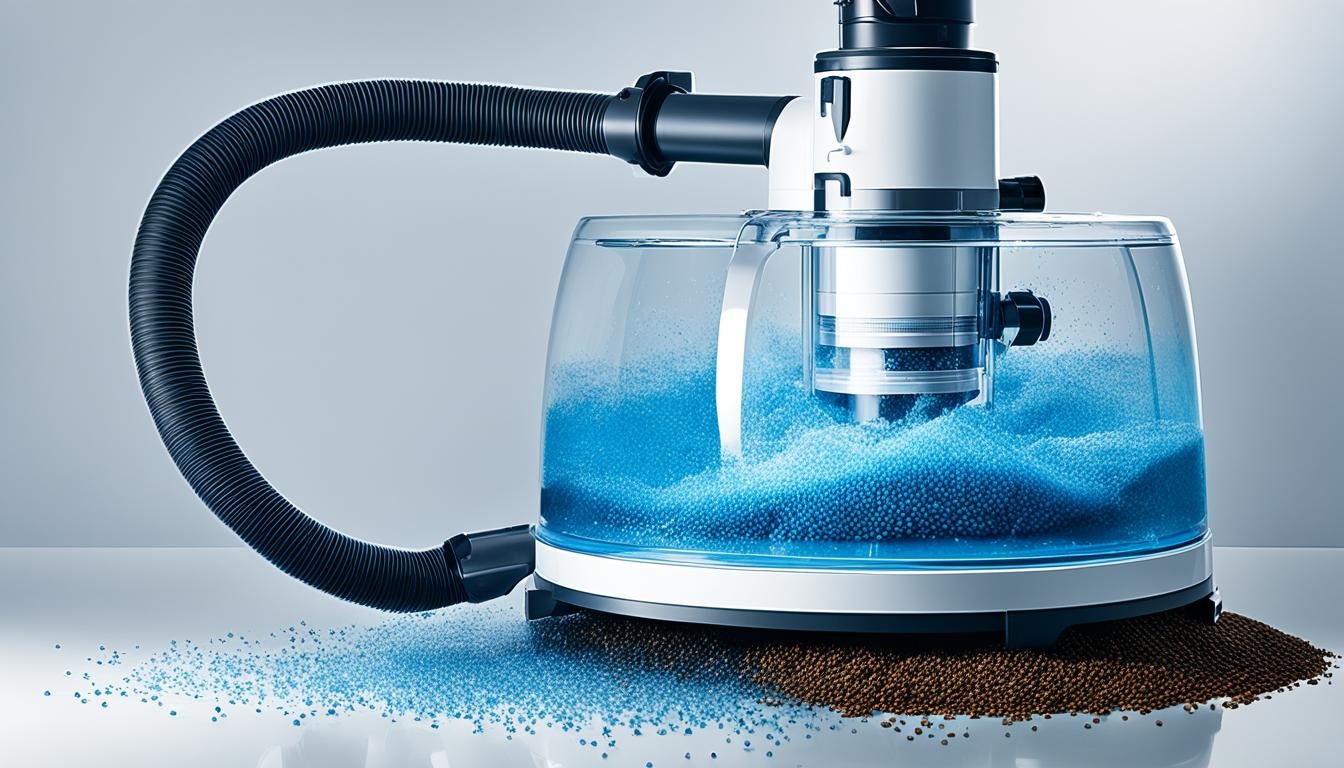
If you have ever wondered how does a water filter vacuum cleaner work, the basic idea is simple. The vacuum pulls air and dirt from the floor into a chamber that contains water. As the dirty air moves through the water, much of the dust and debris gets caught there instead of collecting in a dry bag.
The process is more than just putting water inside a normal vacuum. A water filtration vacuum has a designed air path, a water basin, and a motor that keeps airflow moving. The shape of the chamber helps mix the incoming air with water so the water can capture a large part of the dirt.
For a U.S. home, this design can be useful when you want to clean floors, rugs, upholstery, and other surfaces while keeping collected dust contained in water. Still, the machine needs careful setup and cleaning after use. Water left in the tank can become dirty and unpleasant if you do not empty and wash it promptly.
What Is a Water Filter Vacuum Cleaner?
A water filter vacuum cleaner is a vacuum that uses water to collect and filter dirt from the incoming air. Instead of sending most of the collected dirt into a dry bag or dust cup, the machine directs dirty air into a water-filled chamber.
To understand how does a water filter vacuum cleaner work, think of the water chamber as the first major filter. Dust enters with the air, meets the water, and becomes trapped in the wet collection area. Cleaner air then moves toward the motor and final filters before leaving the machine.
The exact design varies by model. Some machines use strong water turbulence, while others use special separators or extra filters to improve airflow and reduce moisture carryover.
- ✦ Water basin
This holds the water that captures much of the dirt pulled into the vacuum.
- ✦ Suction motor
The motor creates the pressure difference that moves air through the hose, water chamber, and exhaust path.
- ✦ Air separator
Some models separate water droplets from the moving air before the air reaches the motor.
- ✦ Final filter
Many water filtration vacuums use an additional filter to catch particles that remain after the water stage.
Water Filtration Is Not the Same as a Wet-Dry Vacuum
The names can cause confusion. A water filter vacuum uses water mainly as part of its filtration system. A wet-dry vacuum is designed to pick up liquids and dry debris, often with a larger collection tank.
If you are asking how does a water filter vacuum cleaner work because you want to clean a spill, check the owner’s manual first. A water filtration machine may not be designed to collect free liquid from floors.
- ✦ Water filter vacuum
Uses water as part of the dirt and air filtration process.
- ✦ Wet-dry vacuum
Is built to collect both dry debris and liquid when used according to its instructions.
How Does a Water Filter Vacuum Cleaner Work Step by Step?
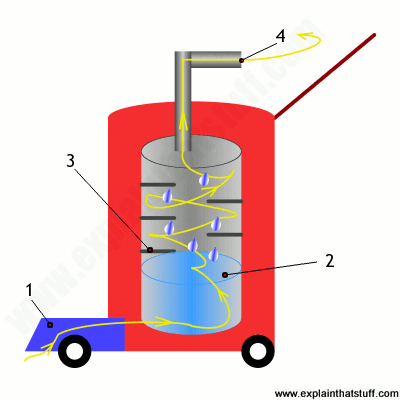
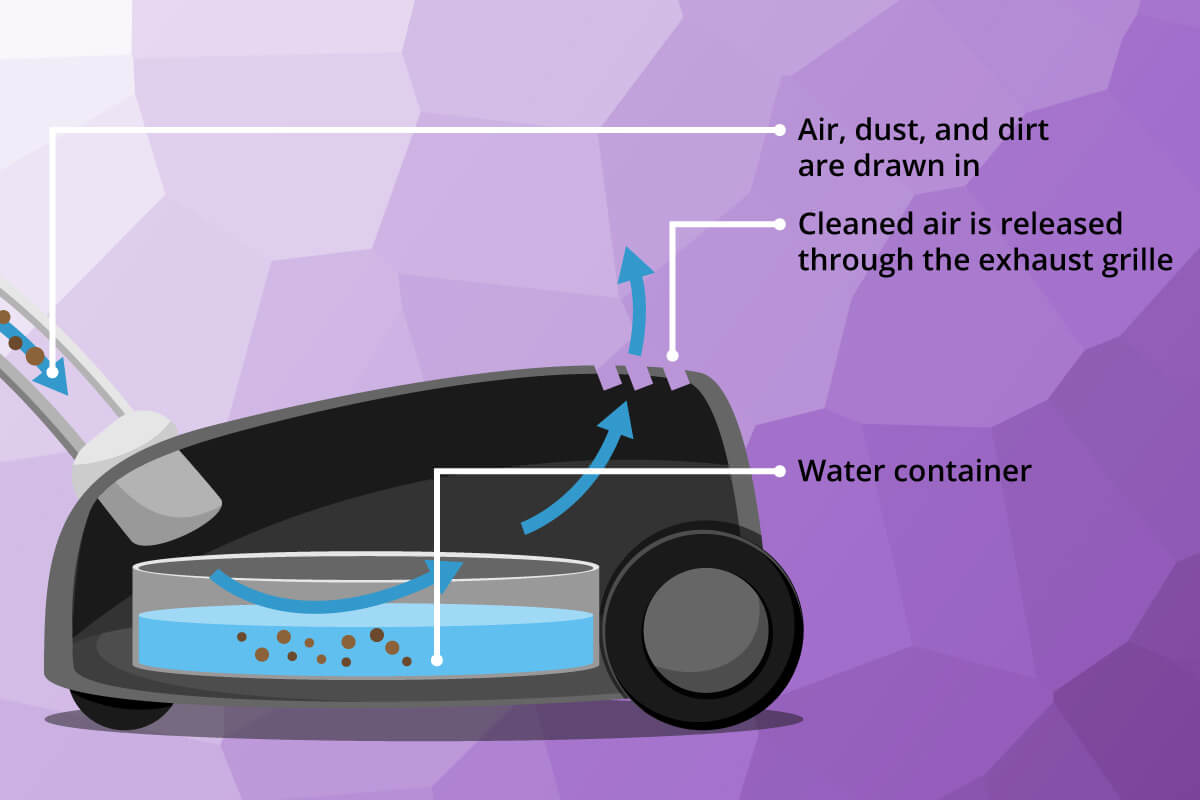
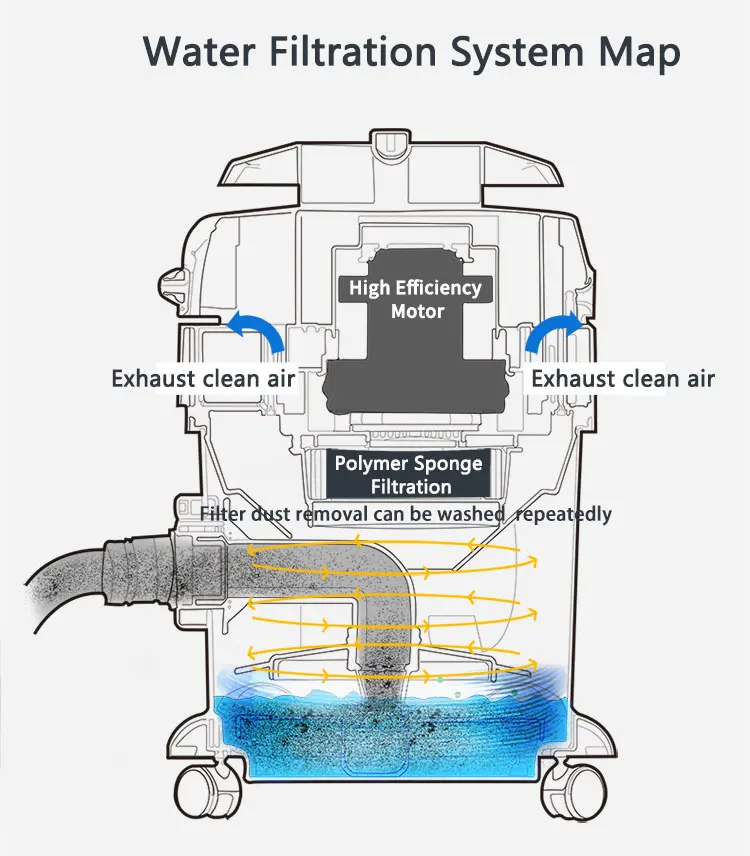
The easiest way to understand how does a water filter vacuum cleaner work is to follow the air from the floor to the exhaust. The motor creates suction at the cleaning head. Air then carries dust, hair, crumbs, and other loose debris through the hose and into the water chamber.
Inside the chamber, the dirty air comes into close contact with water. Larger debris can settle quickly, while smaller particles can become trapped in the water droplets or wet air stream. The exact capture method depends on the design of the machine.
After this stage, the air moves toward the separator and any final filter. The separator helps keep water in the basin, while the final filter can capture particles that escaped the first stage. The cleaned air then leaves through the exhaust.
- ✦ Step 1: Suction starts
The motor creates airflow that pulls dirt and air from the surface being cleaned.
- ✦ Step 2: Dirty air enters
Dust and debris travel through the hose and enter the water filtration chamber.
- ✦ Step 3: Dirt meets water
Water captures much of the dirt as the incoming air moves through or around the water.
- ✦ Step 4: Water is separated
A separator or similar design helps prevent water from traveling farther into the vacuum.
- ✦ Step 5: Final filtration occurs
Additional filtration may remove particles that remain in the air after the water stage.
- ✦ Step 6: Air exits
Filtered air passes through the exhaust path and returns to the room.
Why the Water Does Not Simply Get Sucked Into the Motor
A properly designed water filter vacuum keeps the water in a dedicated chamber. The air path and separator help control the movement of water while allowing air to continue toward the motor.
This is why using the correct water level matters. Too little or too much water can change airflow and may increase the risk of poor performance or water entering areas where it should not.
- ✦ Use the marked water level
Fill the basin only as the manufacturer directs.
- ✦ Keep the separator clean
Dirt or residue can interfere with airflow and water separation.
What Happens Inside the Water Filtration Chamber?
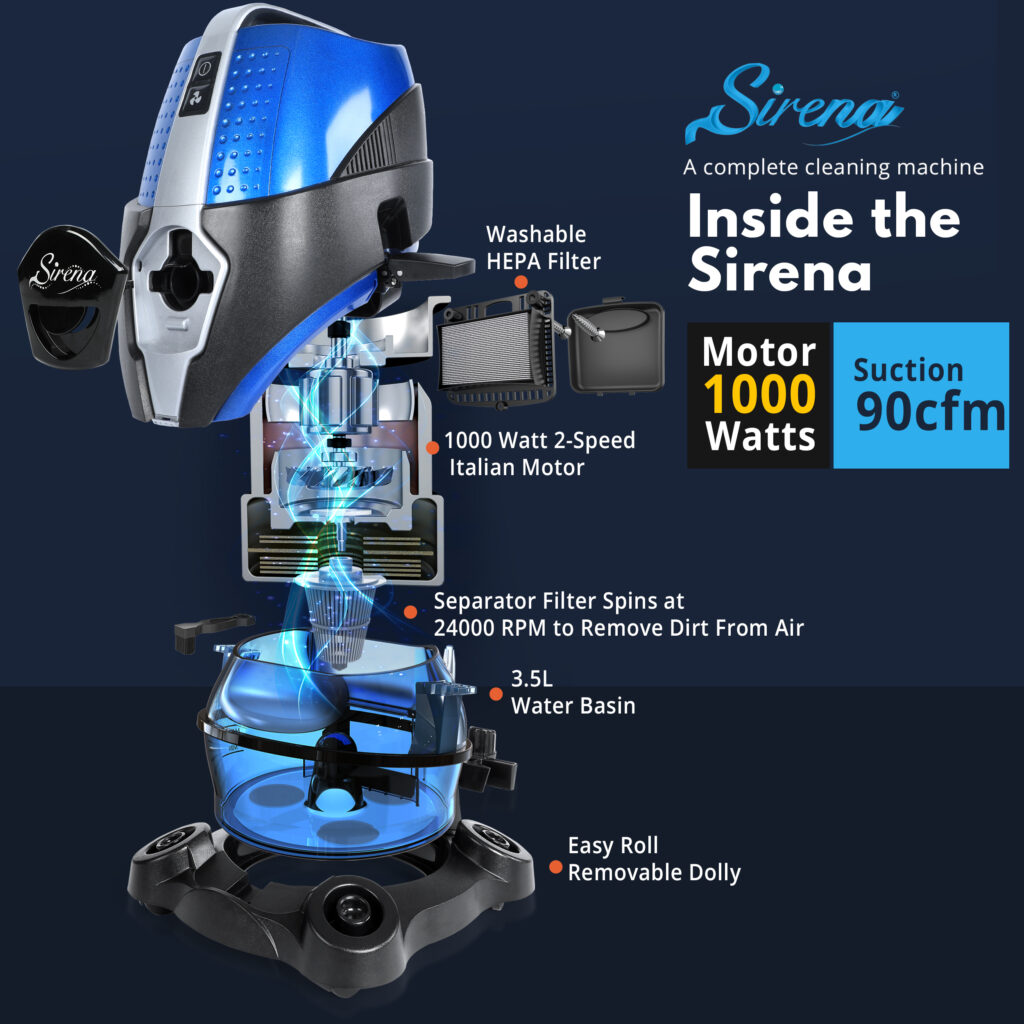
The water chamber is the part that makes this vacuum different from a standard dry vacuum. When dirty air enters, the machine directs it into a space where water can interact with the air stream. This contact allows water to capture a large share of the incoming dirt.
The process can involve splashing, swirling, bubbling, or other forms of water movement. These actions increase contact between the dirty air and the water. A separator then helps control the wet air before it moves on.
This explains an important part of how does a water filter vacuum cleaner work: the water does not act like a simple wall that blocks dust. Instead, the machine uses airflow and water movement together to collect dirt.
- ✦ Heavy debris
Large particles such as crumbs and bits of dirt can become trapped in the water or settle in the basin.
- ✦ Fine dust
Fine particles can be captured when they contact water, although some particles may still require the final filter stage.
- ✦ Pet hair
Hair is usually collected by the vacuum’s airflow and cleaning head, then ends up in the collection system.
- ✦ Moisture control
Separators help keep liquid from traveling with the outgoing air toward the motor and exhaust.
Why Water Can Trap Dust
Dry dust can remain suspended in moving air. When dust contacts water, the water can wet and hold many particles. This makes water useful as a collection medium in a vacuum filtration system.
However, water filtration does not mean every airborne particle disappears. Vacuum design, airflow, water level, separator performance, and final filtration all affect the result.
- ✦ Water wets particles
Dust that contacts the water can become heavier and easier to retain.
- ✦ Air keeps moving
The motor continues to pull air through the system after the dirt collection stage.
What Are the Main Parts of a Water Filter Vacuum?
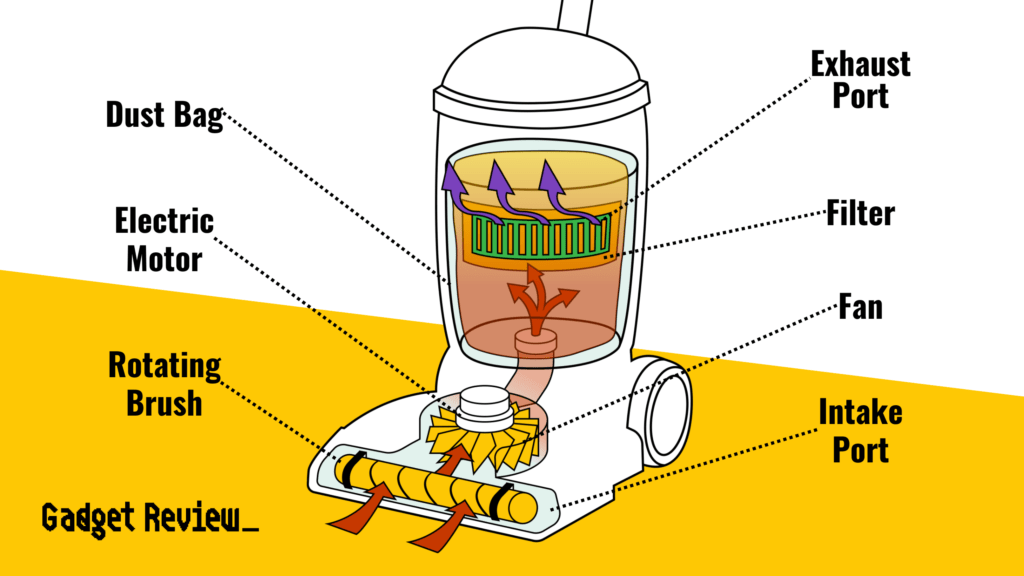
Knowing the main parts makes it much easier to understand how does a water filter vacuum cleaner work. Each part has a different job, but all of them must work together to maintain steady airflow.
The hose and cleaning head collect dirt. The water basin captures much of that dirt. The separator, motor, and final filter then help move and clean the air before it returns to the room.
- ✦ Cleaning head
Moves across the surface and guides dirt into the airflow.
- ✦ Hose and wand
Carry the air and debris from the cleaning head to the vacuum body.
- ✦ Water tank
Holds the water used to collect dirt during filtration.
- ✦ Separator
Helps separate water from the moving air before the air reaches sensitive components.
- ✦ Motor
Creates the suction that drives airflow through the complete system.
- ✦ Final filter
Provides another filtration stage for particles that pass through the water stage.
The Motor and Airflow
The motor is the engine of the vacuum. It spins an internal fan or impeller, which creates a pressure difference that pulls air through the cleaning system.
Good filtration depends on good airflow. A blocked hose, dirty separator, overloaded chamber, or clogged final filter can reduce suction and change how the machine performs.
- ✦ Strong airflow
Moves dirt from the surface toward the water chamber.
- ✦ Clean air path
Helps the vacuum maintain suction and reduces strain on the motor.
Does a Water Filter Vacuum Cleaner Remove Fine Dust?
A water filter vacuum can capture a large amount of dust, but it should not be treated as a guarantee that every fine particle is removed. Fine-particle performance depends on the full filtration system, not just the water basin.
When researching how does a water filter vacuum cleaner work, pay attention to the final filtration stage. Some models use additional filters after the water chamber. The quality, fit, and condition of those filters can have a major effect on the air that leaves the vacuum.
For homes with allergies or strong sensitivity to dust, look for clear manufacturer information about particle filtration rather than assuming that any vacuum containing water offers the same result.
- ✦ Water stage
Captures many particles by bringing dirty air into contact with water.
- ✦ Separator stage
Controls moisture and helps keep water inside the collection system.
- ✦ Final filter stage
Can capture smaller particles that remain after water filtration.
- ✦ Exhaust stage
Releases the filtered air back into the room.
Water Filtration Versus HEPA Filtration
Water filtration and HEPA filtration are different methods. Water acts as a collection medium, while a HEPA filter uses a specialized filter material to capture very small airborne particles.
Some vacuums combine water filtration with another filter. If fine-particle control matters to you, check the complete filtration design instead of judging the machine by the water system alone.
- ✦ Water filtration
Uses water to collect dirt from the incoming air.
- ✦ HEPA filtration
Uses a high-efficiency filter designed to capture very small airborne particles.
What Are the Benefits of a Water Filter Vacuum?
A water filtration system offers a few practical differences from a conventional bag or dry dust cup. One benefit is that collected dirt stays in the water until you empty the basin. This can make the disposal process feel less dusty.
Another benefit is that you can see the dirt collected in the water. This gives a clear visual reminder of what the vacuum picked up from floors and other surfaces. The design can also suit users who prefer not to buy and replace disposable vacuum bags.
Still, every benefit comes with a trade-off. A water filter vacuum often requires more cleanup after each use because the dirty water must be emptied and the wet parts should be cleaned and dried.
- ✦ Dust collection in water
Collected dirt becomes mixed with water instead of sitting as loose dry dust in a bag or cup.
- ✦ No standard dust bag
Many water filtration models do not depend on traditional disposable dust bags.
- ✦ Visible dirt collection
The dirty water lets you see what the machine collected.
- ✦ Potentially cleaner disposal
When handled correctly, dumping dirty water can create less loose dust than emptying some dry dust containers.
The Main Trade-Off
The biggest trade-off is maintenance. A dry vacuum may let you finish cleaning and store the machine quickly. A water filter vacuum needs the water emptied, the tank rinsed, and wet parts dried after use.
That extra work is important because standing dirty water can develop an odor and support unwanted microbial growth. A clean, dry machine is easier to store and ready for the next cleaning session.
- ✦ More cleanup
The water basin needs attention after use.
- ✦ More drying
Wet parts should dry fully before storage when the manufacturer allows or requires it.
What Are the Limitations of Water Filter Vacuums?
Understanding how does a water filter vacuum cleaner work also means understanding what the machine cannot do. Water filtration is useful, but it does not make a vacuum maintenance-free or suitable for every type of cleaning.
The vacuum may be heavier than a simple dry model because you have to carry the water basin and other components. The need to empty and clean the tank after use can also make quick cleaning less convenient.
Water filtration also does not automatically mean better performance on every surface. The cleaning head, suction design, brush roll, airflow, and final filter all affect how well a vacuum performs.
- ✦ Regular cleaning is required
Dirty water and wet components should not be left sitting in the machine.
- ✦ Water adds weight
The filled basin can make the vacuum heavier than some dry models.
- ✦ Not every model handles liquids
A water filtration vacuum should not be assumed to be a wet-dry vacuum.
- ✦ Filters still need care
Final filters and separators can become dirty and may need washing, drying, or replacement.
Common User Mistakes
Many problems start with simple setup errors. Users may add the wrong amount of water, forget to clean the separator, store the tank while it is wet, or use the machine for liquids that the manual does not allow.
The safest approach is to follow the model-specific instructions. Water filtration systems can look similar from the outside while having different requirements inside.
- ✦ Wrong water level
Too much or too little water can affect the designed airflow and separation process.
- ✦ Poor maintenance
Dirty tanks and filters can cause odor, weak suction, or other performance problems.
- ✦ Incorrect use
Using a water filter vacuum outside its approved purpose can damage the machine or create a safety risk.
How to Use a Water Filter Vacuum Correctly
Correct setup is a key part of how does a water filter vacuum cleaner work in everyday use. Before starting, make sure the tank, separator, filters, hose, and cleaning head are installed as the manufacturer directs.
Add only the recommended amount of clean water. Then secure the tank and other parts before switching on the motor. During cleaning, watch for unusual noise, reduced suction, water movement outside the normal chamber, or other signs that the machine needs attention.
After cleaning, turn the machine off and unplug it before emptying the water tank. Dispose of the dirty water as directed, rinse the collection parts, and allow washable parts to dry fully before storage.
- ✦ Before cleaning
Check the water level, tank, separator, filters, hose, and attachments.
- ✦ During cleaning
Use the correct attachment and watch for changes in suction or unusual sounds.
- ✦ After cleaning
Empty the dirty water and clean the parts that the manufacturer says to wash.
- ✦ Before storage
Let washable wet components dry as directed and store the machine in a clean, dry area.
How Often Should You Clean the Water Tank?
The water tank should normally be emptied after each cleaning session. Do not leave dirty water sitting in the machine until the next day if the manufacturer instructs you to empty it after use.
A quick rinse can remove leftover dirt before it dries. Periodic deeper cleaning may also be needed for seals, separators, filters, and other parts that collect residue.
- ✦ Empty after use
Remove dirty water promptly after cleaning.
- ✦ Rinse the basin
Wash away dirt and residue according to the manufacturer’s cleaning instructions.
- ✦ Dry before storage
Allow appropriate washable parts to dry so moisture does not remain trapped in the machine.