DEWALT DC720KA 18-Volt Drill: Full Specs, Pros, Cons & Value
The DEWALT DC720KA 18-Volt Drill is a compact cordless drill/driver from DEWALT’s earlier 18V generation. Although newer lithium-ion and brushless drills now dominate the market, the DC720KA remains relevant for people who already own compatible DEWALT 18V tools, find a well-maintained used unit, or simply need a straightforward drill for everyday drilling and fastening work.
At the heart of the DC720KA is an 18-volt cordless platform, a two-speed transmission, a 1/2-inch ratcheting chuck, 17 clutch settings, and up to 1,700 RPM. The original kit was supplied with two 18V nickel-cadmium batteries, a charger, and a carrying case. Manufacturer and archived retailer specifications list maximum output at 410 unit watts out (UWO) and a working weight of about 4.8 pounds.
Those specifications make the drill capable of much more than basic furniture assembly, but age matters with this model. Its original Ni-Cd battery system, brushed motor design, and relatively heavy battery pack cannot match the efficiency and runtime of a modern compact brushless drill.
This DEWALT DC720KA review looks at its power, speed control, chuck, clutch, batteries, drilling capability, ergonomics, advantages, drawbacks, and whether buying or continuing to use one still makes sense.
DEWALT DC720KA 18-Volt Drill Overview
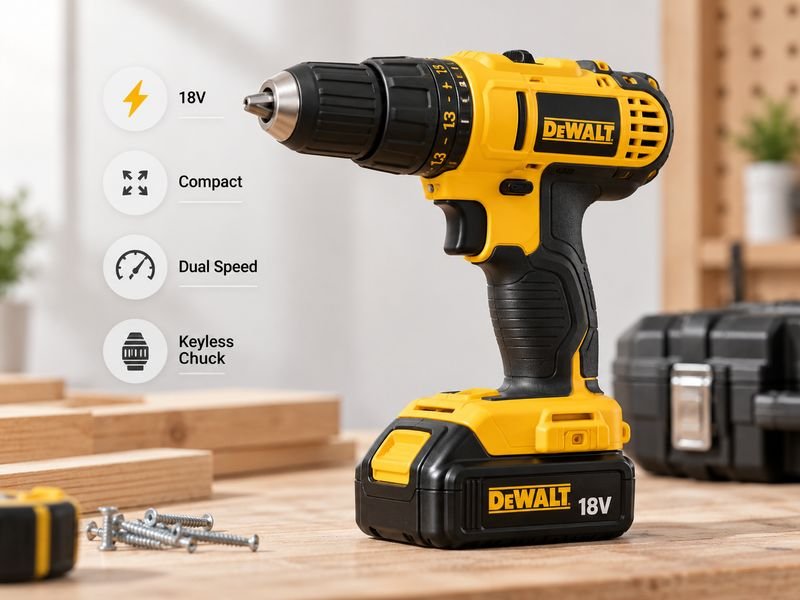
The DEWALT DC720KA 18-Volt Drill is technically a cordless drill/driver, meaning it is designed for both drilling holes and driving fasteners.
DEWALT’s documentation identifies the DC720 as a compact 1/2-inch drill/driver rather than a hammer drill. The related DC725 includes a hammer-drilling function, but the DC720 does not.
The DC720KA was designed around a traditional combination of a relatively powerful motor, mechanical two-speed gearbox, adjustable clutch, and removable battery pack. That formula is still familiar in modern drills, even though battery and motor technology has moved forward considerably.
Its strongest qualities are simplicity, useful torque control, a full-size chuck, and enough power for a broad range of household, workshop, maintenance, and light construction jobs.
Key Specifications
| Specification | DEWALT DC720KA |
| Tool Type | Cordless drill/driver |
| Voltage | 18V |
| Original Battery Type | Ni-Cd |
| Maximum Power | 410 UWO |
| Speed Settings | 2 |
| Low-Speed Range | 0–500 RPM |
| High-Speed Range | 0–1,700 RPM |
| Chuck Size | 1/2 inch |
| Chuck Type | Single-sleeve ratcheting |
| Clutch Settings | 17 |
| Variable Speed | Yes |
| Reverse | Yes |
| Work Light | LED |
| Approximate Kit Weight | 4.8 lb |
| Original Batteries | 2 |
| Original Charger | 1-hour charger |
| Carrying Case | Included with original kit |
The 0–500 and 0–1,700 RPM speed ranges are also listed in DEWALT’s instruction documentation.
How Powerful Is the DEWALT DC720KA?
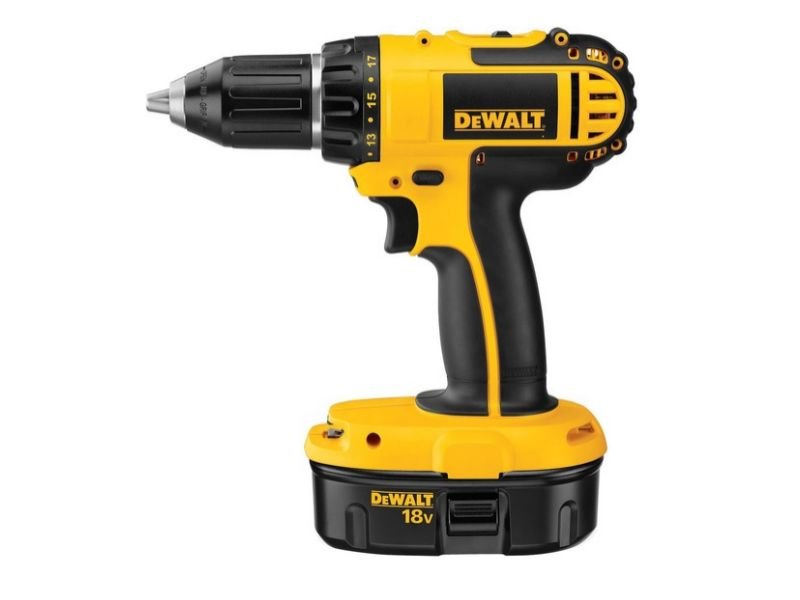
DEWALT rated the DC720KA at 410 UWO, or unit watts out. UWO is a manufacturer performance measurement that considers the relationship between a drill’s speed and torque rather than describing torque alone.
For a drill from this generation, 410 UWO provides respectable performance.
The DC720KA should have enough capacity for common jobs such as:
- Drilling into dimensional lumber
- Making pilot holes
- Installing screws
- Driving longer wood screws
- Drilling through sheet metal
- Installing hardware
- Furniture assembly
- General repair work
- Workshop projects
- Light construction tasks
The motor is a traditional brushed motor, not a modern brushless motor. Lowe’s archived specifications identify the model as non-brushless and list its maximum output at 410 UWO.
That distinction matters when comparing the DC720KA with a newer drill. Brushless designs generally provide better energy efficiency, improved runtime, and less motor maintenance. The DC720KA can still perform useful work, but it achieves that performance with older technology.
Two-Speed Transmission Provides Better Control
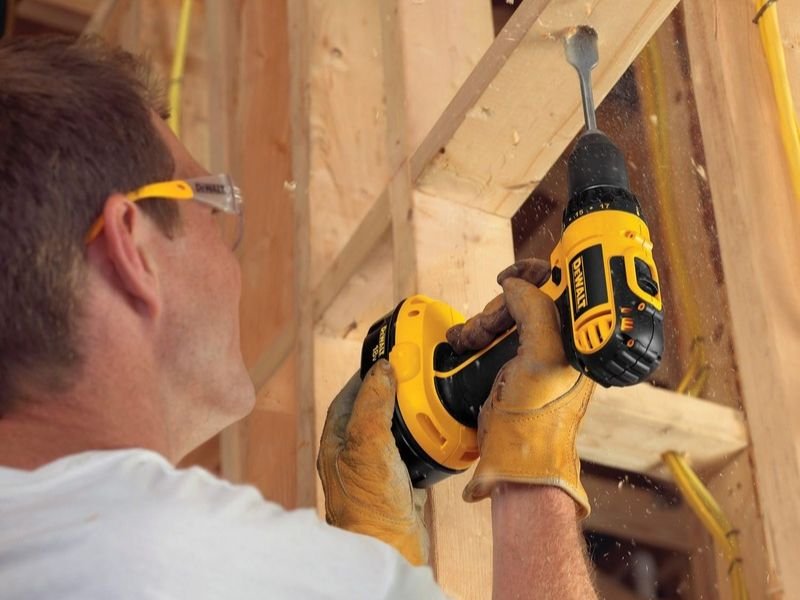
One of the most useful features of the DEWALT DC720KA is its two-speed transmission.
The two ranges are:
Low Gear: 0–500 RPM
Low gear provides lower rotational speed and is better suited to situations where control and twisting force matter more than speed.
Typical uses include:
- Driving screws
- Using larger drill bits
- Drilling larger holes in wood
- Starting fasteners
- Working with demanding drilling applications
High Gear: 0–1,700 RPM
High gear is intended for faster drilling and smaller bits.
It works well for:
- Pilot holes
- Small-diameter wood drilling
- Metal drilling
- Faster general-purpose drilling
- Jobs where high torque is less important
The combination makes the DC720KA considerably more versatile than a single-speed drill.
Instead of relying entirely on the trigger to manage speed, the operator can select a mechanical gear range suited to the job and then make smaller adjustments through the variable-speed trigger.
Variable-Speed Trigger Helps With Precision
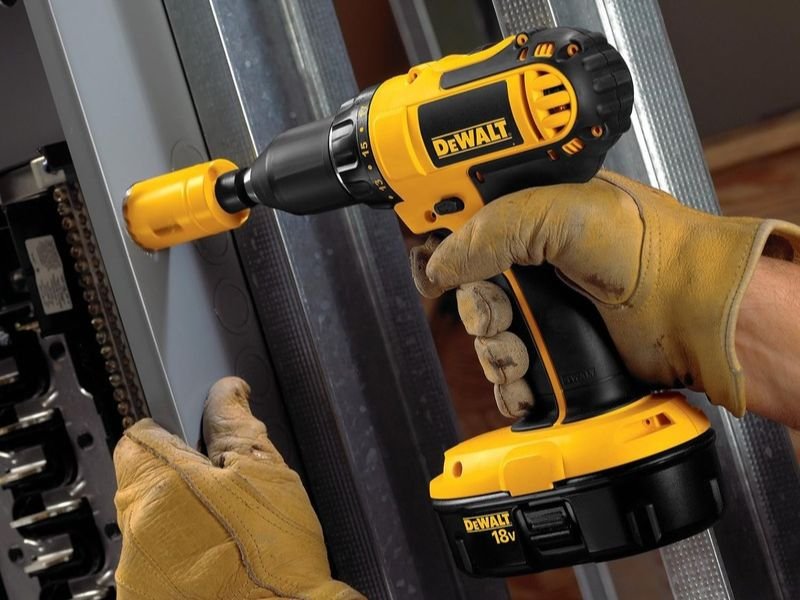
The DC720KA has variable speed, allowing RPM to change according to trigger pressure.
This is particularly helpful when starting a drill bit or screw.
A fast drill that immediately reaches full speed can cause a drill bit to wander across a surface or make a driver bit jump out of a screw head. Starting slowly improves control.
Variable speed is also useful when working with materials where drilling speed needs to be carefully managed.
For screwdriving, it provides better control as the fastener approaches the material surface.
17-Position Adjustable Clutch
The 17-position clutch is another important feature of the DEWALT DC720KA.
A drill clutch limits the amount of rotational force transferred to a fastener. When the selected torque threshold is reached, the clutch slips instead of continuing to turn the screw.
This can help prevent:
- Stripped screw heads
- Overdriven screws
- Damaged hardware
- Broken fasteners
- Fasteners sinking too deeply into soft material
Lower clutch settings are useful for small screws and delicate material, while higher settings allow additional driving force.
DEWALT’s manual recommends beginning with a lower torque setting and increasing it as required for the fastener and workpiece.
That level of adjustment makes the DC720KA useful as both a drill and screwdriver, rather than simply a high-speed drilling tool.
1/2-Inch Ratcheting Chuck
The drill uses a 1/2-inch single-sleeve ratcheting chuck.
A 1/2-inch chuck is an advantage over smaller 3/8-inch designs because it can accept a broader range of drill bits and accessories.
The ratcheting mechanism is designed to hold bits securely and reduce slipping during higher-load applications.
The chuck is also keyless, so installing or removing most bits does not require a separate chuck key.
According to DEWALT’s manual, the chuck uses an automatic spindle-lock mechanism that allows the chuck to be opened and closed while the tool is held securely.
For general workshop use, a 1/2-inch chuck gives the DC720KA considerably more flexibility than smaller light-duty cordless drills.
Drilling Performance in Wood
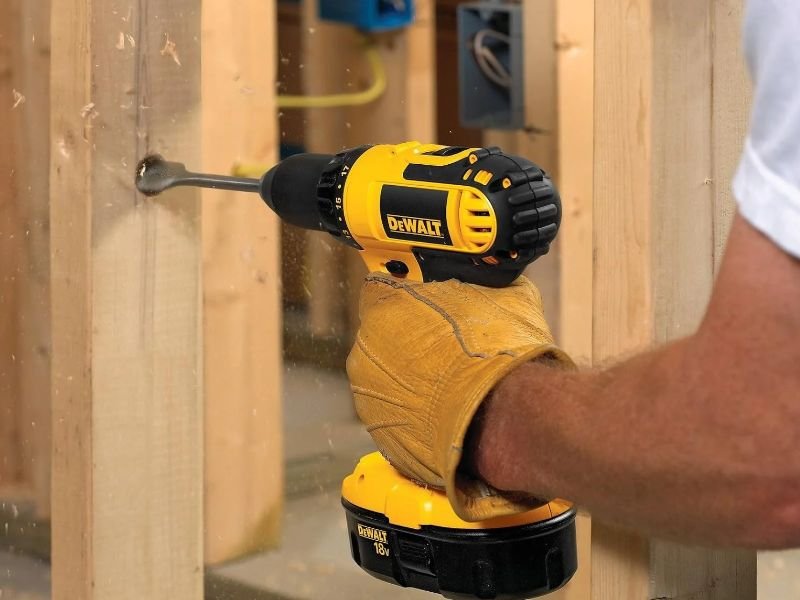
Wood drilling is one of the better applications for the DC720KA.
The combination of 410 UWO, two mechanical speed ranges, and a 1/2-inch chuck allows the drill to handle common wood bits including:
- Twist bits
- Spade bits
- Auger-style bits
- Hole-cutting accessories
DEWALT’s North American instruction manual provides recommended capacities for the DC720/DCD760 platform, including up to a 7/8-inch auger-type bit, 1-inch spade bit, and 1/2-inch twist bit depending on the selected speed and application.
For larger holes, using the low-speed setting generally gives the motor better leverage while helping control heat and bit speed.
The DC720KA should therefore be comfortable with routine woodworking, framing-related drilling, shelf installation, cabinetry work, and similar projects when equipped with an appropriate sharp bit.
Performance for Driving Screws
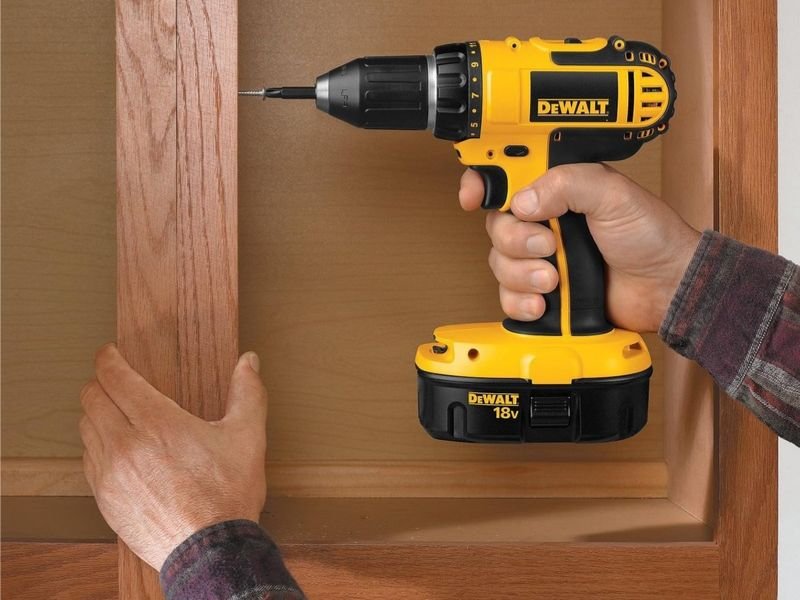
Screwdriving is another area where the DC720KA’s design works well.
Three features are especially useful:
Variable speed, which makes it easier to start screws slowly.
Low-speed gearing, which provides greater control when driving larger fasteners.
17 clutch positions, which reduce the chance of overdriving screws.
These characteristics are useful when installing:
- Cabinet hardware
- Hinges
- Shelving
- Wall fixtures
- Furniture
- Decking fasteners
- General wood screws
However, the DC720KA remains a drill/driver rather than an impact driver.
For repetitive installation of long structural screws, lag fasteners, or other high-resistance hardware, a dedicated cordless impact driver may be more efficient.
Metal Drilling Capability
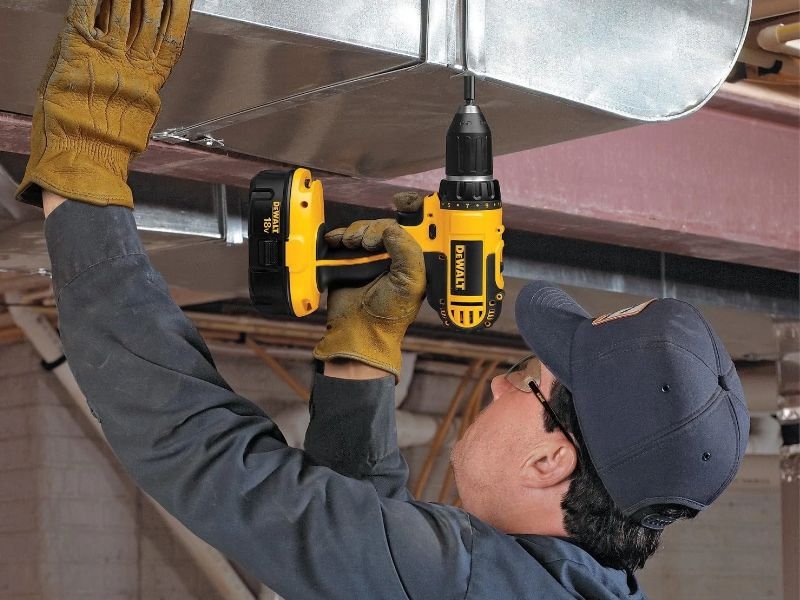
The DC720KA can also drill metal when used correctly.
DEWALT’s operating guidance recommends low speed with high-speed-steel twist bits or suitable hole saws when drilling metal. The manual’s recommended-capacity table lists up to a 1/2-inch twist-bit capacity for the DC720/DCD760 group.
Actual performance depends heavily on:
- Metal thickness
- Metal hardness
- Drill-bit quality
- Bit diameter
- Drilling speed
- Pressure
- Lubrication when appropriate
For thinner steel, aluminum, brackets, and similar everyday materials, the DC720KA has more than enough versatility for common workshop applications.
Is the DEWALT DC720KA a Hammer Drill?
No. The DEWALT DC720KA is a drill/driver, not a hammer drill.
This distinction is important.
A hammer drill combines rotation with rapid forward impacts to improve drilling performance in brick, concrete, and masonry.
The DC720 does not include that hammer mechanism. DEWALT’s manual separates the DC720 drill/driver from hammer-drill models such as the DC725. Its recommended-capacity chart also does not specify a masonry capacity for the DC720.
Therefore, anyone regularly drilling concrete, brick, block, or masonry should choose an appropriate hammer drill or rotary hammer instead.
Size, Weight, and Ergonomics
The DC720KA weighs approximately 4.8 pounds with its traditional battery configuration, according to archived product specifications.
By current compact-drill standards, that is relatively heavy.
Much of the weight comes from the older battery technology.
Nevertheless, the drill was designed as a compact model for its generation. Archived specifications put its length at approximately 8.25 inches.
A shorter body helps when drilling between framing members, inside cabinets, or in other confined areas.
For occasional work, the weight is unlikely to be a major issue. During prolonged overhead drilling or repetitive fastening, however, a newer lithium-ion compact drill may cause less arm and wrist fatigue.
LED Work Light
The DC720KA includes an LED work light intended to improve visibility around the drilling area.
This can be useful when working:
- Inside cabinets
- Under sinks
- In closets
- Between framing
- Inside equipment compartments
- In garages with limited lighting
An integrated LED is commonplace on modern cordless drills, but it was still a valuable convenience on this generation of DEWALT tools.
Archived retailer specifications specifically list an LED work light as a DC720KA feature.
DEWALT DC720KA Battery System
Battery technology is arguably the most important issue to consider with the DC720KA today.
The original DC720KA kit used 18V nickel-cadmium batteries. Archived specifications show two batteries supplied with the kit, with Lowe’s listing the packs at 1.3 Ah.
Ni-Cd batteries were once common in professional cordless tools because they could deliver substantial current and withstand demanding usage.
However, they have several disadvantages compared with modern lithium-ion packs:
- Greater weight
- Lower energy density
- Higher self-discharge
- Older charging technology
- Less runtime for a given size
- Battery aging concerns
When evaluating a used DC720KA, battery condition should therefore be considered almost as carefully as the drill itself.
An old battery may charge normally but lose capacity quickly under load.
Can the DC720KA Use a Modern DEWALT 20V MAX Battery?
There is a practical option for people who want to continue using older DEWALT 18V tools.
DEWALT currently offers the DCA1820 18V-to-20V adapter, which is designed to let compatible older 18V DEWALT tools operate from specified 20V MAX lithium-ion batteries. DEWALT describes the adapter as compatible with most 18V DEWALT tools.
More specifically, a Lowe’s product Q&A answered by a DEWALT product expert states that the DCA1820 works with the DC720.
That can significantly extend the practical life of a good DC720 drill.
Compatibility rules still matter. DEWALT specifies supported battery capacities for the adapter and states that FLEXVOLT batteries are not compatible with the DCA1820. A proper 20V MAX charger is also required for the newer lithium-ion battery.
Original Kit Contents
The original DC720KA package typically included:
- DC720 18V drill/driver
- Two 18V batteries
- One-hour charger
- Carrying case
- Driver bit on some configurations
Multiple archived references list two batteries and a one-hour charger as standard kit equipment.
Anyone buying the tool secondhand should not automatically assume all original accessories are included.
Check the actual listing or package contents before purchasing.
What the DEWALT DC720KA Does Well
Good Power for a Legacy Compact Drill
With 410 UWO, the DC720KA has enough output for a broad range of drilling and fastening applications.
It is not merely a lightweight screwdriver.
Useful Two-Speed Gearbox
The 0–500 and 0–1,700 RPM ranges provide a useful balance between torque-oriented and speed-oriented applications.
Full-Size 1/2-Inch Chuck
The 1/2-inch ratcheting chuck makes the drill more versatile than compact tools limited to smaller accessories.
Adjustable Torque Control
Seventeen clutch settings make it easier to match driving force to the screw and workpiece.
Good General-Purpose Versatility
The DC720KA can perform drilling, screwdriving, repair, assembly, woodworking, and light workshop jobs without needing specialized attachments.
Modern Battery Adapter Option
The availability of the DCA1820 adapter makes the old 18V platform more practical than it otherwise would be.
Where the DEWALT DC720KA Shows Its Age
Ni-Cd Battery Technology
The original nickel-cadmium battery packs are significantly less attractive than today’s lithium-ion batteries in terms of size, weight, and energy density.
Heavier Than Modern Compact Drills
At roughly 4.8 pounds in its traditional configuration, the DC720KA can feel bulky compared with newer compact tools.
Brushed Motor
The drill does not use a brushless motor, meaning it lacks some of the efficiency and longevity advantages of current brushless designs.
No Hammer-Drill Mode
The DC720KA is not intended as a dedicated masonry drill.
Older Product Platform
The drill itself is no longer a mainstream current-generation retail product. Lowe’s, for example, identifies its DC720KA listing as no longer sold through its site.
That makes battery condition, replacement parts, and purchase price especially important when considering a used example.
DEWALT DC720KA Pros and Cons
Pros
- Strong 410 UWO output for its generation
- Useful two-speed transmission
- 0–500 and 0–1,700 RPM ranges
- 17-position clutch
- 1/2-inch ratcheting keyless chuck
- Variable-speed trigger
- Forward and reverse operation
- LED work light
- Good drilling and screwdriving versatility
- Compact body for an older 18V drill
- DCA1820 adapter offers a path to compatible 20V MAX batteries
- Durable, straightforward mechanical design
Cons
- Original Ni-Cd batteries are outdated
- Heavier than many newer compact drills
- Brushed rather than brushless motor
- No hammer-drill function
- Older platform may require buying used
- Battery condition can vary significantly on secondhand kits
- Less efficient than current lithium-ion brushless tools
Who Is the DEWALT DC720KA Best For?
The DC720KA makes the most sense for a few specific types of users.
Existing DEWALT 18V Tool Owners
Someone who already has older DEWALT 18V tools, compatible batteries, chargers, or a DCA1820 adapter can get more value from the DC720KA than someone starting an entirely new cordless-tool collection.
DIY and Home Maintenance Users
Its combination of adjustable clutch settings, variable speed, and a large chuck suits common household jobs.
Examples include:
- Hanging shelves
- Repairing furniture
- Drilling pilot holes
- Installing brackets
- Building simple wood projects
- Driving screws
- General maintenance
Workshop Users Looking for a Backup Drill
A mechanically sound DC720 can also make a useful secondary drill.
Having one drill with a pilot bit installed and another with a driver bit can save time during repetitive assembly work.
Buyers Who Find a Good Used Deal
Price matters considerably.
A clean tool with a healthy battery setup or compatible adapter may still provide useful service.
A worn drill with weak original batteries is much less attractive because battery replacement expenses can quickly erase the benefit of a low purchase price.
Who Should Consider a Newer Drill Instead?
A modern drill is generally a better starting point for someone building a cordless-tool system from scratch.
A newer 20V lithium-ion brushless drill/driver can typically provide:
- Lower weight
- Better battery runtime
- Smaller physical dimensions
- More efficient power delivery
- Newer battery ecosystem
- Better long-term platform support
- Improved electronics
The DC720KA therefore makes the most sense when its purchase price and existing battery compatibility create a clear advantage.
What to Check Before Buying a Used DEWALT DC720KA
Because many DC720KA drills available today are used, condition is crucial.
Check the Chuck
Install a straight drill bit and rotate the drill slowly.
Look for excessive wobble.
Also confirm that the ratcheting chuck tightens and releases smoothly.
Test Both Gear Ranges
Switch between low and high gear.
Both should operate normally without grinding, jumping out of gear, or unusual mechanical noise.
Test the Variable-Speed Trigger
Speed should increase smoothly as trigger pressure increases.
Irregular response may indicate switch or motor wear.
Check Forward and Reverse
Confirm that the direction selector works reliably in both directions.
Listen to the Motor
A brushed drill naturally sounds different from a modern brushless model, but excessive grinding, irregular rattling, burning smells, or severe sparking deserve attention.
Inspect the Battery
If original Ni-Cd batteries are included, determine whether they can still hold a useful charge.
Battery age can be more important than cosmetic appearance.
Check the Charger
Verify that the charger matches the supplied battery type and operates correctly.
Inspect the Housing
Look around the handle, battery mount, gearbox housing, and chuck area for cracks or signs of serious impact damage.
Consider Adapter Cost
If the original batteries are unusable, calculate the total cost of a DCA1820 adapter, compatible battery, and charger before deciding whether the drill is still economical.
How to Get Better Performance From the DC720KA
Proper setup matters more than simply pulling the trigger.
Use low gear for larger drill bits or high-load screwdriving.
Use high gear for smaller drill bits and faster drilling.
Start screws at low speed to prevent the bit from slipping.
Use the clutch when driving fasteners rather than leaving the tool permanently in drilling mode.
Keep drill bits sharp.
Avoid forcing the drill when the bit stops cutting efficiently.
For thin materials, support the workpiece correctly to help prevent tear-out.
DEWALT’s manual advises applying pressure directly in line with the drill bit and reducing pressure as the bit approaches the opposite side of the workpiece. It also warns against repeatedly pulling the trigger to free a stalled drill.
Maintenance and Safety
A cordless drill may seem straightforward, but proper maintenance helps preserve performance and safety.
Keep ventilation openings free of accumulated dust.
Inspect the chuck periodically.
Remove the battery before changing accessories or performing maintenance.
Use appropriate eye protection when drilling.
Secure workpieces rather than trying to hold small material by hand.
Be especially cautious when drilling walls or concealed areas where electrical wiring may be present.
DEWALT’s manual specifically recommends eye protection, securing the workpiece, holding the tool by insulated gripping surfaces when hidden wiring may be encountered, and removing the battery before adjustments or accessory changes.
Is the DEWALT DC720KA Still Worth Considering?
The answer depends largely on the circumstances.
As a piece of cordless-tool technology, the DEWALT DC720KA 18-Volt Drill has clearly been surpassed by newer lithium-ion brushless models.
That does not automatically make it ineffective.
Its 410 UWO motor output, two-speed gearbox, 17 clutch settings, variable speed, LED light, and 1/2-inch chuck form a capable package for routine drilling and fastening.
The deciding factor is usually the battery ecosystem.
For someone already equipped with compatible DEWALT batteries or able to use the appropriate DCA1820 adapter, a mechanically sound DC720 can remain a practical workshop tool.
For someone starting from zero, purchasing into a current lithium-ion cordless platform is usually easier to justify because it provides access to lighter batteries, modern brushless tools, and a larger current-generation ecosystem.
Frequently Asked Questions About the DEWALT DC720KA 18-Volt Drill
Is the DEWALT DC720KA a good drill?
The DC720KA offers solid general-purpose capability for an older 18V cordless drill/driver. Its 410 UWO output, 1/2-inch chuck, two-speed gearbox, and 17-position clutch make it suitable for many drilling and screwdriving applications. Its biggest drawback today is the age of the original Ni-Cd battery platform.
What type of battery does the DEWALT DC720KA use?
The original DC720KA kit was supplied with 18V nickel-cadmium batteries.
Can the DEWALT DC720 use a 20V MAX battery?
DEWALT’s DCA1820 battery adapter allows compatible older 18V tools to operate from supported 20V MAX lithium-ion packs. A DEWALT product-expert response specifically lists the DC720 as compatible with the DCA1820.
How fast does the DEWALT DC720KA spin?
It has two no-load speed ranges: 0–500 RPM and 0–1,700 RPM.
How many clutch settings does the DC720KA have?
The drill has 17 clutch settings, allowing the operator to control torque during screwdriving.
What size chuck is on the DEWALT DC720KA?
It uses a 1/2-inch single-sleeve ratcheting chuck.
Is the DC720KA brushless?
No. It uses a traditional brushed motor. Archived retailer specifications identify the drill as non-brushless.
Does the DEWALT DC720KA have an LED light?
Yes. The drill includes an LED work light for better visibility in darker work areas.
Can the DEWALT DC720KA drill metal?
Yes. With an appropriate metal-cutting bit and correct speed, it can handle general metal drilling. DEWALT’s manual lists up to a 1/2-inch twist-bit capacity for the DC720/DCD760 group.
Can the DEWALT DC720KA drill concrete?
The DC720KA is not a hammer drill, so it is not the appropriate choice for routine concrete or masonry drilling. A hammer drill or rotary hammer is better suited to those materials.
How much does the DEWALT DC720KA weigh?
Archived specifications list the drill at approximately 4.8 pounds in its traditional configuration.
Final Verdict
The DEWALT DC720KA 18-Volt Drill represents an older but still functional approach to cordless drilling. Its combination of 410 UWO power, two-speed gearing, 17 clutch settings, a 1/2-inch ratcheting chuck, variable speed, and LED lighting gives it enough versatility for woodworking, household repair, screwdriving, metal drilling, and general workshop projects.
Its primary weakness is not drilling performance—it is the age of the platform. Original Ni-Cd batteries are heavier and less efficient than modern lithium-ion packs, while the brushed motor cannot offer the efficiency of a current brushless drill.
That makes condition and battery strategy extremely important when evaluating a DC720KA today.
For existing DEWALT 18V users, people with a compatible DCA1820 adapter, or anyone who finds a well-maintained DC720KA at an appropriate price, the drill can still provide practical value. For a completely new cordless-tool setup, however, a current-generation lithium-ion platform provides more convenient long-term ownership.
The DC720KA may be legacy equipment, but its solid two-speed drivetrain, adjustable clutch, full-size chuck, and useful output explain why many examples remain usable long after newer generations reached the market.