
How to Get Dust Out of Drill Hole: Safe, Simple Cleanup Methods
Drilling into wood, drywall, brick, or concrete usually leaves loose dust and debris inside the hole. That material may seem harmless, but it can interfere with wall plugs, anchors, screws, and adhesive anchoring systems.
Knowing how to get dust out of drill hole openings is especially useful when installing fasteners in masonry. A cleaner hole allows an anchor to sit at the correct depth and, in many cases, improves how securely the fastening system can grip the surrounding material.
The best cleaning method depends on what you drilled into, how deep the hole is, and what you plan to install. In many situations, a vacuum and a small hole-cleaning brush are all you need.

How to Get Dust Out of Drill Hole Safely and Effectively
The simplest way to get dust out of a drill hole is to vacuum the opening, loosen remaining debris with a suitable brush, and vacuum again. For deeper masonry holes, alternating brushing with vacuuming or controlled compressed air can remove dust trapped near the bottom.

A basic process looks like this:
- Stop drilling and remove the drill bit.
- Hold a vacuum nozzle directly over the hole.
- Vacuum out as much loose dust as possible.
- Insert a narrow brush and move it in and out several times.
- Vacuum the hole again.
- Repeat until little or no dust comes out.
For concrete, brick, and other masonry, cleaning becomes more important when you are installing chemical anchors, epoxy anchors, expansion anchors, or other structural fasteners. Always follow the fastener manufacturer’s hole-cleaning instructions when they specify a particular procedure.
Why Should You Remove Dust From a Drill Hole?
Drilling creates fine particles as the bit cuts or crushes the surrounding material. Some of that dust exits along the drill flutes, but a portion remains inside the hole.
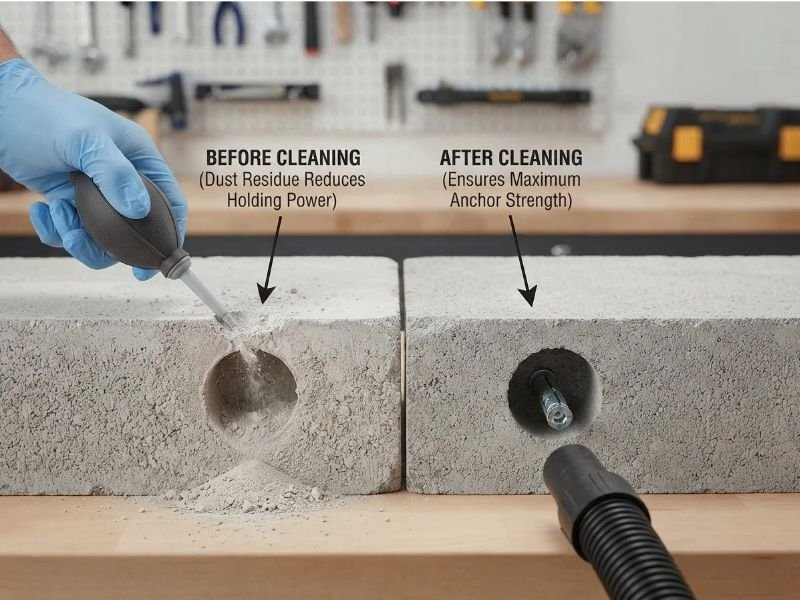
Loose debris can cause several problems.
It may prevent a screw, plug, or anchor from reaching its intended depth. Dust can also reduce friction between some mechanical anchors and the hole wall. With adhesive anchors, a layer of dust may interfere with the adhesive’s contact with the surrounding masonry.
Cleaning also makes installation easier. A wall plug is less likely to jam halfway into the hole, and you can more easily confirm whether the hole was drilled to the required depth.
The importance of cleaning depends heavily on the fastening system. A small picture hook in drywall does not require the same preparation as an adhesive anchor supporting a structural load in concrete.
Best Ways to Remove Dust From a Drill Hole
Several methods work well, and you can combine them when necessary.

Use a Shop Vacuum
A shop vacuum or wet/dry vacuum is one of the easiest and cleanest options.
Place the nozzle as close as possible to the opening and run the vacuum for several seconds. For shallow holes, this may remove nearly all loose material.
A narrow crevice attachment works especially well because it concentrates suction around the hole.
For deeper holes, vacuuming from the surface may not remove everything sitting at the bottom. Brushing the hole first helps loosen compacted particles.
Use a Hole-Cleaning Brush
A hole-cleaning brush is designed to fit inside drilled holes and sweep dust from the sides.
Choose a brush that matches the approximate diameter of the hole. Insert it fully, then twist or move it back and forth several times.
Pull the brush out slowly and vacuum away the loosened material.
Specialized brushes are commonly used when preparing holes for adhesive anchoring systems in concrete or masonry. If the anchor manufacturer specifies a brush diameter or cleaning sequence, use those instructions rather than a generic method.
Use Compressed Air Carefully
Compressed air can remove dust from deep holes, but it must be used carefully because it can send fine particles into the air and toward your face.
If you use compressed air:
- Wear appropriate eye protection.
- Avoid directing the air toward yourself or another person.
- Control airborne dust.
- Use respiratory protection when required for the material and working conditions.
- Follow the anchor manufacturer’s instructions if cleaning a structural anchor hole.
Concrete, mortar, brick, and stone can produce respirable crystalline silica dust, which should not be casually blown around an enclosed work area.
For ordinary DIY work, a vacuum is often a cleaner choice.
Use a Hand Pump or Blow-Out Pump
A manual blow-out pump is another option for deep masonry holes.
These small pumps use a narrow tube that reaches toward the bottom of the hole. Pumping forces debris outward instead of simply moving air across the opening.
They are commonly paired with a hole brush in a repeated blow-brush-blow cleaning sequence.
Again, structural and adhesive anchor systems may require a very specific number of brushing and blowing cycles.
Use a Small Tube With a Vacuum
If your vacuum nozzle is too large to reach into a deep hole, you can sometimes attach a narrower tube to the end of the vacuum hose.
A flexible tube allows suction to reach closer to the bottom of the opening.
Make sure the tube cannot break off or become stuck inside the hole.
This approach can work well for deeper holes in wood or masonry where loose debris collects below the reach of a standard crevice nozzle.
Which Cleaning Method Is Best for Different Materials?
Different materials create different types of drilling debris.
| Material | Typical Debris | Good Cleaning Method |
| Wood | Chips and sawdust | Vacuum, narrow tube, or brush |
| Drywall | Fine gypsum dust | Vacuum |
| Brick | Fine masonry dust and grit | Vacuum plus brush |
| Concrete | Fine powder and crushed aggregate | Vacuum plus brush; follow anchor instructions |
| Stone | Dust and small particles | Vacuum plus brush |
| Tile | Fine ceramic or stone dust | Vacuum carefully |
For a basic screw hole in wood or drywall, aggressive cleaning is usually unnecessary. Removing loose material is normally enough.
Masonry anchor holes deserve more attention because remaining dust can affect how certain anchors perform.
How to Clean a Deep Drill Hole
Deep holes are more difficult because ordinary vacuum suction may only clean the area close to the opening.
Start by vacuuming whatever debris you can reach. Then insert a long, correctly sized brush all the way to the bottom of the hole.
Move the brush in and out several times while rotating it.
Vacuum again afterward.
For very deep masonry holes, a blow-out pump, manufacturer-approved air-cleaning method, or specialized hollow drill system may be appropriate.
Make sure the hole remains deep enough after cleaning. Dust accumulating at the bottom can make a correctly drilled hole effectively too shallow for the fastener.
How to Remove Dust While You Are Drilling
Removing dust during drilling can reduce how much cleanup is needed afterward.
Pull the Drill Bit Out Occasionally
For deeper holes, periodically withdraw the spinning or stopped drill bit so the flutes can carry debris out.
Do not force the bit continuously deeper if the hole is filling with dust.
Removing accumulated debris can also make drilling easier.
Hold a Vacuum Near the Drill Bit
A helper can hold a vacuum nozzle close to the hole while you drill.
This captures much of the dust as it exits.
Keep the vacuum nozzle clear of the rotating drill bit.
Use a Dust-Extraction Attachment
Some drills, rotary hammers, and drilling accessories support dust extraction systems that collect debris at or near the hole.
These can be particularly useful when drilling multiple holes in masonry or working indoors.
Professional setups may also use hollow drill bits that remove dust through the drill bit while the hole is being made.
Cleaning Drill Holes Before Installing Wall Anchors
For ordinary plastic wall plugs, remove enough loose dust that the plug can reach its proper depth without obstruction.
Vacuum the hole, then test the plug fit.
The plug should fit snugly according to its installation instructions. If it falls loosely into the opening, cleaning is not the issue—the hole may be oversized or the wrong drill bit may have been used.
Do not try to compensate for an oversized hole by leaving dust inside it.
Cleaning Holes for Concrete Anchors
Concrete fasteners deserve more careful preparation.
Mechanical anchors and adhesive anchors depend on specific hole dimensions and installation procedures. Some anchor systems require the hole to be cleaned using a prescribed sequence such as:
- Blow or vacuum loose debris.
- Brush the walls of the hole.
- Blow or vacuum again.
- Repeat the sequence as instructed.
Do not assume every concrete anchor uses the same cleaning procedure.
For adhesive or epoxy anchors, follow the manufacturer’s installation instructions exactly. Hole diameter, drilling method, cleaning equipment, moisture conditions, adhesive quantity, curing time, and installation depth can all affect performance.
For structural or safety-critical installations, guessing about hole preparation is not appropriate.
Can You Use Water to Clean a Drill Hole?
Usually, water is not the first choice for routine drill-hole cleaning.
Adding water can turn fine dust into mud or slurry, which may be harder to remove. Moisture can also affect certain fasteners, adhesives, or surrounding materials.
Some specialized anchoring systems allow installation in damp or water-filled holes, but that does not mean water should be used as a general cleaning method.
Unless the product instructions specifically permit or require wet-hole preparation, vacuuming and brushing are usually better options.
What If Dust Is Packed at the Bottom of the Hole?
Packed dust often develops when drilling a deep hole without periodically removing the bit.
Use a narrow brush to break up the compacted material. Then vacuum the hole again.
If necessary, carefully reinsert the drill bit and clear the bottom without intentionally making the hole wider. Afterward, remove the new debris.
For masonry anchors, confirm the finished hole still meets the specified diameter and embedment depth.
Common Mistakes to Avoid
A few simple mistakes can make drill-hole cleaning less effective.
Blowing Dust Directly With Your Mouth
Do not put your face near a dusty masonry hole and blow into it. Fine dust can blow directly back into your eyes, nose, and lungs.
Use a vacuum, hand pump, or appropriate dust-control equipment instead.
Using a Brush That Is Too Small
A brush that barely touches the sides of the hole cannot effectively loosen attached dust.
Use a brush intended for approximately the same hole diameter, particularly when preparing anchor holes.
Forgetting the Bottom of the Hole
A hole may appear clean at the opening while still containing a layer of debris at the bottom.
This can prevent an anchor or screw from reaching its full installation depth.
Enlarging the Hole During Cleanup
Avoid aggressively moving the drill sideways or using oversized tools to clean the opening.
A hole that becomes larger than specified may no longer properly fit the intended anchor.
Ignoring Manufacturer Instructions
Anchor installation procedures are not interchangeable.
If an anchor manufacturer specifies particular cleaning tools, cycles, hole dimensions, or dust-removal methods, those requirements take priority.
Safety Tips When Cleaning Drill Dust
For a few small holes in wood or drywall, cleanup is usually straightforward. Masonry dust requires more care.
Wear safety glasses so particles do not enter your eyes.
When drilling or cleaning concrete, brick, mortar, or stone, use suitable dust-control practices. These materials may generate silica-containing dust. A dust extraction system or properly equipped vacuum can reduce airborne particles.
Avoid creating unnecessary airborne dust with high-pressure compressed air.
If the project involves many masonry holes, confined spaces, structural anchoring, or significant dust exposure, professional-grade dust control may be appropriate.
FAQs About how to get dust out of drill hole
Can I vacuum dust out of a drill hole?
Yes. A shop vacuum is one of the simplest ways to remove loose dust from a drilled hole.
For deeper holes, combine vacuuming with a narrow brush so material stuck to the walls or bottom can be loosened first.
Do I need to clean a hole before installing a wall plug?
It is a good idea. Removing loose dust helps the wall plug reach the intended depth and reduces the chance of debris interfering with installation.
Thorough cleaning becomes more important for masonry and specialized anchors.
Can I use canned compressed air to clean a drill hole?
It can move loose dust, but blowing masonry dust into the surrounding air is not ideal.
A vacuum or purpose-made blow-out pump usually provides better dust control. For anchoring systems, use whatever cleaning method the manufacturer specifies.
How do you clean dust from a deep concrete hole?
Vacuum the opening, brush the full depth of the hole with an appropriately sized hole brush, and vacuum again.
For specialized concrete anchors, follow the required cleaning sequence in the installation instructions.
What happens if you leave concrete dust in an anchor hole?
Loose concrete dust can prevent some anchors from seating correctly and may interfere with the performance of certain mechanical or adhesive anchoring systems.
The effect depends on the type of anchor, which is why proper hole preparation is especially important for structural installations.
Can I blow drill dust out with a straw?
A straw may move some debris, but blowing by mouth can send dust toward your face and expose you to airborne particles.
Using a vacuum or manual blow-out pump is a safer and more effective approach.
Should I clean wood drill holes before inserting screws?
For ordinary screws, extensive cleaning is usually unnecessary. Remove large chips or packed sawdust if they prevent the screw, bolt, dowel, or other hardware from fitting correctly.
Does a drill hole need to be completely spotless?
Not every hole needs laboratory-level cleanliness.
For ordinary household fasteners, removing loose debris is generally enough. For adhesive anchors and other engineered fastening systems, however, the required level of cleanliness should match the manufacturer’s installation procedure.
Conclusion
Learning how to get dust out of drill hole openings is simple: remove loose debris with a vacuum, loosen stubborn material with a correctly sized brush, and repeat the process until the hole is clear enough for the intended fastener.
A basic household hole may need only a few seconds of vacuuming, while concrete anchor holes can require a precise cleaning procedure. Pay particular attention to hole depth, anchor instructions, and dust safety when working with masonry. A clean, correctly sized hole gives your screw, plug, or anchor the best chance of fitting and performing as intended.