
How to Catch Drywall Dust When Drilling Holes Without a Mess
Drilling into drywall looks like a clean, simple job until fine white powder starts falling onto the floor, furniture, baseboards, and everything nearby. If you are mounting a shelf, hanging a picture, installing wall anchors, or making a few pilot holes, controlling the dust while you drill can save you from cleaning the room afterward.
Learning how to catch drywall dust when drilling holes is surprisingly easy. For one or two small holes, you can often catch nearly all the debris with a folded piece of paper, masking tape, or a small container placed directly below the drill bit. For larger jobs, holding a vacuum hose beside the hole is usually the most effective approach.
The best method depends on how many holes you need to drill, whether someone can help you, and how clean you want the surrounding area to stay.
How to Catch Drywall Dust When Drilling Holes
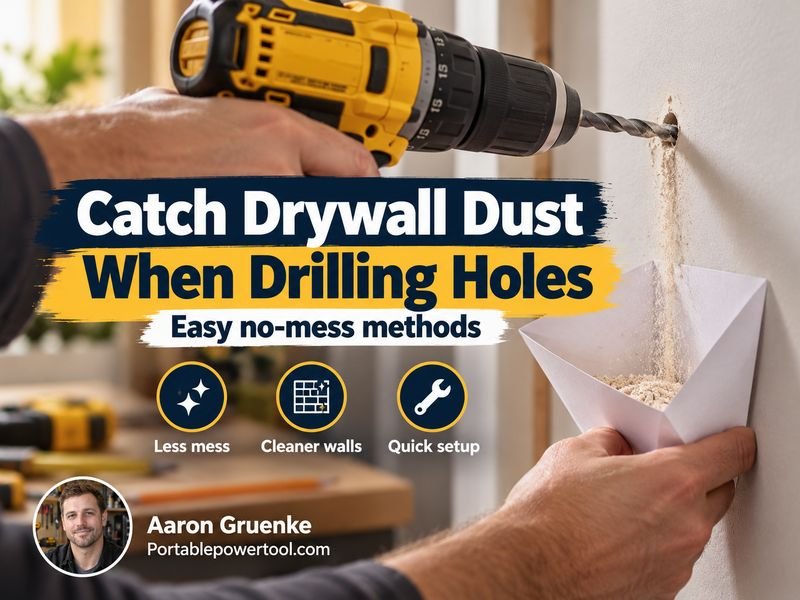
The easiest way to catch drywall dust is to position something directly underneath the drilling point before the bit enters the wall. A folded paper catcher, envelope, sticky note, disposable cup, or vacuum hose can collect the powder as it falls.
For most small household projects, the following methods work well:
- Tape a folded sheet of paper below the drilling point.
- Hold a vacuum hose next to the drill bit.
- Tape an envelope or small bag beneath the hole.
- Use a disposable cup as a dust collector.
- Use a drill dust-catching attachment for repeated drilling.
Drywall dust is extremely fine, so catching it at the source is much easier than trying to clean it after it spreads.
Why Does Drilling Drywall Create So Much Dust?
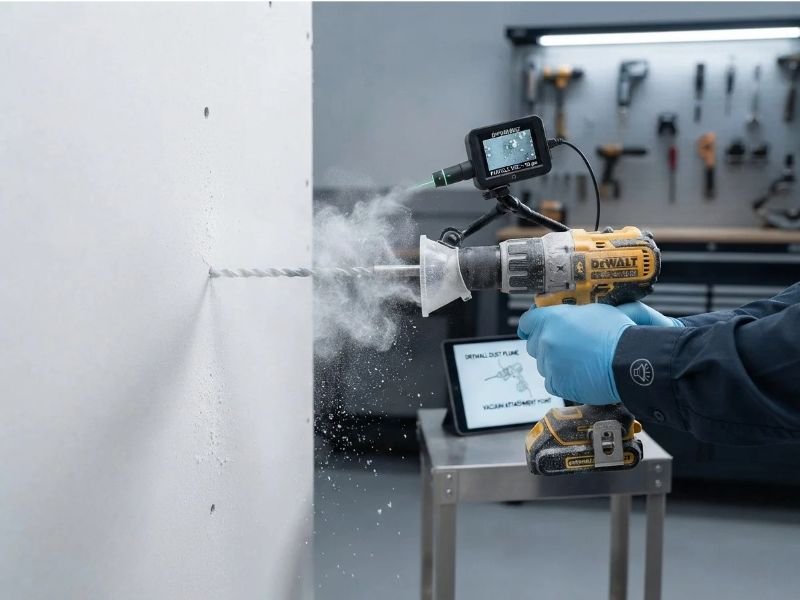
Standard drywall, also called gypsum board, has a soft gypsum core covered with paper facing. When a drill bit cuts through the wall, the gypsum breaks into tiny particles.
These particles are light enough to fall down the wall or become temporarily airborne.
The amount of debris depends on several factors, including:
- The diameter of the drill bit
- How deep you drill
- Whether you are drilling drywall alone or into a stud behind it
- The type of wall anchor being installed
- Drill speed
- The number of holes being made
A small picture-hanging hole might create only a pinch of powder. Installing multiple anchors for shelving, cabinets, or TV mounts can produce considerably more debris.
Method 1: Make a Paper Drywall Dust Catcher
For one or two holes, a folded sheet of paper is one of the simplest and cheapest solutions.
You need only a piece of printer paper, scrap paper, or moderately stiff paper and some painter’s tape.
How to make one
- Fold the bottom portion of the paper upward to create a small pocket.
- Crease the sides slightly so the pocket remains open.
- Position the pocket directly below where you plan to drill.
- Secure the top edge to the wall with painter’s tape.
- Drill the hole normally.
- Let the falling drywall powder collect inside the paper pocket.
- Carefully remove the paper and empty it into the trash.
Keep the catcher close to the drilling point. A gap of only an inch or two between the hole and the top of the paper helps prevent powder from drifting down the wall.
Painter’s tape is generally preferable to aggressive adhesive tape because it is less likely to damage paint when removed carefully.
Method 2: Use a Vacuum While Drilling
A vacuum is usually the best option when you need to drill several holes.
Position the end of the vacuum hose immediately below or beside the drill bit. As the drywall dust leaves the hole, the airflow pulls most of it directly into the vacuum.
Using a vacuum by yourself
If you are working alone, you can temporarily secure the hose to the wall with painter’s tape or position it using a hose holder.
Keep the hose close enough to collect dust without interfering with the rotating drill bit.
Using a helper
If another person is available, have them hold the vacuum nozzle approximately an inch below the drilling point while you operate the drill.
This is especially convenient for:
- Mounting shelves
- Installing curtain rods
- Hanging televisions
- Installing wall-mounted storage
- Drilling multiple anchor holes
A shop vacuum is particularly useful for renovation work because it is designed to handle construction debris. For a few small holes, a household vacuum may also work, provided its manufacturer allows fine dry debris to be collected.
Fine construction dust can clog some vacuum filters quickly, so check the filter afterward.
Method 3: Tape an Envelope Below the Hole
An ordinary paper envelope makes a convenient ready-made dust catcher.
Open the envelope slightly and tape it to the wall directly beneath the drilling point. The opening should face upward.
As you drill, drywall powder falls directly into the envelope.
This method works especially well for small jobs because the dust remains contained when you remove the envelope.
A small paper bag can be used the same way.
Method 4: Use a Sticky Note
For very small holes, such as holes for lightweight picture anchors or small screws, a sticky note can work surprisingly well.
Fold the lower half upward to form a small shelf or pocket. Stick the adhesive edge to the wall immediately below your drilling mark.
This method is convenient because no separate tape is required.
However, a sticky note has limited capacity, so it is better for small drill bits than large wall anchors.
Method 5: Use a Disposable Cup
A paper or plastic cup can create a deeper dust collector than folded paper.
Cut one side of the cup so it can sit against the wall, or cut the cup roughly in half lengthwise. Tape the remaining cup below the drilling point with the open portion facing upward.
The cup catches drywall fragments and powder while you drill.
This method can be particularly useful when drilling larger holes because the container holds more debris than a small paper pocket.
Be careful not to position the cup so close that the drill chuck or bit strikes it.
Method 6: Use a Drill Dust Collector
If you frequently drill into walls, a dedicated drill dust collector may be more convenient than improvised methods.
These accessories typically surround the drilling location and collect debris before it can fall down the wall. Some connect directly to a vacuum, while others use a small chamber to capture the dust.
They are useful for people who regularly install:
- Shelves
- Cabinets
- Wall anchors
- Lighting hardware
- Curtain rods
- Wall-mounted electronics
For occasional DIY work, however, a paper catcher or vacuum usually provides similar practical results without requiring another tool.
Which Dust-Catching Method Works Best?
The best solution depends on the size of the job.
| Method | Best For | Cleanup Level |
| Folded paper | One or two small holes | Very good |
| Envelope | Small anchor holes | Very good |
| Sticky note | Tiny holes | Good |
| Disposable cup | Medium or larger holes | Very good |
| Vacuum hose | Multiple holes | Excellent |
| Drill dust collector | Frequent drilling | Excellent |
If you already have a vacuum nearby, vacuum-assisted drilling generally provides the best control.
For a single hole, folded paper is usually faster.
How to Drill Drywall With Less Dust

You cannot eliminate all gypsum powder simply by changing your drilling technique, but you can reduce how much becomes airborne.
Mark the hole before drilling
Measure and mark the exact drilling point first. Repeatedly starting and stopping the drill can create unnecessary debris.
Start at a controlled speed
Place the drill bit against the mark and begin drilling at a moderate speed.
High speed is not normally necessary for drywall itself. Controlled drilling also makes it easier to keep the drill centered.
Keep the drill straight
Try to keep the bit approximately perpendicular to the wall.
Wobbling the drill can enlarge the opening and create more debris than necessary.
Stop once the required depth is reached
Do not continue drilling deeper than needed.
If you are installing a drywall anchor, follow the anchor manufacturer’s recommended drill size and installation method.
Do You Need to Drill a Hole for Every Drywall Anchor?
No. Some drywall anchors require a predrilled hole, while others are designed to screw directly into drywall.
Common anchor types include:
Plastic expansion anchors usually require a correctly sized pilot hole.
Self-drilling drywall anchors typically have a pointed threaded body that can be installed directly into the drywall.
Toggle bolts and similar hollow-wall anchors generally require a larger opening.
Always follow the instructions supplied with the anchor. Using an oversized drill bit can reduce the anchor’s holding strength.
How to Keep Dust From Sticking to the Wall
Most loose drywall powder falls downward, but some can cling to textured or painted surfaces.
Placing your dust catcher immediately below the hole reduces this problem significantly.
If some powder remains on the wall, remove it gently with a dry microfiber cloth or vacuum brush attachment.
Avoid immediately wiping a large amount of drywall powder with a wet cloth. Water can turn fine gypsum dust into a paste that may smear across the paint.
Vacuum or brush away loose material first, then use a slightly damp cloth only if needed.
Protect the Floor Before Larger Drilling Jobs
Even a good dust-catching method may miss a small amount of debris.
For multiple holes, place a small drop cloth, old towel, piece of cardboard, or plastic sheet underneath the work area.
Move nearby electronics and delicate items away from the wall if possible. Fine dust can settle inside vents, keyboards, and other equipment.
For a single small hole, this level of preparation is usually unnecessary.
Important Safety Checks Before Drilling Into a Wall
Dust control matters, but knowing what may be behind the drywall is more important.
Walls can contain:
- Electrical wiring
- Plumbing pipes
- Gas lines
- HVAC components
- Metal protection plates
- Wood or metal studs
Use extra caution when drilling near electrical outlets, switches, plumbing fixtures, or areas where pipes and wiring are likely to run.
A stud finder with wire-detection capability can sometimes help identify hidden objects, although no detector guarantees that every wire or pipe will be found.
If you unexpectedly encounter metal, strong resistance, or something that does not feel like normal drywall or wood, stop drilling and determine what is behind the surface before continuing.
Should You Wear a Mask When Drilling Drywall?
For one or two small holes in modern drywall, the amount of airborne dust is usually limited, especially if you collect it at the source.
For repeated drilling, sanding, cutting, demolition, or other work that creates noticeable airborne dust, wearing appropriate eye protection and respiratory protection is sensible.
Open a window or provide ventilation when practical.
People with respiratory sensitivities should take additional precautions around airborne construction dust.
Be More Cautious With Older Walls
Older homes can contain materials that require additional precautions.
Homes built before 1978 may have lead-based paint on painted surfaces. Disturbing painted walls can create contaminated dust.
Some older drywall joint compounds, textured coatings, and other building materials may also contain asbestos.
The age of a home alone cannot confirm whether either material is present. If you are planning substantial drilling, cutting, sanding, or demolition in an older building and you are unsure about the materials, consider testing or getting professional guidance before disturbing the surface.
A single small hole is very different from renovation-scale work, but knowing the condition and age of the wall is still useful.
Common Mistakes When Catching Drywall Dust
Placing the catcher too far below the hole
Drywall powder can drift sideways before reaching the catcher.
Position your paper, envelope, or vacuum nozzle immediately below the drilling location.
Using tape that damages the paint
Strong packaging tape or duct tape can pull paint away from the wall.
Use painter’s tape or another low-tack option when possible.
Letting the drill hit the catcher
Leave enough room for the drill chuck and your hand to move freely.
A catcher that is too close can interfere with drilling.
Blowing the dust away
Avoid blowing into the hole with your mouth or compressed air indoors. That simply distributes fine powder around the room.
Vacuuming is a cleaner option.
Wet-wiping loose powder immediately
Drywall dust mixed with water can become messy.
Vacuum or brush loose dust away first.
How to Clean a Drywall Hole Before Installing an Anchor
Some anchors perform better when loose material is removed from the hole.
After drilling:
- Keep the vacuum nozzle near the opening.
- Vacuum loose powder from around the hole.
- Avoid aggressively enlarging the hole while cleaning it.
- Insert the anchor according to the manufacturer’s directions.
You generally do not need the hole to be perfectly dust-free for typical drywall anchors. The main goal is to remove loose debris without changing the hole diameter.
FAQs About How to Catch Drywall Dust When Drilling Holes
Can I use tape to catch drywall dust?
Yes. Fold painter’s tape slightly outward to create a temporary shelf below the hole, or use the tape to attach folded paper or an envelope to the wall.
A paper pocket usually holds more debris than tape alone.
Can I hold a vacuum beside the drill while drilling?
Yes. Holding a vacuum nozzle close to the drilling point is one of the most effective ways to collect drywall dust.
Keep the nozzle far enough away that it cannot contact the rotating drill bit.
Does a sticky note really catch drywall dust?
Yes, for small holes. Fold the bottom half of the sticky note upward to create a pocket and attach it immediately below the drilling point.
For large anchors or repeated drilling, use a larger catcher.
Can drywall dust damage a vacuum?
Fine dust can clog vacuum filters, particularly if a large amount is collected.
A few drill holes usually produce relatively little debris, but larger projects are better handled with a shop vacuum designed for construction dust.
Check and clean the filter according to the vacuum manufacturer’s instructions.
Should I vacuum drywall dust or wipe it?
Vacuum loose drywall dust first.
After most of the powder has been removed, you can wipe the remaining residue with a slightly damp microfiber cloth if the wall finish allows it.
How do I stop drywall dust from falling onto carpet?
Tape a paper catcher or envelope beneath the hole and place a towel or drop cloth on the carpet as backup protection.
Using a vacuum while drilling provides even better control.
What is the cleanest way to drill several holes in drywall?
Use a vacuum hose directly beside each drilling point.
For repeated work, a drill-mounted dust collector or vacuum-compatible drilling attachment can make the process faster and cleaner.
Can I drill drywall without making any dust?
Drilling always removes some wall material, so producing absolutely no dust is difficult.
However, placing a vacuum nozzle or dust catcher directly at the hole can capture most of the debris before it reaches the floor.
Conclusion
The simplest answer to how to catch drywall dust when drilling holes is to collect the powder directly where it leaves the wall. A folded paper pocket, envelope, sticky note, or disposable cup works well for small jobs, while a vacuum hose is usually the cleanest choice when drilling several holes.
Keep the catcher close to the drilling point, use painter’s tape where appropriate, and vacuum loose powder instead of spreading it with air or a wet cloth. With a few seconds of preparation, you can drill the holes you need without leaving a trail of white drywall dust around the room.