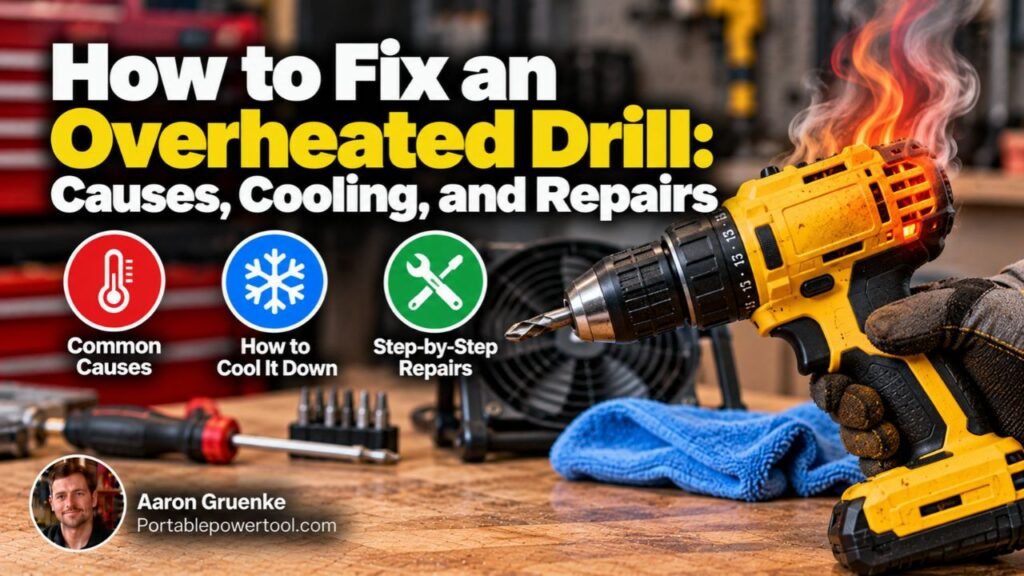
How to Fix an Overheated Drill: Causes, Cooling, and Repairs
A drill can become warm during normal use, especially when driving large screws, drilling thick material, or working continuously for several minutes. But if the housing becomes extremely hot, the drill smells burnt, loses power, shuts itself off, or produces smoke, something is wrong and continuing to use it can damage the motor, battery, wiring, or electronic controls.
Learning how to fix an overheated drill starts with stopping the tool and identifying why excessive heat developed. Sometimes the solution is simple: let the drill cool, reduce the workload, switch to the correct speed or gear, clean blocked ventilation openings, or replace a dull drill bit. In other situations, overheating can point to worn motor brushes, damaged bearings, an overloaded battery, an internal electrical problem, or a failing motor.
The safest approach is to cool the drill naturally, inspect it for obvious problems, and correct the cause before using it again. You should never pour water on a hot drill, place it in a freezer, or keep pulling the trigger in an attempt to “test” it while it is still overheated.
This guide explains how to cool and troubleshoot an overheated corded or cordless drill, the most common causes, what you can safely check at home, and when professional repair or replacement is the better option.
How to Fix an Overheated Drill Safely
To fix an overheated drill, stop using it immediately, disconnect its power source, allow it to cool naturally, and inspect the drill for blocked vents, a dull or binding bit, excessive load, battery problems, or internal mechanical issues.
A practical troubleshooting process is:
- Release the trigger immediately.
- Unplug a corded drill or remove the battery from a cordless drill.
- Place the drill in a dry, well-ventilated area.
- Let the tool cool completely.
- Inspect the air vents and remove loose dust.
- Check the drill bit for dullness or damage.
- Make sure you are using the correct gear and speed.
- Test the drill briefly with no load after it has cooled.
- Stop using it if overheating, smoke, burning smells, sparking, or unusual noises return.
If the drill overheats again during light use, it may have an internal fault that requires professional service.
Is It Normal for a Drill to Get Hot?
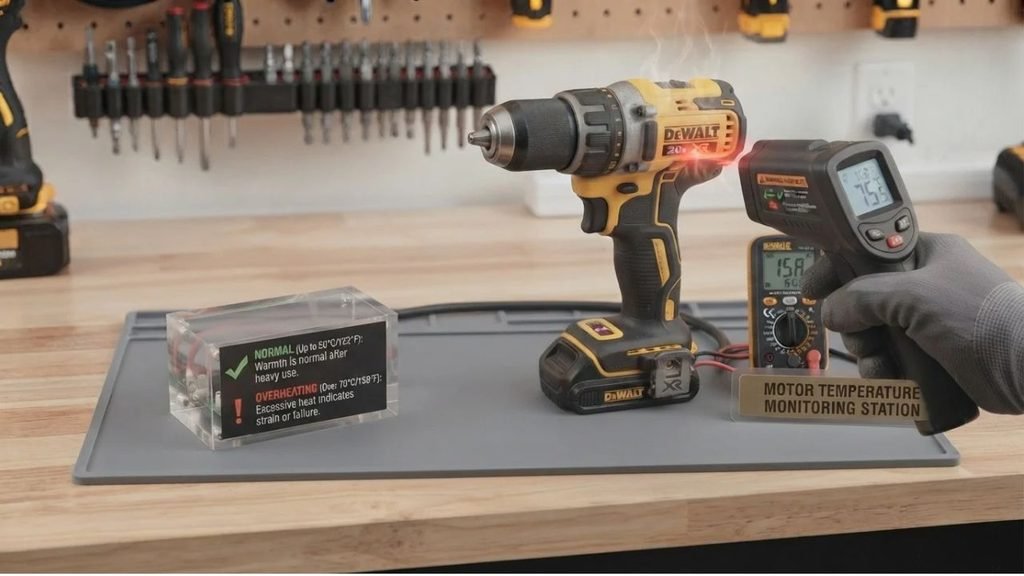
Some warmth is normal.
Electric motors, gears, batteries, and bearings all create heat during operation. A drill may feel noticeably warm after:
- Drilling several holes
- Driving many screws
- Using a large bit
- Drilling through metal
- Using a hole saw
- Mixing heavy material
- Working continuously
Heat becomes more concerning when the drill becomes uncomfortable to hold, repeatedly shuts down, smells burnt, loses significant power, or becomes hot very quickly under a light workload.
The exact operating temperature varies among drill models, so there is no single temperature that defines overheating for every tool.
Stop the Drill Before Troubleshooting
The first step is always to stop using the tool.
Continuing to operate an overheated drill can increase damage to the:
- Motor windings
- Bearings
- Carbon brushes
- Gearbox
- Battery
- Trigger switch
- Electronic speed controller
- Wiring and insulation
For a cordless drill, remove the battery if it can be handled safely.
For a corded drill, unplug it from the outlet.
If the tool is smoking, visibly damaged, or extremely hot, avoid handling it unnecessarily until it is safe to do so.
Let the Drill Cool Naturally
Place the drill on a nonflammable, dry surface with good airflow around it.
Let it return to a normal temperature before testing it again.
Do not try to cool a drill rapidly with:
- Water
- Ice
- A refrigerator
- A freezer
- Wet towels
Rapid cooling can introduce moisture or condensation into electrical components and may damage the tool.
A fan can help circulate room-temperature air around the drill, but avoid blowing large amounts of dust directly into the ventilation openings.
Check the Drill’s Ventilation Openings
Most drills use airflow to remove heat from the motor.
If the ventilation slots are blocked by sawdust, drywall dust, metal particles, or other debris, heat can build up inside the housing.
Inspect the vents around the motor area.
How to clean drill vents
- Disconnect the drill from power.
- Let it cool fully.
- Use a soft brush to remove loose debris.
- Wipe the housing with a dry cloth.
- Avoid pushing dirt deeper into the tool.
Do not insert metal objects through ventilation openings.
If dust has accumulated heavily inside the drill, professional internal cleaning may be appropriate.
Check Whether the Drill Bit Is Dull
A dull drill bit is a common cause of overheating.
Instead of cutting efficiently, a worn bit creates more friction and forces the motor to work harder.
Signs of a dull bit include:
- Slow drilling
- Excessive pressure required
- Increased heat at the bit
- Smoke or discoloration
- Poor hole quality
- The drill bogging down frequently
Replace or sharpen the bit when appropriate.
A fresh bit can dramatically reduce the load on the drill.
Make Sure You Are Using the Correct Bit
Using the wrong bit for the material can also generate excessive heat.
For example:
- Wood requires suitable wood or general-purpose bits.
- Metal usually requires appropriate metal-cutting drill bits.
- Masonry requires masonry bits and, where suitable, hammer action.
- Tile and glass require specialized bits.
Trying to force an unsuitable bit through hard material makes the drill work unnecessarily hard.
Reduce Excessive Pressure
Pressing harder does not always make a drill cut faster.
Too much pressure can slow the drill motor, increase current draw, create additional friction, and cause overheating.
Apply enough force to keep the bit cutting, but let the drill and bit do most of the work.
If you have to push extremely hard, check whether:
- The bit is dull.
- The bit is inappropriate for the material.
- The drill is in the wrong gear.
- The drill is undersized for the job.
Use the Correct Drill Speed
Different drilling tasks work better at different speeds.
In general, larger drill bits usually need lower rotational speeds than small bits.
Very high RPM with a large bit can generate unnecessary heat.
Metal drilling is especially sensitive to excessive speed because friction can quickly heat both the bit and workpiece.
A variable-speed drill allows you to adjust speed to the task.
Start at a controlled speed and increase only as needed.
Use the Correct Gear
Many cordless drills have a two-speed gearbox.
Low Gear
Low gear usually provides:
- Lower RPM
- Higher torque
It is useful for demanding operations such as:
- Driving large screws
- Using larger bits
- Hole saws
- High-load drilling
High Gear
High gear provides:
- Higher RPM
- Lower available torque
It is often more appropriate for smaller bits and lighter drilling.
Trying to perform a high-torque task in high gear can make the motor struggle and produce more heat.
Check the Clutch Setting
A cordless drill-driver usually has an adjustable clutch.
The clutch limits how much torque is applied when driving screws.
If the clutch setting is unnecessarily high, the drill may continue applying heavy torque after a screw has reached its required depth.
For screw-driving work, use the lowest clutch setting that reliably completes the job.
For drilling holes, switch to the normal drill setting if your tool provides one.
Check for a Binding Drill Bit
A drill may overheat quickly if the bit repeatedly binds or jams.
Binding occurs when the bit gets trapped in the material and the motor cannot rotate normally.
This can happen with:
- Large wood bits
- Hole saws
- Auger bits
- Thick metal
- Deep holes
- Poor chip removal
If a bit binds, release the trigger immediately.
Do not keep the motor stalled.
A stalled motor can draw high current and generate heat very quickly.
Clear Chips From Deep Holes
Material removed by the drill bit needs somewhere to go.
When drilling a deep hole, chips can accumulate around the flutes of the bit. This increases friction and makes the motor work harder.
Periodically withdraw the bit while it is rotating slowly to clear debris.
For metal drilling, use an appropriate cutting fluid when recommended for the material and bit type.
Check the Battery on a Cordless Drill
Sometimes the heat is coming primarily from the battery rather than the drill motor.
A cordless-tool battery may become warm during demanding use, but unusual heat can indicate:
- Heavy current draw
- Battery aging
- Internal cell problems
- Poor electrical contacts
- Extreme ambient temperature
Remove the battery and allow it to cool naturally.
Do not immediately place a very hot battery on the charger unless the manufacturer specifically says the charger is designed to handle that condition.
Many modern chargers will delay charging automatically until the battery reaches an acceptable temperature.
Inspect the Battery for Damage
Stop using a cordless drill battery if you notice:
- Swelling
- Cracked housing
- Melted plastic
- Burn marks
- Unusual odor
- Leaking material
- Persistent excessive heat
A damaged lithium-ion battery should not be opened or repaired casually at home.
Replace it or have it evaluated by an authorized service provider.
Clean the Battery Contacts
Poor electrical connections can create resistance and heat.
Inspect the battery contacts on both the battery and drill.
If they are dirty:
- Remove the battery.
- Let everything cool.
- Wipe the contacts with a clean, dry cloth.
- Use a soft brush for loose debris.
- Make sure the contacts are dry before reinstalling the pack.
Never bridge battery terminals with a metal tool.
Check for Worn Motor Brushes
Some drills use carbon brushes to transfer electrical current to the rotating motor.
Brushes gradually wear down.
Possible signs of worn brushes include:
- Excessive sparking
- Intermittent operation
- Reduced power
- Burning smell
- Rough motor operation
- Overheating
Some drills have externally accessible brush caps, while others require the housing to be opened.
If the manufacturer provides a user-replaceable brush procedure, follow it carefully and use the correct replacement parts.
For sealed tools, professional servicing is generally a better option.
Brushless Drills Can Overheat Too
A brushless drill does not have carbon brushes, but it can still become overheated.
Possible causes include:
- Excessive load
- Blocked cooling vents
- Damaged bearings
- Electronic controller problems
- Motor winding damage
- Battery problems
- Repeated motor stalling
Brushless electronics often include temperature and overload protection that shuts the drill down before serious damage occurs.
If the drill works again after cooling, the protection system may have activated because the tool was overloaded.
Frequent shutdowns during normal work should still be investigated.
Check for Bearing Problems
The motor and gearbox rely on bearings or bushings to rotate smoothly.
A worn or damaged bearing can increase friction and create heat.
Possible bearing symptoms include:
- Grinding noises
- Squealing
- Rough rotation
- Excessive vibration
- Side-to-side chuck movement
- Heat developing quickly
Disconnect the drill and rotate the chuck manually.
Some mechanical resistance from the gearbox is normal, but grinding, severe roughness, or obvious looseness can suggest an internal mechanical issue.
Bearing replacement usually requires disassembling the drill.
Inspect the Chuck
A damaged chuck can increase load or create vibration.
Check whether:
- The jaws move smoothly.
- The bit is centered.
- The chuck rotates normally.
- The bit is securely tightened.
A badly bent drill bit can also make the chuck and bearings vibrate, increasing heat and reducing drilling efficiency.
Replace bent bits immediately.
Could the Gearbox Be Causing the Heat?
Yes.
The gearbox transfers motor power to the chuck. Problems such as worn gears, damaged bearings, poor lubrication, or broken internal components can increase resistance.
Gearbox problems may produce:
- Grinding sounds
- Clicking
- Difficulty changing gears
- Reduced speed
- Irregular chuck rotation
- Heat near the front of the drill
Internal gearbox repair is usually beyond basic beginner maintenance.
Why Does My Drill Smell Like It Is Burning?
A burning smell may come from overheated dust, motor brushes, insulation, wiring, or internal electronics.
A slight odor during unusually demanding work can sometimes occur, particularly in a new tool, but a strong or persistent burnt smell is a warning sign.
Stop using the drill immediately if the smell is accompanied by:
- Smoke
- Loss of power
- Visible sparking
- Melting
- Repeated shutdowns
- Extreme heat
Have the tool inspected before using it again.
Why Is My Drill Smoking?
Smoke is not normal.
Disconnect the drill from power immediately.
Possible causes include:
- Burned motor windings
- Damaged brushes
- Electrical short
- Overheated wiring
- Failed electronics
- Severe mechanical overload
Do not repeatedly test a smoking drill.
Professional repair or replacement is appropriate.
Why Does My Drill Stop When It Gets Hot?
Many modern cordless drills have thermal protection.
When internal temperature reaches a protective threshold, the electronics may temporarily shut down the motor.
After the drill and battery cool, the tool may work normally again.
A single shutdown during extremely demanding work does not necessarily indicate a defective drill.
Repeated shutdowns during ordinary drilling may indicate:
- An aging battery
- Blocked ventilation
- Excessive friction
- Motor problems
- Electronic faults
How Long Should You Let an Overheated Drill Cool?
There is no universal cooling time because drill size, battery type, ambient temperature, and the amount of heat vary.
Instead of relying on a fixed number of minutes, allow the drill to return close to normal room temperature.
The housing should no longer feel unusually hot before you test the tool again.
Avoid restarting the drill simply because a few minutes have passed if it is still very warm.
Test the Drill After It Cools
Once the drill has fully cooled and you have corrected any obvious problem, test it briefly.
For a cordless drill:
- Reinstall a known-good battery.
- Remove the drill bit if appropriate.
- Hold the drill securely.
- Run it at low speed without load.
- Listen for unusual sounds.
The motor should sound smooth and consistent.
Stop immediately if you notice:
- Strong sparking
- Grinding
- Smoke
- Burning odor
- Rapid heating
- Irregular speed
These symptoms suggest an internal fault.
Corded Drill Overheating vs. Cordless Drill Overheating
Both types can overheat, but their likely causes differ slightly.
| Problem | Corded Drill | Cordless Drill |
| Blocked vents | Common | Common |
| Dull bit | Common | Common |
| Excessive load | Common | Common |
| Battery overheating | Not applicable | Common |
| Battery contact problems | Not applicable | Possible |
| Worn brushes | Possible | Possible |
| Electronic protection shutdown | Some models | Very common |
| Damaged power cord | Possible | Not applicable |
Troubleshooting should always begin with the simplest external causes before assuming the motor has failed.
Common Mistakes That Cause Drill Overheating
Holding the Trigger While the Motor Is Stalled
A stalled motor can draw heavy current without turning.
Release the trigger immediately when the bit locks.
Drilling Continuously Without Breaks
A drill designed for intermittent household work may overheat during prolonged heavy-duty operation.
Give the tool reasonable cooling breaks during demanding jobs.
Using Dull Bits
A dull bit increases friction and load.
Replace or sharpen worn bits.
Using the Wrong Speed
Large bits at excessive RPM can create significant heat.
Match speed to the bit and material.
Covering the Air Vents
Your hands can sometimes block cooling openings depending on how you hold the tool.
Keep ventilation slots unobstructed.
Using an Undersized Drill for Heavy Work
A small drill may struggle with large hole saws, thick steel, large auger bits, or continuous mixing.
Use a drill designed for the required workload.
How to Prevent Your Drill From Overheating
Preventing overheating is easier than repairing heat damage.
Use these habits:
- Keep the drill vents clean.
- Use sharp drill bits.
- Match the bit to the material.
- Select the proper gear.
- Use an appropriate speed.
- Avoid unnecessary pressure.
- Release the trigger if the bit binds.
- Clear chips from deep holes.
- Allow cooling breaks during demanding work.
- Use batteries designed for the drill.
- Replace damaged batteries.
- Do not exceed the tool’s intended workload.
Good drilling technique reduces stress on both the motor and battery.
When Should You Repair or Replace the Drill?
Professional repair may be worthwhile if the drill is relatively new, expensive, or part of a battery platform you already use.
Consider professional service if the drill:
- Overheats during light work
- Produces smoke
- Has a persistent burnt smell
- Makes grinding or squealing noises
- Has excessive sparking
- Frequently shuts down
- Has damaged wiring
- Has a failing trigger or electronic controller
For a low-cost, heavily worn drill, replacement may be more economical than repairing the motor or gearbox.
Check the manufacturer’s warranty before opening the tool.
FAQs About How to Fix an Overheated Drill
Can an overheated drill be permanently damaged?
Yes.
Excessive heat can damage motor windings, insulation, electronic components, bearings, and batteries.
If the drill cools and operates normally afterward, permanent damage may not have occurred, but repeated overheating can shorten its service life.
Should I put an overheated drill in the freezer?
No.
Rapid cooling can cause condensation inside the tool and expose electrical components to moisture.
Let the drill cool naturally at room temperature.
Why does my cordless drill get hot so fast?
Rapid heating can result from a dull bit, heavy load, incorrect gear, blocked vents, battery problems, mechanical friction, or an internal motor fault.
If it becomes hot during light work, stop using it and investigate the cause.
Can a dull drill bit overheat a drill?
Yes.
A dull bit requires more force and motor power to cut the same material. The additional load creates more heat in both the drill and bit.
Why does my drill overheat when drilling metal?
Metal drilling can generate considerable friction.
Excessive speed, a dull bit, insufficient chip removal, too much pressure, or lack of suitable cutting fluid can increase heat.
Use the proper bit and drilling technique for the metal.
Is it normal for a cordless drill battery to get hot?
A battery may become warm during heavy use.
However, extreme heat, swelling, burning odors, or persistent overheating are not normal and may indicate battery damage.
Can blocked air vents damage a drill?
Yes.
Restricted airflow reduces the drill’s ability to remove heat from the motor.
Keep ventilation openings clear of dust and debris.
Why does my drill work again after cooling down?
The drill or battery may have activated a thermal protection system.
Once the temperature falls, the electronics can allow the tool to operate again.
If this happens frequently during normal use, investigate the underlying cause.
Conclusion
Knowing how to fix an overheated drill begins with stopping the tool before excessive heat causes additional damage. Disconnect the power, let the drill cool naturally, clean its ventilation openings, inspect the bit, reduce unnecessary pressure, and make sure you are using the correct speed and gear.
Many overheating problems come from heavy workload, dull bits, blocked airflow, or incorrect drilling technique. However, repeated overheating during light work, smoke, burning smells, unusual sparking, or grinding noises can indicate an internal motor, bearing, battery, or electronic problem.
Correct the cause before returning the drill to regular use. If the tool continues to overheat after basic troubleshooting, professional repair or replacement is safer than continuing to operate a potentially damaged drill.