
How Long Do Sanding Belts Last? Lifespan, Signs & Replacement
A sanding belt can last anywhere from a few minutes of aggressive stock removal to many hours of lighter sanding. There is no fixed lifespan because belt life changes with abrasive grain, grit, workpiece material, sanding pressure, heat, dust extraction, machine condition, and storage. Replace the belt when cutting speed or finish quality drops noticeably.
A belt used on clean hardwood with light pressure may stay sharp through several projects. The same belt can wear quickly when sanding paint, resinous wood, rust, soft metal, or a surface that loads the abrasive with debris.
Modern abrasive construction also makes a large difference. Conventional aluminum-oxide belts are common and affordable, while ceramic and engineered abrasives can retain their cutting action much longer in demanding applications. Some engineered abrasive designs can last several times longer than conventional products under comparable industrial conditions.
For anyone asking how long do sanding belts last, it is more useful to judge performance than count minutes. A belt is ready for replacement when it cuts slowly, needs extra pressure, burns the workpiece, becomes heavily clogged, leaves an uneven finish, loses abrasive grain, or develops physical damage.
Storage matters before the belt even reaches the sander. Abrasive manufacturers commonly recommend moderate temperatures and controlled humidity because excessive moisture or dryness can distort the backing, weaken joints, increase loading, and shorten usable belt life.
The sections below explain realistic belt lifespan, what shortens it, differences between wood and metal sanding, grain choices, signs of wear, cleaning, storage, and ways to get more work from each belt without sacrificing finish quality or safety.
How Long Do Sanding Belts Last?
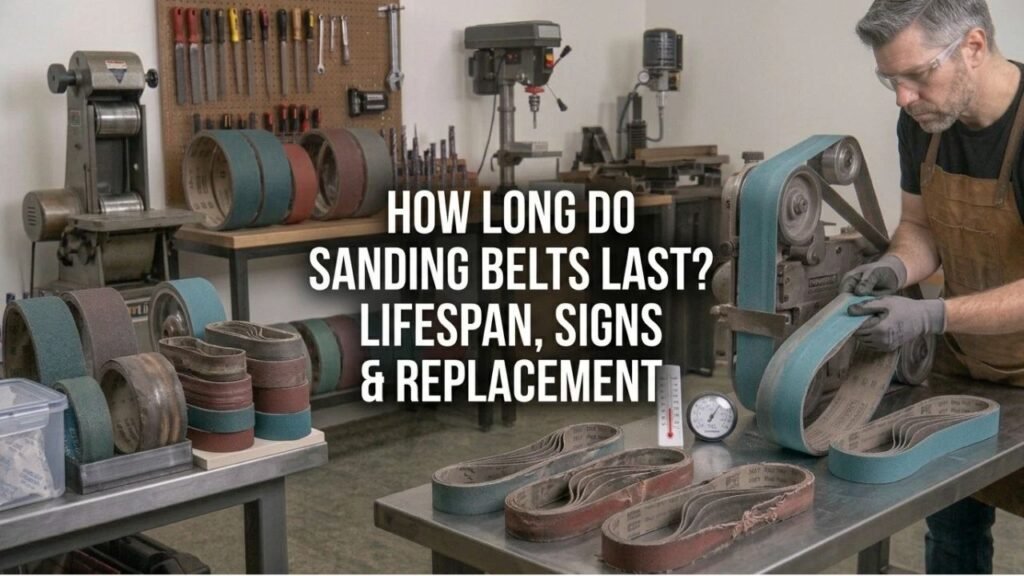
There is no standard number of hours that applies to every sanding belt.
Abrasive belts wear according to the amount and type of work they perform.
Light Wood Sanding
A quality belt used for light sanding on clean wood can remain usable for several hours of accumulated sanding time.
It may also last through multiple small woodworking projects if you:
- Use the correct grit
- Avoid excessive pressure
- Keep dust extraction working
- Sand clean material
- Store the belt properly between jobs
The belt does not need replacement simply because it has been used once.
Performance is the better indicator.
Heavy Stock Removal
Coarse sanding removes material quickly and places more load on the abrasive.
If you are flattening rough lumber, removing thick finish, leveling joints, or reshaping an edge, a belt may lose its sharp cutting action much sooner.
Heavy pressure and heat can shorten life further.
A belt that once removes material quickly but begins sliding over the surface with little cutting action is nearing the end of its useful life.
Metal Sanding
Metal grinding can be much harder on an abrasive belt than light woodworking.
Heat, scale, welds, sharp edges, and high contact pressure increase abrasive wear.
The life of the belt depends strongly on grain type.
Ceramic and zirconia belts are often chosen for tougher metal work because they maintain cutting performance longer than basic aluminum oxide in many high-pressure applications.
Paint and Finish Removal
Paint, varnish, adhesive, resin, and similar coatings can fill the spaces between abrasive grains.
This condition is called loading.
A loaded belt may stop cutting well even though much of the abrasive grain has not physically worn away.
For coating removal, the belt may need cleaning or replacement much sooner than one used on bare wood.
Key Takeaway: Sanding-belt life can range from minutes during harsh grinding or coating removal to many hours of lighter sanding. Cutting performance and belt condition provide a better replacement guide than elapsed time.
What Determines Sanding Belt Lifespan?
Several factors work together to determine how long a belt stays usable.
Abrasive Grain Type
The abrasive material bonded to the belt has a major effect on wear.
Common grain types include:
- Aluminum oxide
- Zirconia alumina
- Ceramic alumina
- Silicon carbide
Each behaves differently.
Aluminum oxide is common for general wood and metal sanding.
Zirconia is tougher and often selected for heavier metal removal.
Ceramic abrasive is designed for demanding grinding and can maintain its cutting action for a long time when used with suitable pressure.
Silicon carbide cuts sharply and is used for certain finishing and specialty applications.
Grit Size
Coarse belts such as 36, 40, or 60 grit remove material quickly.
Fine belts such as 120, 180, or 220 grit remove less material per pass and are used later in the sanding sequence.
A coarse belt doing aggressive work may encounter more heat and physical stress.
Fine belts can load quickly when used too early on rough or coated material.
Using the wrong grit for the job often shortens belt life.
Material Being Sanded
Different materials wear abrasives at very different rates.
Clean softwood is not the same as:
- Hardwood
- Resinous wood
- Painted lumber
- MDF
- Stainless steel
- Mild steel
- Aluminum
- Welds
- Rusted metal
Resin, paint, and some soft metals can clog the belt.
Hard metals and welds can wear abrasive grains quickly.
Sanding Pressure
Pushing harder does not always remove material faster.
Excessive pressure can:
- Create more heat
- Wear abrasive grains faster
- Increase belt loading
- Damage the backing
- Stress the belt joint
- Increase motor load
Let the abrasive do the cutting.
If you need to press much harder than when the belt was new, the belt may already be dull.
Belt Speed
Higher surface speed can increase material removal, but it also increases heat and abrasive stress.
Use the belt speed recommended for the abrasive and workpiece.
On variable-speed machines, reducing speed can sometimes help with heat-sensitive materials or coatings.
Dust Extraction
Dust left between the abrasive and workpiece interferes with cutting.
Good extraction removes loose material before it fills the abrasive surface.
Mirka identifies poor dust removal and belt clogging as common causes of short belt life in wide-belt sanding.
Key Takeaway: Grain type, grit, workpiece material, pressure, speed, and dust removal all affect lifespan. Correct abrasive selection often extends belt life more than simply buying a more expensive belt.
How Do You Know When a Sanding Belt Is Worn Out?
A sanding belt does not need to snap before it should be replaced.
Performance usually declines first.
Sanding Takes Much Longer
A fresh belt removes material quickly with moderate pressure.
A worn belt requires more passes to achieve the same result.
If the job suddenly takes much longer while the machine is operating normally, inspect the abrasive.
You Need More Pressure
Increasing hand pressure to make a dull belt cut is a common mistake.
That extra pressure creates heat and places more stress on the machine.
If normal pressure no longer produces a good cutting action, replacing the belt is usually better than forcing it.
The Workpiece Starts Burning
Burn marks on wood can develop when a dull or clogged abrasive generates excess friction.
Other causes can include:
- Slow movement
- Too much pressure
- High belt speed
- Resin buildup
Inspect the belt before changing your sanding technique.
The Belt Is Heavily Loaded
Look closely at the abrasive surface.
If dust, resin, paint, metal, or adhesive fills the spaces between grains, the belt may feel smoother than it should.
A cleaning stick can restore some belts when the material is removable.
A belt packed with hardened finish or adhesive may need replacement.
Abrasive Grain Is Missing
Large smooth patches indicate abrasive loss.
Once enough grain is gone, the backing can no longer cut evenly.
That can also produce inconsistent scratch patterns.
The Joint Is Damaged
Inspect the belt seam before installation and during use.
Stop using a belt if the joint begins:
- Separating
- Cracking
- Lifting
- Tearing
Do not attempt to get a few more minutes from a damaged joint.
The Backing Is Torn or Creased
A belt with cuts, edge tears, punctures, severe creases, or cracks should be removed.
Abrasive manufacturers warn against running belts that appear brittle, torn, curled, or otherwise damaged.
Key Takeaway: Replace a belt when cutting slows, pressure requirements increase, burning begins, loading becomes severe, abrasive grain disappears, or the backing or joint shows damage.
How Long Do Sanding Belts Last on Wood?
Woodworking belt life varies widely because wood species and surface condition matter.
Clean Bare Wood
A quality belt can last through a substantial amount of sanding on clean unfinished wood.
Dust extraction and moderate pressure usually extend its life.
Use the whole sanding area rather than repeatedly working a tiny part of the belt.
Resinous Wood
Pine and other resinous species can load abrasive belts more quickly.
Heat softens resin and encourages it to stick between abrasive grains.
Reducing pressure and cleaning the belt periodically can extend useful life.
Painted or Varnished Wood
Old paint and finish often shorten belt life.
The coating can soften from friction and smear across the abrasive.
Starting with a belt designed for coating removal may work better than sacrificing a standard fine-grit belt.
MDF and Engineered Wood
MDF generates fine dust that can fill an abrasive surface quickly if extraction is weak.
Keep the dust-collection system clear and use an abrasive suited to the material.
How Long Do Sanding Belts Last on Metal?
Metal sanding places different demands on the belt.
There is no fixed metal-sanding lifespan because mild steel, stainless steel, aluminum, rust, and weld grinding create different wear patterns.
Mild Steel
Aluminum oxide can work for general steel sanding, but zirconia or ceramic products are often chosen for heavier removal.
For frequent steel work, belt quality and grain type strongly affect replacement frequency.
Stainless Steel
Stainless steel can generate substantial heat during grinding.
Using an abrasive designed for stainless work and maintaining proper speed and pressure reduces unnecessary belt wear.
Weld Grinding
Removing welds is aggressive work.
The belt contacts a small raised area under significant pressure, creating heat and grain wear.
Ceramic abrasives can be a strong option for this type of work because their grain structure is designed to continue exposing fresh cutting edges during use.
Aluminum
Aluminum can load an abrasive rapidly.
The soft metal can fill spaces between grains and reduce cutting action.
Use an abrasive designed for nonferrous metal when possible and avoid excessive heat.
Key Takeaway: Metal can shorten belt life faster than light woodworking, especially during weld grinding. Ceramic and zirconia belts often provide longer service in demanding metal-removal jobs.
Do Ceramic Sanding Belts Last Longer?
Often, yes.
Ceramic abrasive is designed for demanding stock removal and grinding.
Under suitable operating conditions, the grain continually exposes fresh cutting surfaces as it wears.
Norton reports that some engineered abrasive belt designs can provide roughly three to ten times the life of conventional abrasive belts in appropriate industrial applications.
That does not mean every ceramic belt will last ten times longer on every sander.
Actual results depend on:
- Material
- Contact pressure
- Belt speed
- Machine power
- Grit
- Cooling
- Belt construction
Ceramic belts tend to make the most sense when abrasive cost is offset by longer cutting life and faster material removal.
For occasional light woodworking, a standard aluminum-oxide belt may still be the more sensible choice.
Can You Clean a Sanding Belt to Make It Last Longer?
Yes, if the belt is loaded rather than truly worn out.
Use a Belt Cleaning Stick
A rubber abrasive-cleaning stick can remove sawdust and some residue from a running sanding belt.
Follow the sander and cleaning-product instructions.
Keep hands away from the moving abrasive and use the cleaning accessory only in the recommended manner.
Cleaning Cannot Restore Dull Abrasive Grain
Cleaning removes debris.
It does not sharpen worn abrasive.
If the belt is clean but cuts slowly, the grains may simply be dull.
Replace it.
Hardened Coatings May Not Clean Well
Paint, adhesive, resin, and melted material can bond tightly to the belt.
If cleaning does not restore the open abrasive surface, replacing the belt may save more time than repeatedly trying to recover it.
How Can You Make Sanding Belts Last Longer?
Small changes in sanding technique can reduce belt consumption.
Choose the Right Grit
Do not start too fine.
Trying to remove heavy material with fine grit takes longer and causes extra heat.
Use a logical grit sequence.
For example, a rough surface might progress through increasingly finer grits rather than jumping straight to a finishing belt.
Use Moderate Pressure
Let the abrasive cut.
Pushing excessively can make the belt hotter without increasing material removal enough to justify the wear.
Keep the Sander Moving
Holding the belt in one spot increases heat and can damage both the belt and workpiece.
Move steadily across the surface.
Keep Dust Extraction Clear
Empty dust bags or collectors and check extraction ports for blockage.
Good airflow around the sanding area reduces loading.
Clean Loaded Belts Early
Do not wait until the abrasive surface is completely packed.
Removing loose buildup before it becomes severe can preserve cutting action.
Avoid Sanding Nails and Sharp Metal
Hidden screws, nails, and sharp edges can tear a belt or strip abrasive from a small area instantly.
Inspect reclaimed lumber before sanding.
Use the Correct Belt Tracking
A belt rubbing against the side of the sander can damage its edge quickly.
Adjust tracking according to the machine instructions.
A belt that will not track correctly may indicate a machine problem rather than a defective abrasive.
Key Takeaway: Correct grit, moderate pressure, steady movement, good dust extraction, cleaning, and proper tracking can extend belt life without sacrificing sanding speed.
Does Sanding Belt Storage Affect Lifespan?
Yes.
Coated abrasive belts contain backing materials, adhesives, and joints that react to temperature and humidity.
Humidity Matters
Norton recommends storing coated abrasive belts around 40–50% relative humidity and roughly 60–80°F.
Klingspor gives a similar preferred range and notes that excessive humidity can cause loading, backing distortion, and premature grit loss.
Very dry conditions can make some belt materials brittle.
Keep Belts Away From Concrete Floors
Abrasive manufacturers advise storing belts above concrete floors and away from damp locations.
Concrete can expose stored products to moisture.
Avoid Direct Heat and Sunlight
Do not store belts next to:
- Radiators
- Furnaces
- Steam pipes
- Sunny windows
- Other strong heat sources
Large temperature swings can affect the backing and adhesive.
Keep Them in Their Packaging
Original packaging protects belts from dirt and environmental changes.
For long storage periods, this is better than throwing loose belts into an open workshop drawer.
Do Not Use Damaged Stored Belts
Discard belts that have become:
- Brittle
- Severely curled
- Cracked
- Torn
- Kinked
A belt may look unused yet be unsafe if poor storage has damaged its backing or joint.
Key Takeaway: Moderate temperature and humidity, dry storage, and original packaging preserve belt condition. Poor storage can shorten life before the abrasive ever touches a workpiece.
Do Sanding Belts Expire?
Sanding belts do not have a simple expiration date like food, but adhesives and backing materials age.
Klingspor notes that adhesive suppliers generally warranty adhesive properties for about one year and recommends purchasing quantities that can normally be used within six to eight months.
That does not mean every belt becomes unusable after one year.
Storage conditions make a major difference.
Before installing an older belt, inspect:
- Joint
- Backing
- Edges
- Abrasive surface
- Belt shape
Do not run an old belt that has become brittle, curled, cracked, or separated at the seam.
For professional shops buying belts in bulk, stock rotation is a good practice.
Use older sound stock before newer stock rather than letting cartons sit for years.
Why Do My Sanding Belts Wear Out So Fast?
Very short belt life often points to the application or machine setup.
You Are Using the Wrong Grit
A grit that is too fine for heavy stock removal can clog and overheat quickly.
Move to a coarser belt for the early stage.
The Belt Is Clogging
Dust collection may be weak, or the material may be prone to loading.
Paint, resin, adhesive, MDF dust, and soft metals are common examples.
You Are Pressing Too Hard
High pressure increases friction and heat.
Try letting the machine’s weight and abrasive do more of the work.
The Sander Has a Tracking Problem
A belt that constantly rubs one edge can fail long before the abrasive is worn.
Check rollers, tracking adjustment, tension, and platen condition.
You Are Removing Too Much Material in One Pass
On stationary and wide-belt sanders, aggressive stock removal can overload the belt.
Mirka recommends checking machine settings, grit sequence, dust extraction, and stock-removal amount when belts show unusually short life.
Key Takeaway: Premature belt wear often comes from wrong grit, loading, excess pressure, machine tracking, poor dust extraction, or overly aggressive material removal.
Should You Replace Both Sanding Belts and Machine Parts?
Normally, you replace only the abrasive belt.
A belt that repeatedly fails in the same way may point to a sander problem.
Inspect the machine if you notice:
- Belt tearing at one edge
- Repeated joint failures
- Belt walking off the rollers
- Uneven sanding
- Chatter
- Rapid localized belt wear
Possible machine causes include:
- Damaged platen
- Worn contact wheel
- Misaligned rollers
- Bad bearings
- Tracking mechanism problems
- Incorrect tension
Correcting the machine problem prevents new belts from being damaged in the same way.
Sanding Belt Life by Application
There is no guaranteed lifespan table, but the general pattern looks like this:
| Application | Typical Belt-Life Tendency |
| Light sanding on clean wood | Longer |
| General hardwood sanding | Moderate to long |
| Heavy stock removal | Shorter |
| Paint or finish removal | Often short due to loading |
| MDF sanding | Can shorten with poor dust extraction |
| Mild-steel finishing | Varies with abrasive type |
| Weld grinding | Heavy wear |
| Stainless grinding | Heavy heat and wear |
| Aluminum sanding | Loading can shorten life |
| Properly matched ceramic belt | Often longer in demanding work |
Use this table as a comparison rather than a time guarantee.
The condition of the abrasive remains the best guide.
Conclusion
How long do sanding belts last depends far more on the work than on a fixed number of minutes or hours. A belt used gently on clean wood may last through several projects, while aggressive grinding, paint removal, resin, or metal work can wear or clog one very quickly.
The best replacement signs are slower cutting, extra pressure, heat, burn marks, heavy loading, missing abrasive, damaged edges, or a failing joint. Cleaning can restore a loaded belt, but it cannot bring dull abrasive grains back to life.
I recommend matching the abrasive grain and grit to the material, using moderate pressure, keeping dust extraction working, and storing spare belts in controlled conditions. Those habits usually give you more usable sanding from each belt while maintaining a cleaner finish.
FAQs About Sanding Belt Lifespan
How Often Should You Change a Sanding Belt?
Change the belt when it no longer cuts at a reasonable rate or when its physical condition becomes questionable.
There is no set replacement interval. A belt can remain useful across several projects or become unusable during one demanding job.
How Do I Know If My Sanding Belt Is Dull?
A dull belt removes material slowly and may require more pressure than it did when new.
You may also notice extra heat, wood burning, or a polished-looking abrasive surface even after the belt has been cleaned.
Can You Reuse Sanding Belts?
Yes.
A belt can be removed and used again if the abrasive still cuts well and the backing, edges, and joint remain undamaged.
Store removed belts in a dry, temperature-controlled location rather than folding or crushing them.
Do Ceramic Sanding Belts Last Longer Than Aluminum Oxide?
Ceramic belts often last longer during demanding grinding and heavy stock removal.
Engineered abrasive products can provide several times the life of conventional belts in suitable applications. For light sanding, the extra cost may not always be necessary.
Why Does My Sanding Belt Keep Clogging?
Paint, resin, adhesive, fine dust, and some soft materials can fill the spaces around abrasive grains.
Wrong grit, excess heat, and weak dust extraction can make loading worse. Clean the belt when appropriate or switch to an abrasive designed for the material.
Can You Clean a Sanding Belt Instead of Replacing It?
Yes, when debris is the main problem.
A belt-cleaning stick can remove some sawdust and residue. If the abrasive grains are already dull or the belt is physically damaged, cleaning will not restore it.
How Long Can Unused Sanding Belts Be Stored?
There is no single hard expiration date, but storage affects the backing and adhesives.
Keep belts in their original packaging in a dry area with moderate temperature and humidity. Inspect older belts carefully before use and discard any that are brittle, curled, cracked, torn, or separating.
Is It Safe to Use a Sanding Belt With a Small Tear?
No.
Remove a belt with a tear, cut, cracked edge, damaged joint, puncture, or severe crease. Abrasive-belt manufacturers recommend replacing damaged belts rather than continuing to run them at operating speed.