How to Use an Air Compressor: Complete Beginner’s Guide
Learning how to use an air compressor can save time on many home, garage, and workshop projects. From inflating tires to powering nail guns, an air compressor is one of the most useful tools a homeowner can own.
Over the years, I have used air compressors for automotive work, woodworking, and general maintenance. The biggest lesson I learned is that proper setup and safety matter just as much as the task itself. Once you understand the basics, using an air compressor becomes easy and reliable.
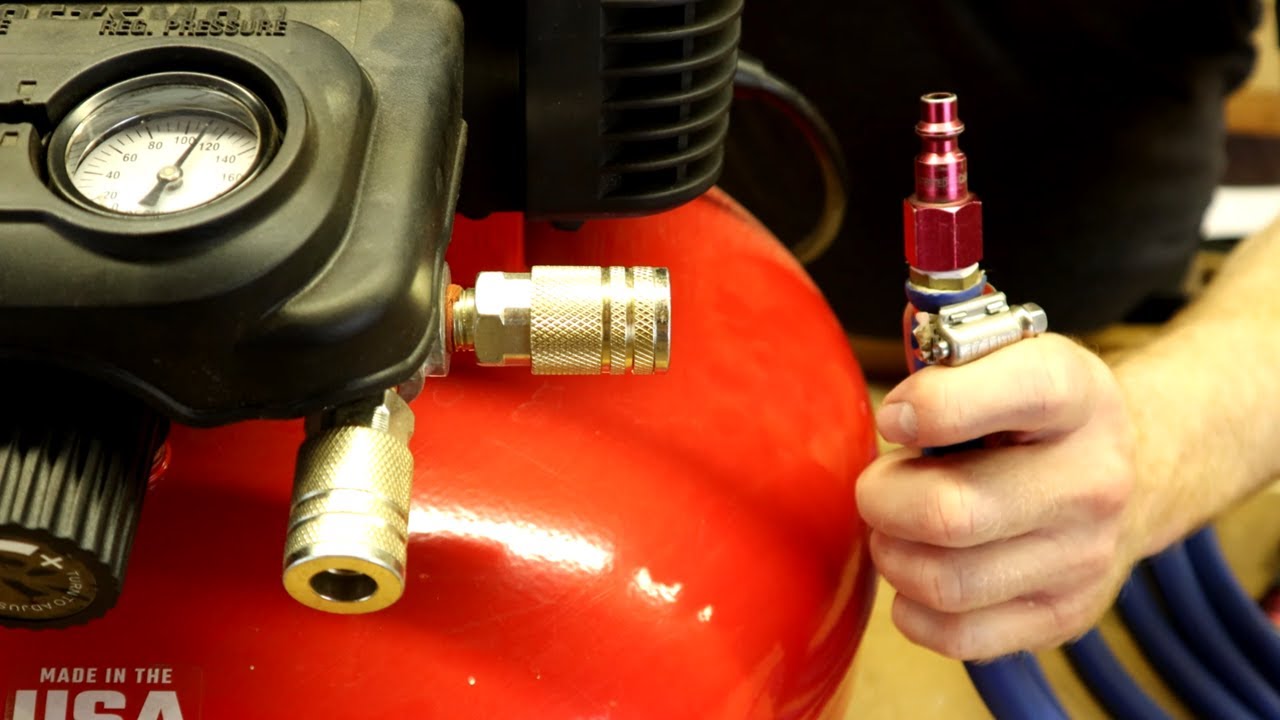
What Is an Air Compressor and How Does It Work?
An air compressor takes in air and stores it in a pressurized tank. The stored air can then power tools, inflate objects, or assist with cleaning tasks.
When learning how to use an air compressor, it helps to understand that pressure is measured in PSI, while airflow is measured in CFM. Both values determine which tools the compressor can operate effectively.

- ✦ PSI
Measures air pressure delivered by the compressor.
- ✦ CFM
Measures the volume of air the compressor supplies.
- ✦ Tank
Stores compressed air for future use.
Common Uses for Air Compressors
Air compressors are used in garages, construction sites, workshops, and homes. They can handle tasks that would otherwise require significant manual effort.
- ✦ Inflation
Inflate tires, sports equipment, and air mattresses.
- ✦ Power Tools
Run nail guns, impact wrenches, and paint sprayers.
Safety Steps Before Using an Air Compressor
Before learning how to use an air compressor for any project, safety should come first. Compressed air stores a large amount of energy and must be handled carefully.
Wear safety glasses and hearing protection whenever the compressor is running. Keep the work area clean and free of trip hazards.

- ✦ Read the Manual
Follow the manufacturer’s instructions for your specific model.
- ✦ Inspect Equipment
Check hoses, fittings, and power cords for damage.
- ✦ Use Proper Protection
Wear eye and hearing protection during operation.
Why Safety Matters
Small issues such as a loose fitting or damaged hose can create problems under pressure. A quick inspection takes only a few minutes and can prevent accidents.
- ✦ Prevent Injuries
Protect yourself from flying debris and loud noise.
How to Set Up an Air Compressor
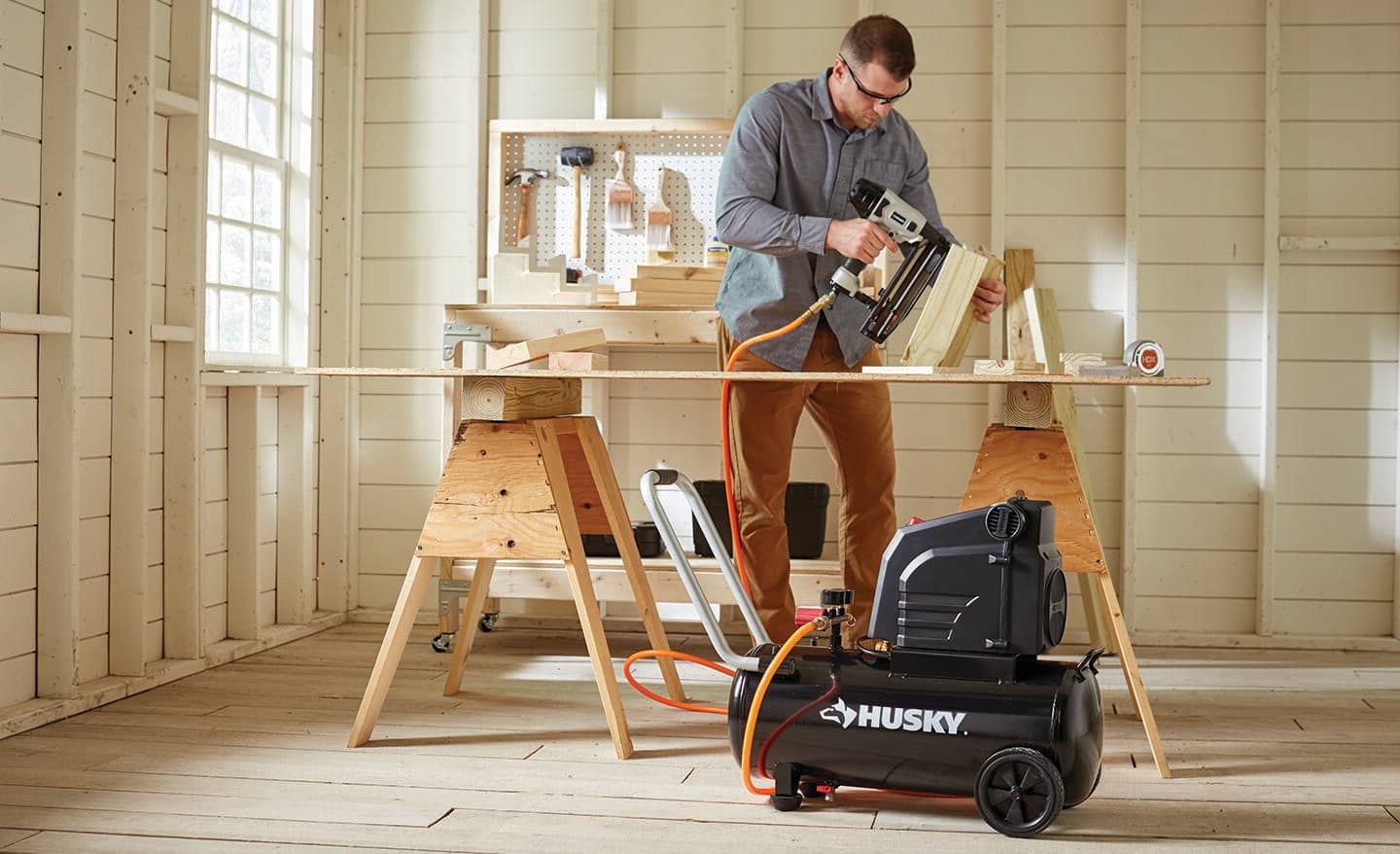
A proper setup makes it easier to learn how to use an air compressor safely and efficiently. Start by placing the compressor on a stable, level surface.
Connect the power source and ensure the tank drain valve is closed. Attach the air hose securely to the compressor outlet.
- ✦ Choose a Flat Surface
Reduce vibration and improve stability.
- ✦ Check the Drain Valve
Make sure it is fully closed before filling the tank.
- ✦ Attach the Hose
Ensure fittings lock securely into place.
Powering the Compressor
Most homeowner models plug into a standard electrical outlet. Larger units may require dedicated circuits or higher voltage connections.
- ✦ Verify Power Requirements
Use the correct outlet and extension cord if approved.
Step-by-Step Guide: How to Use an Air Compressor
The easiest way to understand how to use an air compressor is to follow a simple sequence. This process works for most portable and stationary models.
Allow the tank to fill completely before connecting and using your air-powered tool.

- ✦ Step 1
Turn on the compressor and allow the tank to fill.
- ✦ Step 2
Set the regulator to the correct PSI.
- ✦ Step 3
Connect the air tool or inflation accessory.
- ✦ Step 4
Test the tool before starting work.
- ✦ Step 5
Complete the task while monitoring pressure levels.
Adjusting Air Pressure
Different tools require different pressure settings. Always check the tool manufacturer’s recommended PSI range before use.
- ✦ Avoid Excess Pressure
Too much PSI can damage tools and materials.
Using Common Air Compressor Tools
Once you know how to use an air compressor, you can connect many different tools. Each tool has its own airflow and pressure requirements.
Check both the compressor and tool specifications to ensure compatibility.

- ✦ Tire Inflator
Adds air to vehicle tires and recreational equipment.
- ✦ Nail Gun
Speeds up woodworking and construction projects.
- ✦ Impact Wrench
Removes and installs lug nuts quickly.
- ✦ Paint Sprayer
Provides smooth and even paint application.
Matching Tools to the Compressor
Some tools need more airflow than others. A small compressor may work well for inflation but struggle with continuous-use tools such as paint sprayers.
- ✦ Check CFM Ratings
Ensure the compressor can supply enough airflow.
Common Mistakes to Avoid
Many beginners make small errors when learning how to use an air compressor. Avoiding these mistakes helps improve safety and performance.
Most problems come from incorrect pressure settings, poor maintenance, or using undersized equipment.

- ✦ Ignoring Moisture
Water buildup inside the tank can cause corrosion.
- ✦ Using Damaged Hoses
Leaks reduce performance and create hazards.
- ✦ Exceeding PSI Limits
Too much pressure can damage tools and equipment.
Avoid Rushing Setup
Taking a few extra minutes to inspect equipment often prevents hours of troubleshooting later. Good habits lead to better results.
- ✦ Perform Quick Checks
Inspect connections before every use.
Air Compressor Maintenance and Storage
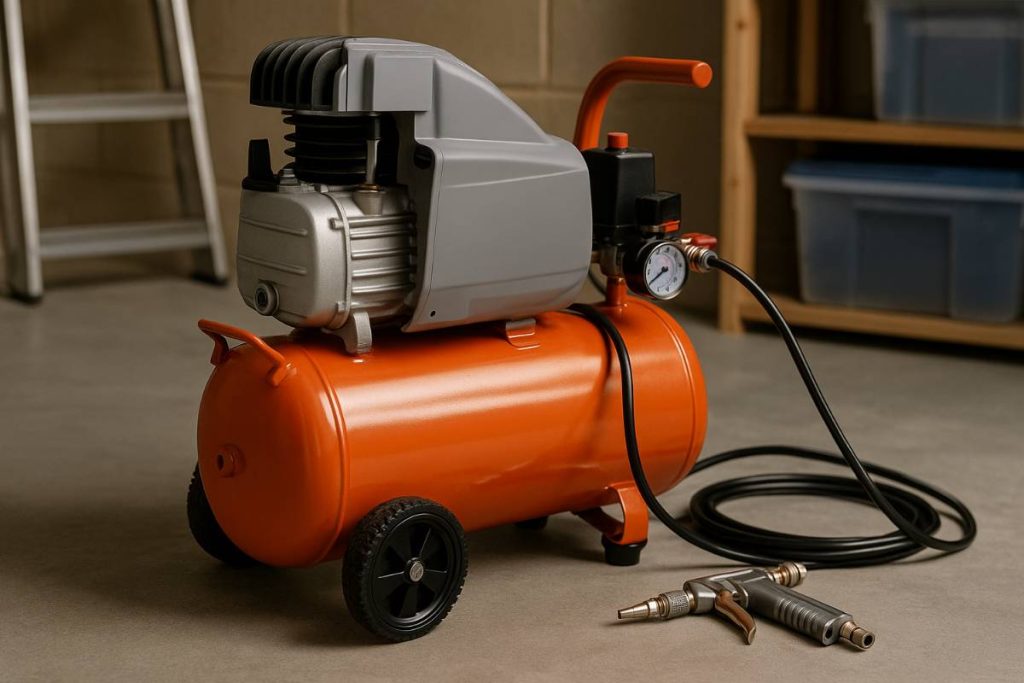
Proper maintenance is a key part of knowing how to use an air compressor correctly. A well-maintained unit lasts longer and performs better.
After each use, turn off the compressor, disconnect power, and release stored air if recommended by the manufacturer.
- ✦ Drain the Tank
Remove moisture after use to reduce rust.
- ✦ Inspect Filters
Keep air intake filters clean and unobstructed.
- ✦ Store Indoors
Protect the compressor from weather and moisture.
Long-Term Care Tips
Regular maintenance helps avoid costly repairs. Follow the service schedule listed in your owner’s manual.
- ✦ Monitor Performance
Watch for unusual noises or pressure loss.