
How Does a Wet Dry Vacuum Work as a Carpet Cleaner? 7 Safe Steps
A wet dry vacuum works as a carpet cleaner by using powerful suction to pull water, liquid spills, and loosened dirt from carpet fibers into a collection tank. It can handle wet messes that would damage a regular vacuum, but it doesn’t automatically wash, scrub, or deep-clean carpets like a dedicated carpet extractor.
So, how does a wet dry vacuum work as a carpet cleaner in everyday situations? The process is fairly simple. The motor creates suction, the hose collects moisture, and a special tank holds the dirty water until you empty it.
This makes a wet dry vacuum useful when someone spills a drink on the living room carpet or tracks muddy water through the hallway. With the right preparation, it can also help remove moisture after limited spot cleaning.
Still, there’s a catch. Using the wrong filter, adding too much water, or skipping proper drying can create bigger problems than the original spill. This guide explains how the machine works, which attachments to use, how to clean carpet safely, and when a proper carpet cleaning machine is the better choice.
Quick Answer
A wet dry vacuum cleans carpet by creating suction that pulls spilled water, cleaning liquid, and loose debris through a hose into a collection tank. To clean a spot, prepare the vacuum for wet pickup, treat the stain with a carpet-safe product if needed, extract the moisture, and dry the carpet completely. It works well for spills and limited moisture removal, but a regular wet dry vacuum cannot replace a dedicated carpet extractor for deep cleaning.
How Does a Wet Dry Vacuum Work as a Carpet Cleaner?
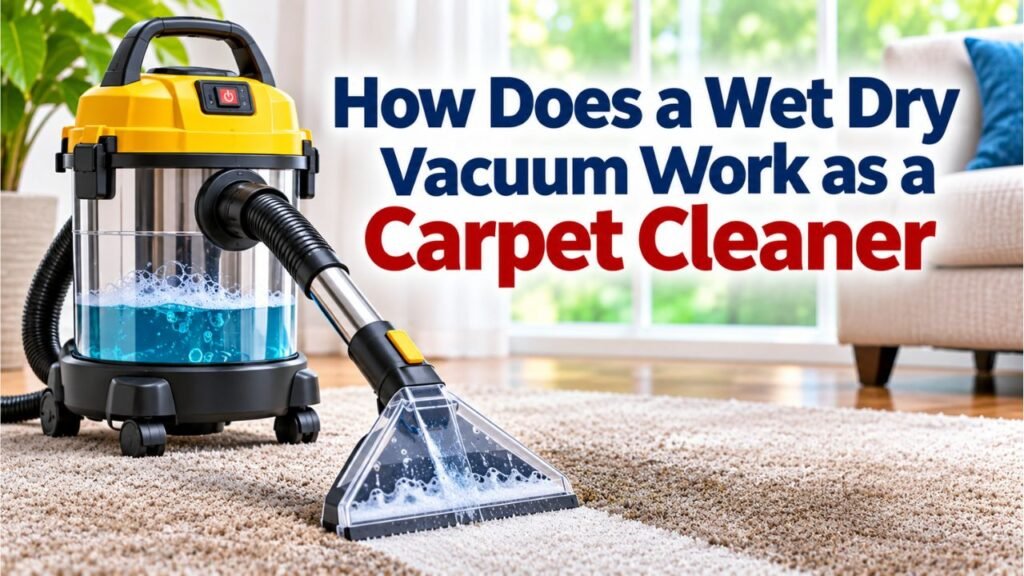
A wet dry vacuum removes moisture from carpet by creating a pressure difference that moves air and liquid through its suction hose. Unlike a regular household vacuum, it has a liquid collection system designed to handle wet debris without sending collected water directly into the motor.
The process relies on a few basic components working together.
1. The Motor Creates Suction
When you turn on the vacuum, an electric motor spins a fan inside the machine.
The fan creates a low-pressure area that pulls surrounding air through the hose and cleaning nozzle.
As air moves through the carpet fibers, it carries loose dirt and available moisture toward the collection tank.
Think of drinking through a straw. The pressure difference moves liquid upward, although a vacuum uses a motor-driven airflow system rather than your mouth.
2. The Hose Pulls in Water and Dirt
The suction nozzle draws liquid from the carpet surface and any moisture it can reach between the fibers.
A suitable carpet attachment can improve contact with the material, helping the vacuum collect more liquid.
For example, after spilling a glass of water, several slow passes may remove much of the surface moisture.
The vacuum can’t reliably pull every drop from deep carpet padding.
3. The Tank Separates Liquid From Air
Inside the vacuum, collected liquid and debris enter a large collection tank.
The tank’s design allows liquid to collect while air continues through the machine.
Wet pickup filters and internal guards help protect sensitive components.
If you’re curious about the individual components, the guide to vacuum cleaner parts and their functions explains how motors, filters, hoses, and collection chambers work together.
4. The Float Protects the Motor
Many wet dry vacuums contain a float mechanism that rises as the collection tank fills.
When the liquid reaches a certain level, the float blocks the airflow path.
You may notice the motor sound change sharply or the suction stop.
Turn off and unplug the vacuum before emptying the tank. Don’t depend on the float to shut off the motor automatically, since many models only restrict airflow.
What Can a Wet Dry Vacuum Actually Clean From Carpet?
A wet dry vacuum is best for recovering liquid spills, picking up wet debris, and removing some moisture after a small cleaning job. It can help with fresh accidents, but it cannot reliably remove deeply embedded stains, old odors, or dirt trapped beneath the carpet backing.
Here’s where it performs well and where it falls short.
| Carpet Cleaning Task | Wet Dry Vacuum Performance |
|---|---|
| Fresh water spills | Very useful for liquid recovery |
| Recently spilled drinks | Removes liquid, but may leave stains |
| Muddy water | Collects moisture and loose debris |
| Pet urine accidents | Removes some liquid, not all odor or contamination |
| Light spot cleaning | Helpful with proper preparation |
| Deep carpet shampooing | Limited without cleaning and agitation equipment |
| Old, dried stains | Usually needs separate stain treatment |
| Soaked carpet padding | Cannot reliably dry it by itself |
| Regular dry vacuuming | Possible with the correct dry setup and floor tool |
Why Suction Alone Isn’t Enough
Carpet fibers hold dirt in different ways.
Some particles sit loosely between the fibers. Others cling to oily residue or become trapped deep in the carpet pile.
Suction removes loose material, but stubborn dirt often requires a cleaning solution and gentle agitation.
Agitation means moving or brushing carpet fibers to loosen trapped soil.
A regular upright vacuum may use a powered brush roll for this task. A standard shop vacuum generally lacks that carpet-cleaning feature.
The guide explaining how a vacuum brush assembly works covers why brush movement can improve dry dirt removal.
For wet carpet cleaning, the right combination of stain treatment, controlled moisture, and extraction matters more than suction alone.
How to Clean Carpet With a Wet Dry Vacuum: 7 Safe Steps
To clean a small carpet spot using a wet dry vacuum, first confirm that the carpet and vacuum are suitable for the job. Then prepare the machine for wet pickup, treat the affected area carefully, extract the liquid, and dry the carpet completely before using it again.
Follow these steps for small, clean-water spills or ordinary household spots, not sewage, flood contamination, or extensive water damage.
Step 1: Check the Carpet and Vacuum
Start by checking the vacuum’s instruction manual.
The machine must be rated for liquid pickup, and the manufacturer should permit the intended attachment and cleaning method.
Next, check the carpet care instructions.
Some materials, including certain wool, silk, jute, and specialty rugs, require extra care or professional cleaning.
Avoid wet cleaning when the carpet label prohibits it.
If you’re dealing with an electrical appliance and standing water, don’t operate the machine from a wet location.
Safety Note: Keep the vacuum’s electrical connections dry. Never handle its plug with wet hands or operate electrical equipment while standing in water.
Step 2: Remove Loose Dirt First
For a carpet that is still dry, vacuum loose debris before applying any cleaning liquid.
Sand, crumbs, pet hair, and dust can become harder to remove once wet.
Use a suitable dry vacuum setup with the correct filter.
If the carpet already has a fresh liquid spill, skip ordinary dry vacuuming and address the moisture instead.
Never use a dry-only household vacuum to pick up liquid.
Step 3: Prepare the Vacuum for Wet Pickup
Turn the vacuum off and unplug it.
Empty the collection tank and check that its interior is clean.
Then set up the machine according to its wet pickup instructions.
Many models use a foam sleeve or a wet-compatible filter. Some require removal of a dry collection bag or cartridge filter, while others have different requirements.
The manufacturer’s wet pickup filter guidance explains why foam sleeves are used for certain machines.
Make sure the float mechanism remains properly installed.
Never remove protective motor components simply to increase suction.
Step 4: Blot the Spill and Treat the Stain
Use a clean white towel to absorb excess liquid before vacuuming.
Blot from the outside of the stain toward the center to reduce spreading.
Don’t rub aggressively. That can push soil deeper or damage carpet fibers.
For a stubborn spot, choose a cleaning product approved for the carpet material.
Test it on a small hidden area first.
Follow the product’s directions and avoid mixing cleaners.
Some wet dry vacuums aren’t designed to collect foaming detergents, so confirm that the machine permits pickup of the cleaning solution.
Step 5: Apply Only a Small Amount of Cleaning Liquid
If spot treatment is needed, apply the carpet-approved cleaner exactly as directed.
Avoid pouring large amounts of water directly onto the carpet.
Too much moisture can reach the padding and subfloor, making drying much harder.
For example, a small drink stain may need only light treatment rather than soaking an entire section.
Give the cleaning product the contact time stated on its label.
For a fresh plain-water spill, no cleaning chemical may be necessary.
Pro Tip: Treat only the affected area. More cleaning liquid doesn’t automatically mean cleaner carpet.
Step 6: Extract the Dirty Water Slowly
Attach a suitable carpet or wet pickup nozzle.
Place it against the affected carpet and move slowly across the damp area.
Use controlled, overlapping passes rather than rushing back and forth.
For a small spill, make several passes until the machine stops collecting much liquid.
Don’t force the nozzle down so hard that it damages the carpet or restricts airflow.
Keep an eye on the collection tank.
If the float closes the airflow path, switch off the machine and empty the tank.
Step 7: Dry the Carpet and Clean the Vacuum
Removing liquid is only half the job.
Place a fan near the damp area to encourage airflow. A dehumidifier can help when indoor humidity is high.
Keep furniture away from the wet carpet until it dries.
The carpet backing and padding must also be dry, not just the surface.
After finishing, unplug the vacuum, empty the tank, and wash the parts as directed by the manufacturer.
Allow the tank, hose, and wet pickup accessories to dry before storage.
Leaving dirty water inside the machine can create unpleasant odors.
Which Filter and Attachment Work Best for Carpet Cleaning?
A wet dry vacuum needs a wet-compatible filter setup and a nozzle suitable for carpet surfaces. The correct combination depends on the vacuum model and the type of liquid being collected. Using an unsuitable filter can restrict airflow or allow moisture to reach components that shouldn’t get wet.
Here’s a practical comparison.
| Component | Purpose | What to Check |
|---|---|---|
| Foam filter sleeve | Helps manage wet debris | Must fit the vacuum model |
| Wet-compatible cartridge filter | Handles liquid pickup on approved models | Follow manufacturer instructions |
| Carpet extraction nozzle | Helps collect moisture from carpet | Compatible hose connection |
| Flexible hose | Carries liquid into the tank | No cracks or blockages |
| Float mechanism | Restricts airflow when liquid rises | Moves freely and stays installed |
| Collection tank | Holds recovered liquid | Clean, empty, and undamaged |
Does a Wet Dry Vacuum Need a Special Carpet Attachment?
A carpet-compatible nozzle can make liquid recovery easier.
Some attachments have narrow openings that concentrate suction along the carpet surface.
A wide utility nozzle may collect liquid too, but it might leave more moisture behind.
An ordinary hard-floor squeegee attachment isn’t always suitable for carpet.
Check the accessory instructions instead of assuming every nozzle works on every floor.
The right attachment can make a noticeable difference, especially on low-pile carpet.
Wet Dry Vacuum vs. Carpet Cleaner: What’s the Difference?
A wet dry vacuum mainly collects liquid and debris already present on a surface, while a dedicated carpet extractor applies cleaning solution and removes the dirty liquid afterward. Both use suction, but the extractor combines several cleaning actions in one machine for more effective carpet washing.
| Feature | Wet Dry Vacuum | Carpet Extractor |
|---|---|---|
| Removes liquid spills | Yes | Usually |
| Picks up dry workshop debris | Yes, with correct setup | Generally not designed for this |
| Applies cleaning solution | Usually no | Yes |
| Scrubs carpet fibers | Usually no | Often |
| Extracts dirty cleaning water | Yes | Yes |
| Deep-cleans carpet | Limited | Designed for it |
| Removes water after leaks | Useful for accessible water | Depends on model |
| Best application | Spills and wet debris | Routine carpet washing |
Why a Carpet Extractor Cleans More Thoroughly
A carpet extractor usually combines three cleaning actions.
First, it applies a controlled amount of water or cleaning solution.
Next, brush action or other agitation helps loosen soil.
Finally, suction removes the dirty liquid into a recovery tank.
A regular wet dry vacuum performs mainly the collection step.
For example, cleaning an entire family-room carpet with a shop vacuum would require separate application and agitation, and the results could still be uneven.
For whole-room washing, a proper extractor is generally the better tool.
There are also many designs beyond shop vacuums. Comparing different vacuum cleaner types can help explain which machines suit dry dirt, wet spills, and routine floor care.
How Long Does Carpet Take to Dry After Wet Vacuuming?
Carpet drying time depends on how much water entered the fibers, the carpet thickness, room humidity, temperature, and airflow. A lightly damp surface may dry within a few hours, while soaked carpet and padding can take much longer and may need professional drying equipment.
According to carpet cleaning and drying recommendations, carpet that receives routine wet cleaning should dry within 12 hours.
That isn’t a guarantee for every cleaning job.
A small spot cleaned with minimal moisture may dry faster than thick carpeting soaked by a plumbing leak.
How to Help Carpet Dry Faster
Start by extracting as much liquid as the vacuum can collect.
Then improve air circulation with a fan.
Use a dehumidifier if the room feels humid, and keep indoor humidity controlled.
Avoid placing heavy furniture back onto wet carpet.
Don’t cover damp flooring with plastic or rugs because moisture can remain trapped.
What If the Carpet Padding Is Still Wet?
This is where the stakes get higher.
Carpet padding acts like a sponge and may hold water long after the surface feels dry.
The guidance for drying water-damaged carpet recommends prompt water extraction, airflow, and drying of both carpet and backing, generally within 24 to 48 hours after clean-water damage.
That guidance concerns preventing mold after water damage, not a normal drying time for every small cleaning job.
If padding is soaked, professional water restoration may be needed.
A dry carpet surface doesn’t prove that the padding underneath is dry.
Common Mistakes When Cleaning Carpet With a Wet Dry Vacuum
The biggest mistakes are using the wrong filter, soaking carpet unnecessarily, ignoring drying time, and expecting a shop vacuum to remove deeply trapped dirt. These problems can reduce cleaning performance and leave moisture or residue behind even when the surface initially looks clean.
Using Too Much Cleaning Solution
It’s tempting to add more detergent when a stain doesn’t disappear.
That can backfire.
Excess cleaner may leave sticky residue that attracts fresh dirt. Some products also foam heavily, causing problems for equipment not designed to collect them.
Follow the carpet cleaner’s label and the vacuum’s instructions.
Forgetting to Change the Filter Setup
A filter suitable for dry dust isn’t automatically suitable for wet pickup.
Some filters can become saturated or damaged when used incorrectly.
Never guess about filter removal.
Follow the specific owner’s manual because wet pickup designs differ.
Rushing the Extraction Passes
Moving the nozzle too quickly can leave water behind.
Slow passes give the machine more opportunity to collect accessible liquid.
Still, repeatedly vacuuming the same area won’t solve water trapped deep in the padding.
Know when you’ve reached the machine’s limit.
Using Too Much Water
Flooding carpet while trying to remove a small stain is one of the easiest ways to create a bigger problem.
Water can spread beyond the visible spot and soak the backing.
Take the cautious route by treating small areas with controlled amounts of liquid.
Ignoring Electrical and Chemical Hazards
Never use a wet dry vacuum to collect gasoline, paint thinner, flammable solvents, or unknown hazardous liquids.
Don’t vacuum materials that may contain asbestos or other hazardous dust without appropriate specialist equipment and procedures.
If the spill involves sewage, contaminated floodwater, or a damaged electrical system, stop and seek professional help.
When Should You Call a Professional Carpet Cleaner?
Professional help is appropriate when carpet has deep stains, widespread soaking, contaminated water, persistent odors, or moisture trapped beneath the surface. A household wet dry vacuum can help with minor accidents, but serious water damage and deep cleaning often require equipment designed for those specific problems.
Consider a professional for a whole-room deep clean when ordinary spot treatment isn’t enough.
A carpet technician may use controlled solution application, agitation, extraction, and drying equipment.
For major water damage, a restoration specialist may need to inspect the padding and subfloor.
Water from sewage backups or outdoor flooding presents additional risks because it may contain harmful contaminants.
Don’t attempt to handle those situations as routine carpet cleaning.
For a small fresh spill, a wet dry vacuum may be enough. For contaminated or heavily soaked carpet, professional service is the safer choice.
Frequently Asked Questions
Wet dry vacuums can handle many carpet-related messes, but their limitations often cause confusion. Most questions involve how effectively they remove stains, whether cleaning chemicals are needed, and whether the machine can replace a dedicated carpet shampooer. The answers depend on the carpet material, attachment, and condition of the affected area.
Can You Use a Wet Dry Vacuum to Shampoo Carpet?
A standard wet dry vacuum doesn’t normally shampoo carpet by itself. You can sometimes apply a carpet-safe cleaning solution separately and use the vacuum to recover moisture if the manufacturer allows it. A dedicated carpet extractor is better suited to controlled shampooing, rinsing, and deep cleaning.
Can a Wet Dry Vacuum Remove Pet Urine From Carpet?
A wet dry vacuum can remove some fresh pet urine, especially before the liquid spreads into the padding. It cannot reliably remove every trace or eliminate lingering odors. Proper stain treatment may still be necessary, and urine that reaches the carpet pad can require professional attention.
Can You Use a Wet Dry Vacuum on Soaking Wet Carpet?
Yes, a properly rated wet dry vacuum can recover accessible water from wet carpet. It cannot reliably dry deeply soaked padding or the subfloor. If the carpet has extensive water damage, contaminated water, or hidden moisture, professional drying and restoration may be necessary.
Do You Need to Put Water in a Wet Dry Vacuum Before Cleaning?
No. A typical wet dry vacuum collects liquid already present on a surface and doesn’t require water in its tank before operation. Certain specialized models have different operating requirements. Always read the manufacturer’s instructions before adding water or cleaning chemicals to any component.
Will a Wet Dry Vacuum Remove Deep Carpet Stains?
A wet dry vacuum may help remove loosened stain material and cleaning liquid, but suction alone usually won’t remove deeply embedded discoloration. Older stains may require a suitable cleaning product, controlled agitation, or professional treatment. Results depend on the stain, carpet fibers, and how long the material has remained.
Can a Wet Dry Vacuum Replace a Carpet Cleaner?
A standard wet dry vacuum cannot fully replace a dedicated carpet cleaner. It is useful for liquid recovery and limited spot cleaning, but most models don’t apply cleaning solution or scrub carpet fibers. For full-room washing or heavily soiled carpeting, a purpose-built carpet extractor is more suitable.
Make the Most of Your Wet Dry Vacuum Without Soaking Carpet
A wet dry vacuum can be a handy tool for carpet spills, wet debris, and limited moisture extraction. Its motor creates suction that pulls accessible liquid through a hose and deposits it inside a collection tank.
That’s the basic working principle.
The machine has limits, though. Most models don’t spray cleaning solution, scrub fibers, or rinse carpet the way a dedicated extractor does.
Successful carpet cleaning depends on using the right filter, selecting a suitable attachment, applying minimal moisture, and allowing enough drying time.
Don’t cut corners on that last part. Water left inside carpet padding can lead to odor, material damage, and mold problems.
For fresh household spills, the next step is straightforward: check your vacuum’s wet pickup instructions, prepare the correct filter and nozzle, and extract the liquid carefully.
If the carpet needs serious deep cleaning or remains wet underneath, choose professional cleaning or drying equipment instead.