How Many Types of Vacuum Cleaners Are There? 8 Types Explained
There are eight main types of vacuum cleaner worth knowing: upright, canister, stick, handheld, robot, wet/dry, central, and backpack. Eight isn’t an official industry count. Different stores group machines in different ways, but these designs cover the most common household options and several useful specialty machines.
An upright can make short work of a carpeted living room, while a handheld handles crumbs in a car seat without dragging a full-size machine outside. Neither wins every job. A vacuum built for dry carpets cannot safely handle spilled water, and a floor-cleaning robot cannot carry itself up stairs.
You’ll also run across terms such as cordless, bagless, and HEPA. Those describe power, dirt collection, or filtration rather than completely separate vacuum designs. That can make shopping confusing.
This guide compares what each kind does, where it struggles, and which features deserve your attention. Use your floors, storage space, and cleaning routine to narrow the choices.
Quick Answer
There are eight common vacuum cleaner types: upright, canister, stick, handheld, robot, wet/dry, central, and backpack. Uprights and canisters suit regular floor cleaning, sticks and handhelds handle quick messes, robots provide routine touch-ups, wet/dry models handle approved liquid spills, central systems serve installed whole-home setups, and backpack units suit large or commercial spaces.
What Are the Eight Main Types of Vacuum Cleaners?
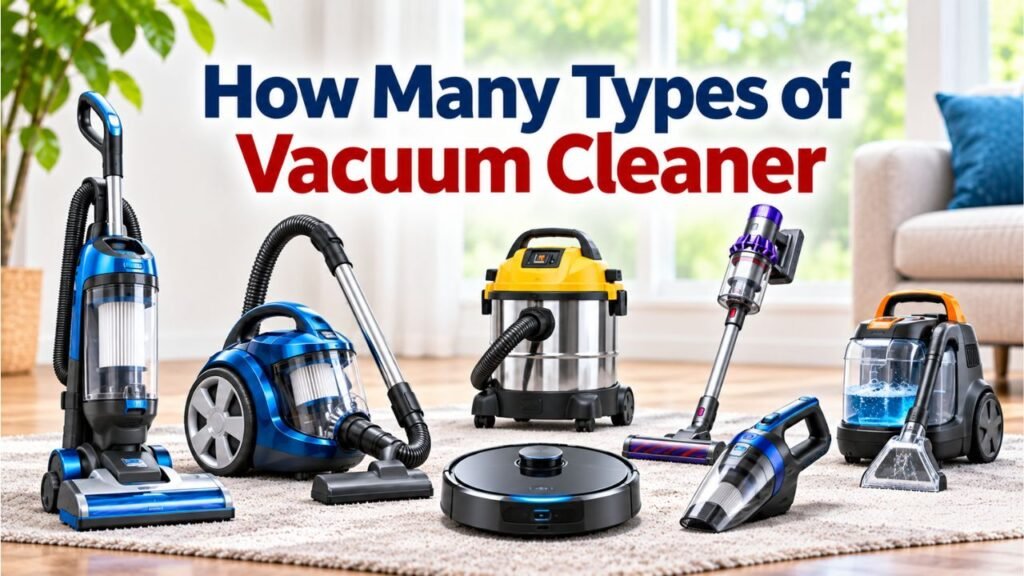
The eight main vacuum designs differ in their shape, cleaning method, and intended job. Some work best as a household’s primary cleaner, while others fill a narrower role, such as collecting garage debris or maintaining floors between regular cleaning sessions.
| Vacuum type | Best suited for | Main drawback |
|---|---|---|
| Upright | Large carpeted rooms | Can be awkward on stairs |
| Canister | Hard floors, stairs, furniture | Hose and body take storage space |
| Stick | Quick daily floor cleaning | Smaller bin; cordless runtime varies |
| Handheld | Cars, crumbs, upholstery | Too small for whole rooms |
| Robot | Scheduled floor touch-ups | Misses some edges and obstacles |
| Wet/dry | Approved liquids and workshop debris | Bulky; not always a carpet washer |
| Central | Homes with installed vacuum piping | Installation and hose storage |
| Backpack | Larger spaces and commercial cleaning | Fit and noise need consideration |
1. Upright Vacuum Cleaners
An upright vacuum has the cleaning head, motor, and dirt container arranged in one standing unit. Many include a powered brush roll, a bristled cylinder that loosens dirt from carpet fibers. Its broad head covers a carpeted bedroom quickly.
Best for: homes with large carpeted areas and people who want one full-size machine. Uprights can be less convenient around tight furniture or on steep stairs. For delicate rugs, look for adjustable brush settings.
2. Canister Vacuum Cleaners
A canister vacuum keeps the motor and dust container in a separate body, connected to the floor tool by a flexible hose. You move the lighter wand instead of pushing the full machine, which makes cleaning under a couch or along stair treads easier.
Canisters are a good fit for hardwood, tile, and mixed flooring when they have suitable attachments. For carpet, check whether the model includes a powered brush head. The hose and wheeled body can get caught around furniture.
3. Stick Vacuum Cleaners
Stick vacuums use a slim body and smaller cleaning head. Many run on rechargeable batteries, though corded versions exist. Their real strength is convenience: grab one after breakfast, collect cereal crumbs, and return it to a closet or charging dock.
Some newer sticks handle carpet well, but performance differs by model and cleaning head. Battery runtime can fall at higher power settings, and small bins need frequent emptying. For thick carpet, check pickup tests before buying.
4. Handheld Vacuum Cleaners
Handheld vacuums are compact machines designed to carry in one hand. They’re useful for car seats, couch cushions, window tracks, and small dry spills. A crevice tool, a narrow attachment for tight spaces, helps collect crumbs beside a seat buckle.
The downside is limited reach and dirt capacity. A handheld makes more sense as a second cleaner, especially if the larger vacuum lacks a detachable portable unit.
5. Robot Vacuum Cleaners
A robot vacuum travels across floors on its own, using sensors and sometimes mapping software to avoid obstacles. Set a schedule and it can gather everyday dust while you’re doing something else. That’s handy in a home where crumbs and pet hair build up quickly.
Cords, small toys, high thresholds, thick rugs, and unexpected pet accidents can cause problems. Treat a robot as help with routine floor care, not a guaranteed replacement for a full-size vacuum.
6. Wet/Dry Vacuum Cleaners
A wet/dry vacuum, often called a shop vacuum, is built to pick up permitted dry debris and liquids. That makes it practical for a garage, workshop, or an ordinary water spill. Never use a dry-only vacuum for water. Avoid gasoline, solvents, and hot ashes.
Important difference: a wet/dry vacuum collects water, but it doesn’t automatically scrub and rinse carpet like a dedicated carpet extractor. Read how a wet/dry vacuum works for carpet moisture removal before using one on a rug.
For lead-contaminated renovation dust, an ordinary shop vacuum isn’t enough. The requirements for a proper HEPA vacuum in lead-safe work call for a machine designed to filter its exhaust without bypass leaks. Leave hazardous cleanup to qualified professionals.
7. Central Vacuum Systems
A central vacuum uses a fixed motor and collection unit, often placed in a garage or utility area. Pipes run inside the home to wall inlets. To clean, you connect a hose and floor tool at an inlet rather than moving the motor from room to room.
This setup can be convenient in a large house, especially when the system is planned during construction. The catch is installation work, upfront cost, and storing the hose. Renters may find the setup impractical.
8. Backpack Vacuum Cleaners
A backpack vacuum puts the motor and dirt container in a unit worn with shoulder straps, leaving you to clean with a hose and wand. They suit cleaning around office desks and long hallways.
They can help in busy spaces, but carrying a motor on your back isn’t everyone’s cup of tea. Check fit, weight, noise, and suitable attachments. For a small apartment, a stick or canister is usually simpler.
Are Cordless, Bagless, and HEPA Vacuums Separate Types?
Cordless, bagless, and HEPA describe features that can appear across several vacuum designs, so they don’t need separate places in the eight-type count. A cordless stick with a bagless bin and HEPA filtration is still one stick vacuum, not three different machines.
Corded Versus Cordless
Corded vacuums draw electricity through a power cable. Cordless machines rely on rechargeable batteries and are easier to move between rooms or out to the car. Their limits are charging time and battery runtime, which changes with power mode and model.
For example, a corded canister suits a long cleaning session, while a cordless stick feels easier for daily kitchen touch-ups. Power source alone doesn’t prove cleaning quality.
Bagged Versus Bagless
A bagged vacuum traps dirt in a replaceable bag. A bagless machine collects it in a reusable bin. Bags can make emptying neater, while bins save you from stocking replacements but may release dust when dumped.
If dust bothers you, pay attention to how the machine seals and how you empty it. A clear dirt cup may look convenient until a cloud of fine dust escapes over the trash can.
HEPA Filtration and Sealed Systems
HEPA stands for high-efficiency particulate air. It refers to a filter’s ability to capture very small particles. A HEPA-labeled filter alone doesn’t prove that all the vacuum’s exhaust passes through it; leaks around the housing also matter.
For homes affected by pet allergies, guidance on cleaning up pet allergens recommends vacuuming with HEPA filtration. Consider a well-sealed machine and a low-dust emptying method, along with the floor-cleaning performance you need.
What About Carpet Washers and Other Specialty Machines?
Carpet extractors apply a cleaning solution and recover dirty water, so they’re different from ordinary dry vacuums. Vacuum mops combine floor pickup and wet cleaning in one unit, usually for approved hard floors. Ash vacuums and hazardous-dust machines have special safety requirements.
These may appear as extra types, making eight a useful framework rather than a fixed count.
Which Vacuum Cleaner Type Is Best for Your Home?
The best choice depends on floor material, room size, stairs, and how often you clean. Start with the hardest regular task in your home, then choose a design that handles it comfortably. A convenient machine you actually use beats an oversized one that stays in storage.
| Your situation | A sensible starting choice | Why it fits |
|---|---|---|
| Mostly wall-to-wall carpet | Upright | Broad powered head for carpet cleaning |
| Hardwood and several staircases | Canister | Flexible wand and floor tools |
| Small apartment, quick cleanups | Stick | Compact and easy to grab |
| Crumbs in the car | Handheld | Portable, with narrow attachments |
| Daily pet hair on open floors | Robot, plus a main vacuum | Routine touch-ups between full cleans |
| Garage debris or approved water spills | Wet/dry | Designed for tougher dry and wet pickup |
| Large home with built-in piping | Central | Cleaning from wall inlets |
| Offices or long commercial hallways | Backpack | Portable wand-based cleaning |
Carpet performance involves more than motor power. Independent vacuum-testing criteria for carpet examine dirt removal, dust containment, and how the machine affects carpet appearance. That beats comparing wattage alone.
Rule of thumb: choose for your biggest regular cleaning job, not a rare mess. Try this: think about the task you dislike most. If it’s hauling a heavy upright upstairs, weight and carrying comfort deserve more attention than a longer feature list. For size comparisons, check how vacuum cleaner weight changes by type.
What Should You Check Before Choosing a Vacuum?
Before buying, match the cleaning head to your floors, then check handling, filtration, maintenance, and storage. A machine can have strong suction and still be a poor fit if it scatters debris on tile, catches on a thick rug, or feels too heavy to carry upstairs.
- Match the floor head to the surface. Carpet often benefits from a powered brush roll. Delicate rugs and certain hard floors may need a gentler, suction-only tool.
- Test reach and handling. Think about stairs, baseboards, low furniture, and carrying the machine between floors.
- Check the dirt container. A tiny bin is fine for crumbs but annoying when cleaning several rooms.
- Review filtration and emptying. A well-sealed system and a clean disposal method matter if dust irritates you.
- Look at maintenance. Filters, bags, brush rolls, and belts may need cleaning or replacement. Check which supplies are available.
- Plan for storage and power. Measure the available closet space, and consider cord length or battery charging arrangements.
The brush design deserves a second look if you have long hair, shedding pets, or thick carpet. This guide to how the vacuum brush assembly works explains why a tangled roller can reduce pickup even when the suction motor sounds normal.
Common mistake: paying for features you won’t use. A self-emptying robot is convenient, but it won’t solve a household’s main problem if that problem is deep carpet cleaning on stairs.
Frequently Asked Questions About Vacuum Cleaner Types
Vacuum categories can overlap because manufacturers combine familiar designs with new features. These answers clear up the most common points of confusion, including which machines count as a separate type and when a second vacuum makes sense for everyday cleaning.
What Are the Five Most Common Household Vacuum Types?
Upright, canister, stick, handheld, and robot vacuums are five familiar home-cleaning categories. Uprights and canisters often serve as primary cleaners, while sticks and handhelds suit fast jobs. Robots help maintain floors between full cleans. Wet/dry and central systems are also found in homes but serve more specific needs.
Which Vacuum Type Is Best for Hardwood Floors?
A canister with a soft floor tool or a stick designed for hard floors is a good starting point. Choose a head that won’t scratch the finish or scatter crumbs. A robot may help with daily dust, but check its wheels, brushes, and the flooring manufacturer’s cleaning guidance first.
Is a Robot Vacuum Better Than an Upright?
A robot is better for unattended, routine touch-ups on accessible floors. An upright often makes more sense for a large carpeted area that needs a thorough clean. Robots cannot handle stairs and can struggle around cords or clutter, so these two types often serve different roles rather than competing directly.
Can a Wet/Dry Vacuum Replace a Carpet Cleaner?
Not by itself. A wet/dry vacuum can recover permitted water and loose debris, but most don’t spray cleaning solution and scrub carpet the way a carpet extractor does. Use the right attachments and follow the manual. For soaked carpet or contaminated water, professional cleanup may be safer.
Do All Vacuum Cleaner Types Use HEPA Filters?
No. Some models have HEPA filtration, while others use different filters. You can find HEPA-equipped vacuums in multiple categories, including uprights, canisters, and some sticks. Check whether the machine has a sealed airflow path, since a HEPA filter alone doesn’t stop dust escaping through housing leaks.
Choose the Type That Fits Your Cleaning Routine
Eight main vacuum designs cover most everyday cleaning needs, but no one machine suits every task. Uprights and canisters handle regular floor cleaning; sticks, handhelds, and robots help with smaller jobs; and wet/dry, central, and backpack machines serve specialized settings.
Don’t let overlapping labels throw you off. Cordless, bagless, and HEPA describe how a vacuum is powered, collects dirt, or filters air. They don’t add three more designs to the list. A machine’s floor head, ease of use, and cleaning results deserve more attention. For homes with stairs, reach and carrying weight matter. If pets shed heavily, check carpet pickup and brush maintenance before buying.
Start with one next step: write down your main floor type and the cleaning job that gives you the most trouble. Then compare two suitable vacuum designs using the buying checklist above. That beats counting features on a product box.