
What Are Cap Staples? Cap Staplers, Uses, Types, and Sizes
If you have seen small round plastic discs attached to housewrap, roofing felt, or synthetic underlayment, you were probably looking at cap staples. They combine a metal staple with a wider plastic cap to hold thin construction materials more securely than a bare staple can.
So, what are cap staples? They are fasteners that use a staple for penetration and a plastic cap to spread holding pressure across a larger surface area. This reduces the chance of thin materials tearing or pulling over the staple crown.
A cap stapler is the tool used to install these fasteners efficiently. It automatically positions the plastic cap and drives a staple through it, making it especially useful for large housewrap and roofing-underlayment projects.
This pillar guide explains what cap staples are, what a cap stapler is, what a cap stapler is used for, how the system works, common sizes, proper installation, advantages and disadvantages, cap staples versus cap nails, common problems, maintenance, and safety.
What Are Cap Staples?
Cap staples are metal staples installed through plastic caps to create a wider holding surface on thin building materials.
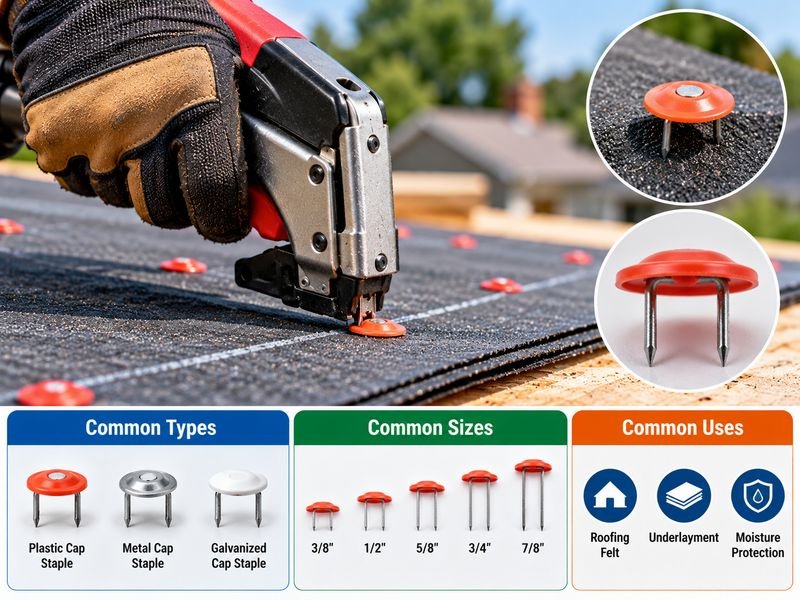
A regular staple puts most of its holding force along its narrow crown. On materials such as housewrap or roofing underlayment, that small contact area can allow the material to tear around the staple, especially when exposed to wind.
A cap staple solves this problem by adding a plastic disc between the staple and the material.
The staple penetrates the substrate, while the plastic cap distributes pressure across a larger area.
A typical cap-staple installation consists of:
- A metal staple
- A plastic cap
- The sheet material being fastened
- An approved substrate underneath
The cap itself does not provide penetration. Its main purpose is to create a wider bearing surface around the fastener.
What Does a Cap Staple Look Like?
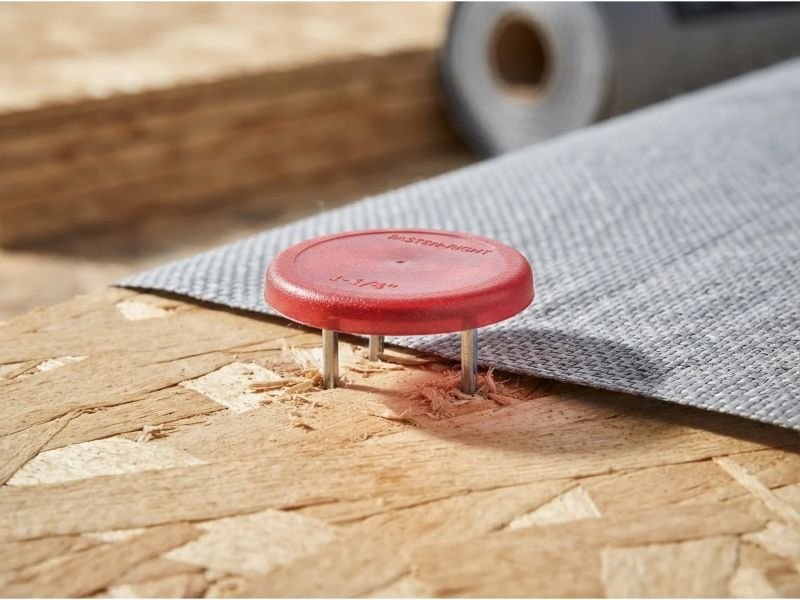
Once installed, a cap staple looks like a small round plastic disc sitting flat against the material with a staple driven across or through its center.
Caps are available in different colors depending on the manufacturer. White, orange, green, blue, and black are common.
Many construction cap systems use caps around 1 inch in diameter, although the exact size varies by product and tool.
Why Do Cap Staples Have Plastic Caps?
The plastic cap helps prevent fastener pull-through.
Imagine fastening housewrap with a normal narrow staple. If wind pulls strongly on the material, the staple crown concentrates that force in a very small area. The wrap can begin tearing around the metal.
A cap spreads that same force across a much larger section.
This makes cap staples particularly useful on materials that are thin, flexible, or relatively easy to tear.
What Is a Cap Stapler?
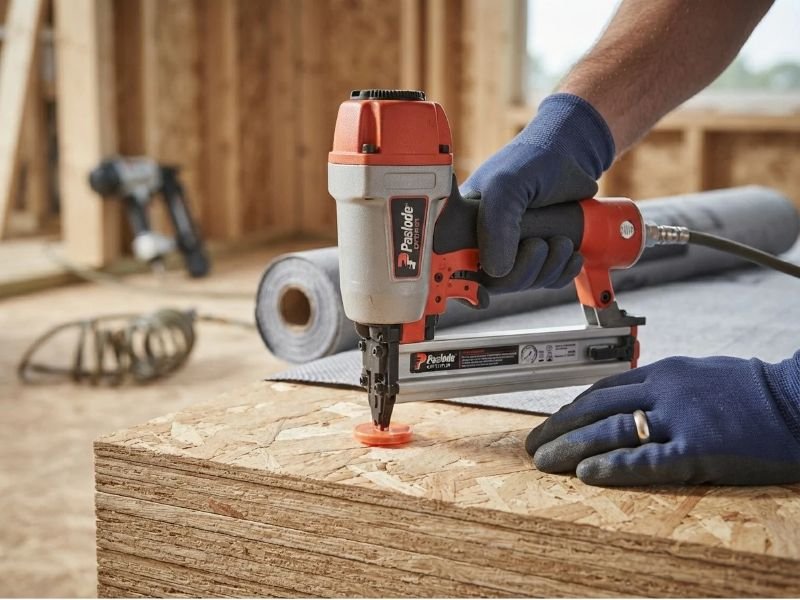
A cap stapler is a fastening tool that places a plastic cap against the work surface and drives a staple through it in one operation.
Instead of placing each plastic cap by hand, the stapler feeds caps automatically.
The tool normally contains one supply of metal staples and another supply of plastic caps. Each time the stapler cycles, it positions a new cap and drives a staple through it.
This makes installation much faster when hundreds or thousands of fasteners are required.
Is a Cap Stapler the Same as a Regular Staple Gun?
No.
A standard staple gun feeds and drives only staples.
A cap stapler has an additional cap-feed mechanism that positions a plastic disc underneath each staple.
Because of this difference, a regular staple gun usually cannot use cap-stapler consumables unless it was specifically designed for that system.
What Is a Cap Stapler Used For?
A cap stapler is used for attaching thin construction membranes and sheet materials where a wider fastener surface helps prevent tearing or pull-through.
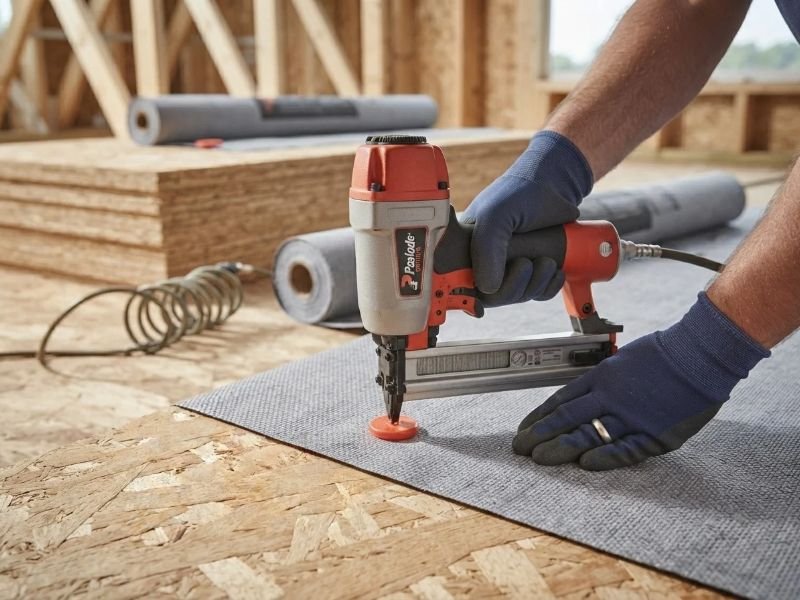
Common applications include:
- Housewrap
- Weather-resistant barriers
- Synthetic roofing underlayment
- Roofing felt
- Building paper
- Certain foam sheathing products
- Some insulation facings
- Temporary protective membranes
A cap stapler is not normally used for structural framing or heavy construction connections.
The exact fastener type should always match the installation instructions for the material being installed.
How Does a Cap Stapler Work?
A cap stapler combines two feeding systems into one tool.
Cap Feeding
Plastic caps are loaded into a dedicated magazine, reel, strip, coil, or cartridge depending on the tool.
When the stapler cycles, one cap moves underneath the tool nose.
Staple Feeding
Metal staples are stored in a separate magazine.
The next staple moves into position above the plastic cap.
Staple Driving
When the trigger is activated, the driver blade pushes the staple through the cap and material and into the substrate.
The cap remains against the surface while the staple holds it in place.
Automatic Advancement
After each shot, both systems advance.
Another cap and staple are then ready for the next fastening point.
This automatic process is what makes a dedicated cap stapler useful for large construction projects.
Main Parts of a Cap Stapler
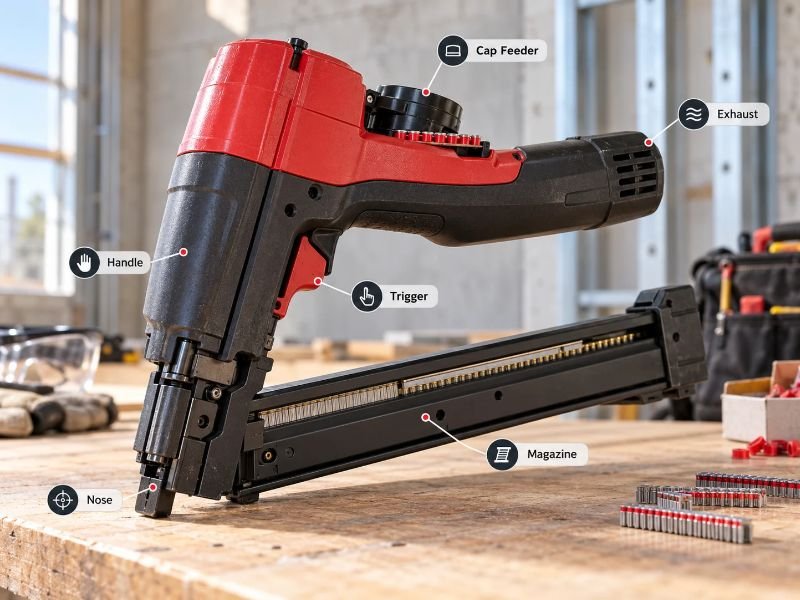
Although the design varies by manufacturer, most cap staplers contain similar components.
Staple Magazine
The staple magazine stores the metal fasteners and automatically advances them toward the driver.
Cap Magazine
The cap magazine stores and feeds the plastic caps.
Different tools may use cap strips, reels, coils, or other proprietary systems.
Driver Blade
The driver blade supplies the force that pushes the staple into the substrate.
Tool Nose
The nose contacts the work surface and helps position the fastener.
Many pneumatic tools also use the nose as part of their safety mechanism.
Trigger
The trigger activates the fastening cycle.
Depth Adjustment
Many professional tools allow the user to adjust how deeply the staple is driven.
Correct depth is important because an overdriven staple can crush the cap or damage the material.
What Materials Are Cap Staples Used For?
Cap staples are mainly intended for thin building materials rather than structural lumber connections.
Housewrap
Housewrap is one of the most common applications.
Housewrap forms part of a home’s weather-resistant barrier behind exterior siding. Because it is thin and flexible, bare staples can pull through relatively easily.
A capped fastener spreads the load and gives the wrap a larger holding area.
Roofing Underlayment
Cap staples may be approved for some roofing-underlayment products.
The wider cap helps secure the material against the roof deck and reduces tearing around each fastener.
However, roofing products have specific fastening requirements. Some permit cap staples, while others require cap nails.
Always follow the underlayment manufacturer’s instructions.
Roofing Felt
Traditional roofing felt can also be installed with capped fasteners where the roofing system allows them.
Because felt can tear around narrow fasteners, a wide cap provides better surface support than a bare staple.
Synthetic Underlayment
Many modern synthetic roofing underlayments are designed for use with capped fasteners.
The manufacturer may specify:
- Fastener type
- Cap diameter
- Fastener length
- Required penetration
- Fastener spacing
Do not assume every synthetic underlayment accepts cap staples.
Foam Sheathing
Some foam products can be temporarily secured with plastic-cap fasteners.
The cap spreads pressure and reduces the chance of the narrow staple crushing or pulling through the foam surface.
However, cap staples should not automatically be considered structural fasteners for foam-board systems.
What Should Cap Staples Not Be Used For?
Cap staples are specialty membrane fasteners.
They are generally not intended for:
- Structural framing
- Joist connections
- Deck framing
- Structural connectors
- Heavy plywood fastening
- Subfloor fastening unless specifically approved
- Furniture construction
- Hardwood assembly
The plastic cap increases surface area, but it does not make the staple equivalent to a structural nail or screw.
Why Use Cap Staples Instead of Regular Staples?
The biggest advantage is the larger bearing surface.
A regular staple makes contact with only a narrow section of material. A cap staple spreads pressure across the entire plastic disc.
This can provide several benefits.
Less Material Tear-Out
Housewrap and underlayment are less likely to tear around properly installed capped fasteners.
Better Resistance to Pull-Through
The wider cap makes it more difficult for the fastener to pull through thin sheet material.
Better Temporary Holding
Housewrap or underlayment may remain exposed before siding or roofing is installed.
Cap fasteners can provide stronger temporary attachment when permitted by the product manufacturer.
Easier Inspection
Plastic caps are easy to see, making fastener placement and spacing easier to check visually.
Faster Installation
With a dedicated cap stapler, both the staple and cap are installed in one operation.
Cap Staples vs. Regular Staples
The biggest difference is how each fastener spreads pressure.
| Feature | Cap Staples | Regular Staples |
| Plastic cap | Yes | No |
| Holding surface | Wide | Narrow |
| Resistance to pull-through | Higher on thin materials | Lower |
| Housewrap use | Common | Product-dependent |
| Roofing underlayment | Used where approved | Often restricted |
| Tool required | Cap stapler | Standard stapler |
| Material protection | Better load distribution | More concentrated pressure |
A regular staple may physically hold a membrane, but that does not automatically make it an approved fastener.
Cap Staples vs. Cap Nails
Cap staples and cap nails have similar plastic caps but use different metal fasteners.
A cap staple uses two staple legs.
A cap nail uses a single nail shank.
Both spread holding pressure over a wider area than an ordinary nail or staple without a cap.
Which One Holds Better?
There is no universal answer because the required fastener depends on the building system.
Some manufacturers permit both.
Others specifically require cap nails.
Roofing applications in particular may have strict fastening requirements, so never substitute staples for nails without checking the product instructions.
Cap Stapler vs. Cap Nailer
A cap stapler and cap nailer are different tools.
A cap stapler drives staples through plastic caps.
A cap nailer drives nails through plastic caps.
The tool magazines, drivers, and fasteners are different.
Even though both tools may look similar, they should not be considered interchangeable.
What Sizes Do Cap Staples Come In?
Cap staples are available in several dimensions.
The four specifications you should pay attention to are:
- Staple leg length
- Staple crown width
- Wire gauge
- Cap diameter
Staple Leg Length
The legs determine how far the staple penetrates into the substrate.
Longer staples provide greater penetration, but longer is not automatically better.
The fastener must match the material, substrate, and installation requirements.
Staple Crown Width
The crown is the horizontal metal section connecting the two staple legs.
The crown must match the tool’s magazine and driver.
Cap Diameter
The plastic cap provides the wide bearing surface.
Caps around 1 inch are common in construction applications, but different systems use different dimensions.
Why Correct Size Matters
Using incompatible fasteners can lead to:
- Tool jams
- Misfeeds
- Poor penetration
- Broken caps
- Inconsistent fastening
- Tool damage
Always use staples and caps specifically approved for your stapler.
Are Cap Staples Galvanized?
Many cap staples intended for construction use have galvanized steel or another corrosion-resistant finish.
The coating helps protect the fastener from moisture.
However, not all galvanized coatings provide the same level of corrosion resistance.
The correct fastener may depend on environmental conditions, exposure time, treated lumber, coastal conditions, and the manufacturer’s specifications.
What Is a Pneumatic Cap Stapler?
A pneumatic cap stapler uses compressed air to drive staples.
The tool connects to an air compressor using an air hose.
Pneumatic tools are especially popular with contractors because they can install large numbers of fasteners quickly with relatively little hand effort.
Advantages of a Pneumatic Cap Stapler
A pneumatic tool typically offers fast cycling, consistent driving power, automatic cap feeding, and reduced hand fatigue.
Many models also provide adjustable drive depth.
Disadvantages of a Pneumatic Cap Stapler
The main drawback is the additional equipment.
You need:
- Air compressor
- Air hose
- Correct air pressure
- Compatible fittings
The hose can also be inconvenient when working on large roofs or around scaffolding.
What Is a Manual Cap Stapler?
A manual cap stapler uses hand force rather than compressed air.
Manual systems can be useful for smaller projects, repairs, or occasional DIY work.
They generally cost less to set up because an air compressor is not required.
The tradeoff is speed and effort.
Installing hundreds or thousands of fasteners manually can become tiring.
How to Load a Cap Stapler
Loading instructions vary by model, so always check the tool manual.
The general process is straightforward.
Step 1: Load the Staples
Open the staple magazine and insert the correct fastener strip.
Make sure the staples are facing the correct direction.
Step 2: Load the Plastic Caps
Install the cap reel, strip, coil, or cartridge into its dedicated holder.
Feed the first cap into the starting position as directed by the manufacturer.
Step 3: Close the Magazines
Make sure both magazines are fully latched.
Step 4: Test the Tool
Test the stapler on scrap material before starting the actual installation.
The cap should sit flat and secure without being crushed.
How to Use a Cap Stapler Correctly
Correct technique helps the cap and staple perform as intended.
Step 1: Position the Material
Install the housewrap, underlayment, or other membrane according to its required overlap and layout.
Remove large wrinkles before fastening.
Step 2: Set Up the Stapler
Load the correct caps and staples.
For a pneumatic model, connect the air hose and use pressure within the manufacturer’s recommended operating range.
Step 3: Test Drive Depth
Test several fasteners.
The cap should sit firmly against the surface without cutting deeply into the material.
Step 4: Hold the Tool Square
Keep the tool nose flat against the surface.
Driving at an angle can leave part of the staple raised or damage the cap.
Step 5: Fire the Fastener
Activate the tool according to its trigger and contact-safety system.
Step 6: Inspect the Fastener
A properly installed cap should remain flat and firmly attached without being badly deformed.
Step 7: Follow the Required Spacing
Fastener spacing should come from the installation instructions for the material.
Do not simply space fasteners by eye.
How Deep Should Cap Staples Be Driven?
Cap staples should be driven deep enough to hold the cap securely against the material without crushing the cap or cutting through the membrane.
An overdriven staple may distort the plastic disc or damage the building material.
An underdriven staple can leave the cap loose.
If the staple is consistently too deep or too shallow, adjust the tool’s depth setting or pneumatic pressure according to the manufacturer’s instructions.
How Far Apart Should Cap Staples Be?
There is no universal spacing for all cap staples.
Spacing can vary according to:
- Housewrap brand
- Roofing underlayment type
- Wind conditions
- Roof or wall location
- Building height
- Substrate
- Edge location
- Exposure duration
For example, a manufacturer may specify closer fastener spacing around edges and seams than across the main field of the material.
Always follow the installation guide for the exact product.
Can You Use Cap Staples for Housewrap?
Yes. Cap staples are commonly used for housewrap when permitted by the housewrap manufacturer.
Their wide surface area helps prevent the weather barrier from pulling over the fastener.
This can be especially useful while the wrap remains exposed before siding is installed.
Can You Use Regular Staples for Housewrap?
That depends on the housewrap.
Some products may allow certain bare staples for temporary attachment, while others call for capped fasteners.
A bare staple does not provide the same resistance to tear-through as a plastic cap.
If the manufacturer’s instructions call for cap staples or cap nails, use those fasteners.
Can You Use Cap Staples for Roofing Underlayment?
Yes, but only when the particular roofing underlayment allows them.
Some underlayments permit cap staples, while others specify cap nails.
Factors such as roof slope, wind exposure, and how long the underlayment will remain uncovered can influence fastening requirements.
For roofing work, the product instructions and applicable building requirements should always take priority.
Can You Use Cap Staples for Synthetic Underlayment?
Many synthetic underlayments use capped fasteners, but the exact fastener requirements vary.
The manufacturer may specify:
- Cap diameter
- Staple or nail type
- Fastener penetration
- Spacing
- Approved fastening zones
Do not substitute another fastener simply because it fits your tool.
Can You Use Cap Staples for Roofing Felt?
Cap staples may be used for roofing felt when permitted by the roofing system.
Because felt can tear around narrow bare staples, plastic caps can provide a more secure holding surface.
However, some roofing installations specifically require capped nails.
Can You Use Cap Staples on Foam Board?
Cap staples can sometimes be used to temporarily hold foam board or similar products.
The wide plastic cap helps prevent the fastener from cutting deeply into the foam.
However, cap staples should not automatically be treated as permanent structural fasteners.
The foam or wall-system manufacturer may require screws, washers, nails, furring strips, or another attachment method.
Are Cap Staples Waterproof?
No. A cap staple should not be considered completely waterproof.
The plastic cap covers a relatively large area, but the staple still penetrates the membrane.
Water-management systems rely on correct overlaps, flashing, tapes, sealants where specified, and proper fastener placement.
The cap staple is only one part of the system.
Do Cap Staples Damage Housewrap?
Properly installed cap staples are designed to reduce damage.
Problems usually occur when the staple is driven incorrectly.
Common causes of damage include:
- Excessive drive depth
- Incorrect air pressure
- Angled fastening
- Fastening too close to an edge
- Wrong staple or cap
- Driving through large wrinkles
The cap should sit firmly against the housewrap without cutting through it.
Advantages of Cap Staples
The main advantage is their ability to hold thin materials without concentrating all the force around a narrow metal crown.
Other advantages include faster installation with a dedicated tool, improved resistance to pull-through, easier visual inspection, and reduced membrane damage.
For large housewrap or roofing-underlayment projects, a pneumatic cap stapler can also save considerable time compared with manually positioning individual caps.
Disadvantages of Cap Staples
Cap staples also have limitations.
They require specialized fasteners and often a specialized tool.
Consumables may cost more than ordinary staples, and a cap stapler has a more complicated feed mechanism that can jam.
Most importantly, cap staples are not suitable for every building material.
If a product specifically requires cap nails or another fastener, a cap staple should not be substituted.
Common Cap Stapler Problems
Cap Is Not Feeding
Check the cap magazine first.
The tool may be empty, incorrectly loaded, dirty, or using incompatible caps.
A damaged strip or reel can also interrupt feeding.
Staple Will Not Fire
Possible causes include an empty magazine, jammed staple, low air pressure, incorrect fastener size, or driver problem.
Cap Is Being Crushed
The staple may be driven too deeply.
Reduce the drive-depth setting or adjust air pressure within the tool’s approved operating range.
Staple Is Not Fully Driven
Low air pressure, hard substrate, an incorrect staple, or a worn driver can leave the staple standing above the cap.
Staple Misses the Cap
This usually points to a cap-feed alignment problem.
Stop using the tool and inspect the cap-feeding mechanism.
How to Clear a Jammed Cap Stapler
Treat every jammed stapler as though it could fire unexpectedly.
For a pneumatic tool:
- Remove your finger from the trigger.
- Disconnect the air hose.
- Remove staples and caps if required.
- Open the manufacturer’s jam-clearing mechanism.
- Remove the damaged fastener.
- Check the driver and feed track.
- Close the tool.
- Reload it.
- Test it on scrap material.
Never place your fingers directly in front of the tool nose.
Cap Stapler Safety
Cap staplers can cause serious puncture injuries.
Always wear appropriate eye protection and keep your hands away from the fastening point.
For pneumatic tools, disconnect the air supply before clearing jams or performing maintenance.
Never disable a contact safety or trigger mechanism.
You should also consider what may be hidden behind the surface. Electrical wires, plumbing, HVAC components, and other utilities may be present behind walls or roofs.
How to Choose a Cap Stapler
Start by checking what fastener your building material requires.
If the product requires cap nails, buying a cap stapler will not solve the problem.
Next, compare the tool’s:
- Staple-length range
- Cap diameter
- Fastener compatibility
- Depth adjustment
- Magazine capacity
- Tool weight
- Operating pressure
- Availability of replacement fasteners
For frequent professional use, speed, weight, reliability, and consumable availability can matter as much as the purchase price.
How to Maintain a Cap Stapler
A clean feed system helps prevent jams.
Remove construction dust and broken cap pieces according to the manufacturer’s maintenance instructions.
Inspect the driver periodically for wear.
For pneumatic models, use air-tool oil only if the manufacturer specifies lubrication. Some modern tools are designed to operate without regular oil.
Also keep the air pressure within the recommended range. Excessive pressure can overdrive staples and increase wear.
Cap Staples, Cap Nails, or Regular Staples: Which Is Best?
There is no single fastener that is best for every application.
Regular staples are appropriate where the material manufacturer permits them and a wide cap is unnecessary.
Cap staples make sense when a wide bearing surface is needed and staple fastening is approved.
Cap nails should be used when the roofing or weather-barrier system specifically calls for nails.
The product installation instructions should always determine the final choice.
Common Mistakes When Using Cap Staples
One common mistake is assuming that any staple length will work.
Too short a fastener may not penetrate the substrate sufficiently, while unnecessarily long staples can create other problems.
Another mistake is driving the staple too deeply. The cap should hold the membrane rather than crush through it.
Installers also sometimes substitute cap staples where instructions specifically require cap nails.
Fastener spacing matters as well. Even the correct fastener may perform poorly if too few are installed.
Finally, avoid mixing incompatible caps and staples simply because they appear similar. Small dimensional differences can cause repeated jams or poor fastening.
FAQs About What Are Cap Staples
What Are Cap Staples Made Of?
Cap staples normally consist of a metal staple and a plastic cap.
The metal provides penetration and holding strength, while the plastic cap distributes pressure across the surface.
What Is a Cap Stapler?
A cap stapler is a tool designed to automatically position a plastic cap and drive a staple through it.
It is commonly used for housewrap, weather barriers, roofing underlayment, and other thin construction materials.
What Is a Cap Stapler Used For?
A cap stapler is used where a narrow bare staple could tear through a thin membrane.
Typical applications include housewrap, synthetic roofing underlayment, roofing felt, building paper, and certain foam products.
Are Cap Staples Better Than Regular Staples?
Cap staples are generally better for thin membranes when a wider holding surface is needed.
Regular staples are still more appropriate for many other fastening jobs.
The correct choice depends on the material manufacturer’s instructions.
Can I Use Cap Staples for Housewrap?
Yes, if the housewrap manufacturer allows them.
Cap staples are widely used because the plastic disc helps reduce pull-through around the fastener.
Can I Use Regular Staples Instead of Cap Staples?
Only if the installation instructions permit regular staples.
A bare staple provides a much smaller bearing surface and may tear through the material more easily.
Are Cap Staples Good for Roofing?
They can be appropriate for certain roofing underlayments.
However, some roofing systems require cap nails rather than staples, so always verify the required fastener.
What Is the Difference Between a Cap Stapler and a Cap Nailer?
A cap stapler drives a staple through a plastic cap.
A cap nailer drives a nail through the cap.
The tools, fasteners, and installation requirements are different.
Can a Regular Staple Gun Use Cap Staples?
Usually not.
A cap stapler has a dedicated mechanism that feeds and positions plastic caps. A standard staple gun generally handles only staples.
Why Does My Cap Stapler Keep Jamming?
Common causes include incorrect staples, incompatible caps, improper loading, damaged cap strips, a dirty feed mechanism, incorrect air pressure, or worn internal components.
Conclusion
Understanding what are cap staples starts with their main purpose: increasing the surface area of a staple so thin building materials are less likely to tear or pull through around the fastener.
A cap stapler makes installation faster by automatically positioning a plastic cap and driving a staple through it in one cycle. These tools are commonly used for housewrap, weather-resistant barriers, roofing underlayment, roofing felt, and certain foam products.
However, cap staples are not universal construction fasteners. The correct staple length, cap diameter, fastener spacing, penetration, and fastener type depend on the material being installed. Always check the manufacturer’s installation requirements, particularly for roofing and exterior weather-barrier systems, before deciding between cap staples, cap nails, or another fastening method.