
Can I Use Gear Oil in My Air Compressor? What to Know
In most air compressors, you should not use ordinary automotive gear oil unless the compressor manufacturer specifically lists that exact lubricant type and viscosity as approved.
If you are low on compressor oil and already have a bottle of 75W-90, 80W-90, or another gear lubricant in the garage, using it may seem reasonable. After all, both products are lubricating oils designed to protect metal parts. However, an air compressor and a vehicle differential place very different demands on their lubricants.
The answer to can I use gear oil in my air compressor is therefore usually no. Gear oils are formulated primarily for heavily loaded gears, while dedicated compressor oils are formulated around the heat, oxidation, moisture, air exposure, deposit control, and lubrication requirements found inside compressor pumps and airends.
There are exceptions. Certain industrial compressors have gears or bearings that use manufacturer-specified lubricants, and some specialized systems may call for a lubricant that resembles an industrial gear oil. That does not mean ordinary automotive gear oil is a safe substitute for compressor oil.
Using the wrong lubricant can cause poor cold starting, excessive heat, deposits, foaming, inefficient operation, seal problems, or accelerated compressor wear. The safest approach is to identify the lubricant specification in the owner’s manual and match the required viscosity grade and oil type, rather than choosing oil based only on what is available.
This guide explains why gear oil and air compressor oil are different, whether common 75W-90 or 80W-90 gear oils can be used, what happens if you accidentally put gear oil in a compressor, and how to choose the correct lubricant.
Can I Use Gear Oil in My Air Compressor?
Generally, you should not use gear oil in an air compressor unless the manufacturer specifically approves it.
Most oil-lubricated reciprocating compressors need a dedicated compressor lubricant, often a non-detergent mineral or synthetic oil in a specified viscosity.
Depending on the compressor, the manual may call for something such as:
- ISO VG 46 compressor oil
- ISO VG 68 compressor oil
- ISO VG 100 compressor oil
- SAE 20 non-detergent compressor oil
- SAE 30 non-detergent compressor oil
- A proprietary synthetic compressor lubricant
Automotive gear oils such as:
- SAE 75W-90
- SAE 80W-90
- SAE 85W-140
are designed around different operating requirements.
Even if the compressor appears to run with gear oil, that does not prove the lubricant is suitable for long-term use.
Why Gear Oil and Air Compressor Oil Are Different
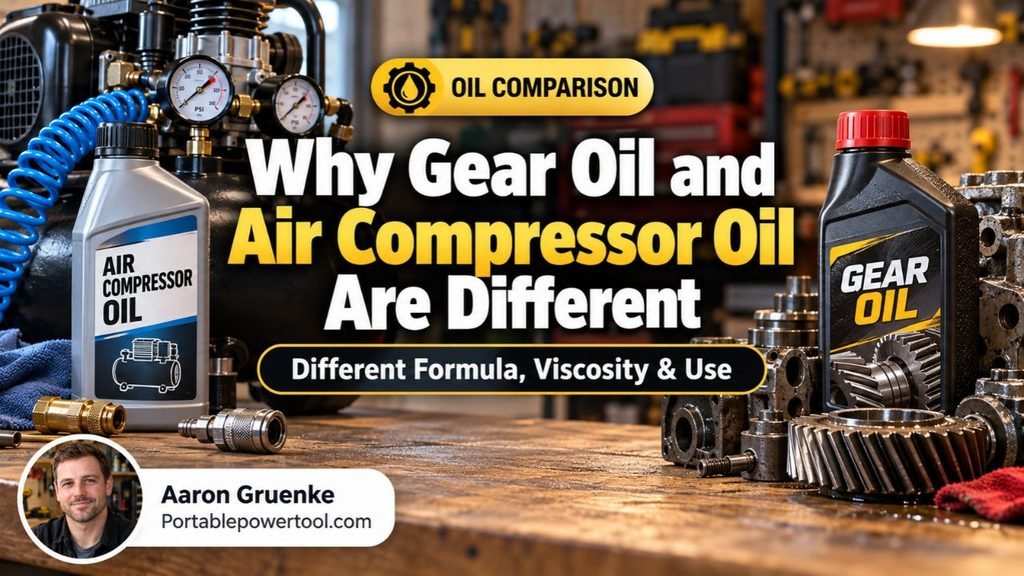
The main difference is not simply thickness.
The oils are formulated for different machines.
Gear Oil Is Designed for Heavily Loaded Gears
Automotive gear oil is commonly used in:
- Differentials
- Manual transmissions in applicable vehicles
- Transfer cases where specified
- Industrial gear drives
Gear teeth can experience extremely high contact loads.
Many automotive gear oils therefore contain extreme-pressure, or EP, additives designed to prevent metal-to-metal damage under heavy sliding and contact pressure.
Compressor Oil Has Different Priorities
Air compressor oil must deal with conditions such as:
- Continuous exposure to hot compressed air
- High operating temperatures
- Oxidation
- Moisture
- Condensation
- Carbon and deposit formation
- Foam control
- Rust protection
- Lubrication of bearings, cylinders, crankshafts, or rotors
A good compressor lubricant is formulated to remain stable while exposed to heat and oxygen for extended periods.
That is one reason replacing compressor oil with whatever lubricant happens to have a similar-looking viscosity number is risky.
Air Compressor Oil vs. Gear Oil
Here is a simplified comparison:
| Feature | Air Compressor Oil | Automotive Gear Oil |
| Primary application | Compressor pumps and airends | Gearboxes and differentials |
| Main lubrication challenge | Heat, oxidation, air exposure, deposits | High gear contact loads |
| Extreme-pressure additives | Depends on formulation | Common in many gear oils |
| Deposit control | Very important | Different formulation priorities |
| Water separation | Often important | Varies by product |
| Typical viscosity systems | ISO VG or sometimes SAE | SAE J306 gear-oil grades |
| Safe compressor substitute? | Designed for compressor use | Usually no unless specifically approved |
The most important point is that similar viscosity does not make two lubricants interchangeable.
Can I Use 80W-90 Gear Oil in an Air Compressor?
Usually, no.
80W-90 gear oil should not normally be used in an air compressor that specifies compressor oil.
An 80W-90 automotive gear lubricant is formulated for gear sets rather than compressor crankcases.
Potential problems can include:
- Incorrect viscosity behavior
- Higher starting resistance
- Excessive heat
- Poor oil circulation
- Foaming
- Deposit formation
- Incompatibility with compressor seals or materials
- Reduced efficiency
If your compressor manual specifically lists an appropriate 80W-90 product—which would be unusual for many common shop piston compressors—follow the manufacturer’s instructions.
Otherwise, use the stated compressor lubricant.
Can I Use 75W-90 Gear Oil in an Air Compressor?
The same basic rule applies.
Do not substitute 75W-90 gear oil simply because it is synthetic or because the compressor requires a synthetic oil.
“Synthetic” only describes part of the lubricant’s formulation.
Two synthetic oils can have completely different:
- Base stocks
- Additive systems
- Viscosity
- Compatibility
- Intended operating conditions
A synthetic automotive gear oil is not automatically equivalent to a synthetic compressor lubricant.
Is SAE 90 Gear Oil the Same Thickness as SAE 30 Compressor Oil?
This is a common source of confusion.
No, you cannot compare the printed numbers directly.
Automotive engine oils and automotive gear oils use different SAE viscosity classification systems.
For example, an SAE 80W-90 gear oil is not simply “three times thicker” than an SAE 30 oil.
The numbers come from different grading standards.
Similarly, many industrial compressor lubricants are rated using the ISO viscosity grade system, such as ISO VG 46, 68, or 100.
This means you should never substitute oils by comparing only the number printed on the container.
What Is ISO VG Compressor Oil?
ISO VG stands for International Standards Organization viscosity grade.
Common compressor oil grades include:
- ISO VG 32
- ISO VG 46
- ISO VG 68
- ISO VG 100
- ISO VG 150
The number is based broadly on the oil’s kinematic viscosity at 40°C.
For example, ISO VG 68 oil has a nominal viscosity of approximately 68 centistokes at 40°C.
The correct grade depends on:
- Compressor design
- Ambient temperature
- Operating temperature
- Manufacturer specification
A higher ISO number generally indicates a more viscous oil.
However, never assume that moving to a higher viscosity provides better protection.
Oil that is too thick can create its own problems.
Why Compressor Oil Needs Good Oxidation Resistance
Compressor oil operates around hot air.
Heat plus oxygen promotes oxidation, a chemical process that gradually degrades the lubricant.
Oxidized oil can form:
- Varnish
- Sludge
- Carbon deposits
- Sticky residues
Deposits can interfere with valves and other internal components.
This is particularly important in reciprocating compressors where oil may be exposed to elevated temperatures around the cylinder and discharge valve area.
Dedicated compressor lubricants are formulated with oxidation and thermal stability in mind.
Why Carbon Deposits Matter in an Air Compressor
Carbon formation is more than a cleanliness issue.
Heavy deposits can:
- Restrict valves
- Reduce efficiency
- Increase temperatures
- Increase maintenance requirements
- Contaminate downstream air systems
For that reason, compressor oils are often designed to minimize ash, sludge, varnish, and carbon under compressor operating conditions.
An oil formulated mainly for automotive gears may not provide the same deposit-control characteristics.
Can Gear Oil Foam in an Air Compressor?
Foam behavior depends on the exact lubricant, but using an inappropriate oil can contribute to aeration or foaming problems.
Compressor crankcases contain rapidly moving components.
If the lubricant traps excessive air, lubrication can become less effective.
Possible consequences include:
- Poor lubrication
- Higher operating temperatures
- Irregular oil levels
- Oil being pushed from the breather
- Increased oil carryover
Using the manufacturer’s recommended compressor oil avoids guessing about foam-control performance.
Are Gear Oil EP Additives Bad for Air Compressors?
Not every EP additive is automatically harmful, but an additive package designed for a differential is not necessarily appropriate for an air compressor.
Automotive gear oils may contain sulfur-phosphorus or other extreme-pressure additives to protect heavily loaded gear teeth.
A typical reciprocating air compressor does not need the same additive balance.
Using an oil with unnecessary or incompatible additives can potentially affect:
- Seals
- yellow-metal components in certain equipment
- deposit formation
- oil stability
- operating characteristics
The exact compatibility depends on the compressor and lubricant chemistry.
This is why manufacturer approval matters more than simply identifying an oil as “heavy duty.”
Do Some Air Compressors Have Gears?
Yes.
Some compressor designs contain gears as part of their drive system.
For example, particular industrial, screw, centrifugal, or specialized compressor systems may have:
- Timing gears
- Gearboxes
- Gear-driven stages
- Lubricated bearings and gears
However, this does not mean you should pour automotive differential oil into the compressor’s main lubrication system.
A manufacturer may specify:
- One lubricant for the compressor airend
- Another lubricant for a gearbox
or a specialized lubricant suitable for the complete system.
Follow the lubrication specification for each reservoir individually.
What Oil Should I Use in My Air Compressor?
Start with the owner’s manual or pump identification plate.
Look for a specification such as:
- ISO VG 46
- ISO VG 68
- ISO VG 100
- SAE 30 non-detergent
- Synthetic compressor lubricant
- Manufacturer-specific part number
If your manual requires proprietary lubricant, using the specified product is normally the safest choice.
For Small Reciprocating Compressors
Many oil-lubricated piston compressors use a dedicated non-detergent compressor oil.
Common viscosities include ISO VG 68 or SAE 30-type compressor lubricants, although the exact requirement varies.
For Rotary Screw Compressors
Rotary screw compressors can use highly specialized lubricants.
Depending on design, the oil may perform several jobs simultaneously:
- Lubricating bearings
- Lubricating rotors
- Sealing compression spaces
- Removing heat
- Protecting against corrosion
Do not substitute generic gear oil in a rotary screw compressor unless specifically authorized by the manufacturer.
Can I Use Motor Oil Instead of Gear Oil?
If you do not have compressor oil, switching from gear oil to ordinary engine oil is not automatically the solution.
Some older reciprocating compressors allow specific non-detergent motor oils, while others require dedicated compressor lubricant.
Modern automotive engine oil contains detergent and dispersant additives intended for combustion engines.
Whether those additives are acceptable depends on the compressor.
Use engine oil only when the compressor manufacturer approves the exact type and viscosity.
Why Non-Detergent Oil Is Commonly Recommended
Many traditional piston compressor manufacturers specify non-detergent compressor oils.
In an automotive engine, detergent and dispersant additives help keep contaminants suspended so the oil filter can capture them.
Many simple compressor pumps do not use an engine-style full-flow oil filtration system.
Their lubrication requirements are different.
That is why a purpose-made compressor oil may use a different additive strategy.
However, do not assume every compressor requires non-detergent oil. Modern compressor designs can have very different lubricant specifications.
Can I Use Hydraulic Oil in an Air Compressor?
Hydraulic oil is another lubricant people sometimes consider as a substitute.
Like gear oil, hydraulic oil may have a viscosity similar to a specified compressor lubricant, but its additive package is designed primarily for hydraulic systems.
Some specialized compressor manufacturers may approve particular industrial lubricants, but generic hydraulic oil should not automatically replace compressor oil.
Matching viscosity alone is insufficient.
Can I Use Gear Oil Temporarily in an Emergency?
For most ordinary air compressors, it is better to stop using the compressor until you have the correct oil than knowingly fill it with an unapproved gear lubricant.
Running briefly with the wrong oil could create more expensive problems than postponing the job.
There are exceptions in genuine emergencies or specialized equipment, but those decisions should be based on manufacturer guidance rather than general substitution advice.
If the compressor is low enough on oil that proper lubrication is uncertain, do not continue operating it.
What Happens if I Accidentally Put Gear Oil in My Air Compressor?
Do not panic, but correct the mistake before prolonged operation.
If You Have Not Started the Compressor
This is the best situation.
Drain the gear oil completely.
Then refill the crankcase with the correct compressor lubricant.
If the manufacturer provides a flushing procedure, follow it.
If You Ran the Compressor Briefly
Shut it down and let it cool.
Drain the incorrect oil while following the manufacturer’s maintenance procedure.
Refill with the correct lubricant.
Monitor the compressor for:
- Unusual noise
- Excessive heat
- Foaming
- Oil leaks
- Oil from the breather
- Abnormal pressure buildup time
Brief operation does not automatically mean damage occurred.
If It Has Been Running on Gear Oil for a Long Time
A closer inspection may be warranted.
Check for:
- Sludge
- Varnish
- Excessive deposits
- Overheating
- Oil leaks
- Mechanical noise
- Reduced compressor performance
A commercial compressor may justify inspection by a qualified technician.
Should You Flush an Air Compressor After Using the Wrong Oil?
Do not automatically add solvents or flushing chemicals.
Some products can damage:
- Seals
- Gaskets
- Paint
- Internal coatings
They can also leave residues that contaminate the new oil.
If flushing is required, follow the compressor manufacturer’s approved procedure.
Sometimes draining the incorrect oil thoroughly and performing an earlier second oil change is preferable to using an aggressive chemical flush.
Can Mixing Gear Oil and Compressor Oil Cause Problems?
It can.
Even two high-quality lubricants may use incompatible additive systems or base oils.
Mixing can potentially affect:
- Viscosity
- Foam control
- Water separation
- Oxidation stability
- Seal compatibility
- Deposit formation
If a significant amount of incorrect oil has been added, draining and refilling is usually safer than relying on dilution.
How to Find the Correct Compressor Oil
Use the following order when identifying the correct lubricant:
- Owner’s manual
- Compressor manufacturer’s service information
- Pump model specification
- Manufacturer-approved lubricant chart
- Reputable compressor lubricant cross-reference
Do not base the choice solely on:
- Tank size
- Horsepower
- Oil color
- What another compressor uses
- The viscosity number alone
Two 60-gallon compressors, for example, can use completely different pumps and lubrication requirements.
Does Tank Size Determine What Oil You Need?
No.
A compressor’s tank capacity has little to do with its required crankcase lubricant.
A 20-gallon compressor and 60-gallon compressor could potentially use the same oil, while two different 60-gallon models could require different lubricants.
The relevant information is the:
- Compressor model
- Pump model
- Compressor design
- Manufacturer oil specification
Always identify the pump rather than choosing oil from tank capacity.
What if My Air Compressor Has No Oil Fill Plug?
It may be an oil-free compressor.
Oil-free compressors often use:
- Permanently lubricated bearings
- Low-friction piston materials
- Coated components
- Sealed lubrication systems
They typically do not require the owner to add crankcase oil.
Never create a fill point or add lubricant to an oil-free compressor unless the manufacturer specifically instructs you to do so.
How to Change From Gear Oil Back to Compressor Oil
If the wrong oil is already inside an oil-lubricated piston compressor, the general correction is:
- Turn off and disconnect the compressor.
- Allow it to cool to a safe temperature.
- Follow the manufacturer’s pressure-relief procedure.
- Place a drain pan beneath the crankcase.
- Remove the oil drain plug.
- Allow the incorrect lubricant to drain thoroughly.
- Reinstall the drain plug correctly.
- Add the manufacturer-specified compressor oil.
- Fill only to the proper sight-glass or dipstick level.
- Run the compressor briefly if permitted.
- Shut it down and inspect for abnormal operation.
- Recheck oil level after it settles.
If a large amount of incorrect oil remains or the compressor operated for a prolonged period, manufacturer-specific service may be appropriate.
Common Oil Substitution Mistakes
Assuming Thicker Oil Protects Better
Oil that is too viscous creates more resistance and may not circulate correctly.
The correct viscosity provides better protection than simply choosing the thickest oil available.
Matching the Number on the Bottle
SAE engine oil, SAE gear oil, and ISO viscosity grades are different systems.
Matching “90” to another oil grade is not a valid substitution method.
Assuming All Synthetic Oils Are Similar
Synthetic compressor, engine, hydraulic, and gear oils can have completely different formulations.
Using Whatever Oil Is Available
An air compressor pump can cost far more than a bottle of correct oil.
Waiting until you have the proper lubricant is generally the more economical choice.
Ignoring the Manual
Lubrication requirements can vary even between similar-looking compressors from the same manufacturer.
FAQs About Can I Use Gear Oil in My Air Compressor
Can I Use 80W-90 Gear Oil in My Air Compressor?
Usually no.
80W-90 is primarily an automotive gear lubricant. Use it in an air compressor only if the compressor manufacturer explicitly approves that oil specification.
For most common oil-lubricated piston compressors, use the specified compressor oil instead.
Can I Use 75W-90 Synthetic Gear Oil in an Air Compressor?
Not simply because it is synthetic.
A synthetic 75W-90 gear oil still contains a viscosity and additive package designed for gear applications.
Use a synthetic compressor oil if your compressor requires synthetic lubricant.
Is Gear Oil Thicker Than Air Compressor Oil?
It depends on the exact products.
You cannot accurately compare the printed grade numbers because automotive gear oils, engine oils, and industrial compressor oils may use different viscosity classification systems.
Compare actual viscosity specifications rather than labels alone.
What Is the Best Substitute for Air Compressor Oil?
There is no universal substitute.
The safest replacement is an oil that meets the compressor manufacturer’s exact viscosity and performance specification.
Some compressors permit specific non-detergent oils, while others require specialized synthetic products.
Can Gear Oil Damage an Air Compressor?
Potentially.
An unsuitable gear oil can have the wrong viscosity, additive chemistry, oxidation characteristics, foam behavior, or compatibility for the compressor.
Damage is not guaranteed from brief use, but long-term operation with an unapproved lubricant should be avoided.
Can I Mix Gear Oil With Compressor Oil?
It is better not to.
Mixing oils can change viscosity and additive performance.
If a significant amount of gear oil has accidentally been added, draining and refilling with the correct lubricant is normally safer.
What Oil Does a Piston Air Compressor Use?
Many oil-lubricated piston compressors use purpose-made compressor oil, commonly in an ISO or SAE viscosity specified by the manufacturer.
Examples may include ISO VG 68 or SAE 30-type compressor oil, but these are not universal recommendations.
Always check the manual.
Does a Rotary Screw Compressor Use Gear Oil?
A rotary screw compressor usually requires a lubricant specifically formulated or approved for its airend.
Some compressor packages also contain separate gearboxes, but any gearbox should receive the lubricant specified for that component.
Do not assume automotive gear oil belongs in the compressor airend.
Conclusion
For most owners asking can I use gear oil in my air compressor, the practical verdict is no—do not use ordinary gear oil unless your compressor manufacturer explicitly approves it.
Gear oil and compressor oil may both lubricate metal components, but they are engineered for different operating conditions. Gear oils emphasize protection of heavily loaded gear teeth, while compressor lubricants need the right combination of viscosity, oxidation resistance, heat stability, deposit control, water separation, and compatibility with the compressor’s internal components.
Do not select a substitute simply because the viscosity numbers look similar or because both products are synthetic. Check the compressor or pump manual for the required ISO or SAE grade and use an approved compressor lubricant.
If you accidentally added gear oil but have not operated the compressor, drain it and refill with the correct oil. If the compressor has already run on gear oil, replace the lubricant promptly and inspect for overheating, foaming, deposits, unusual noise, or other abnormal behavior. In most cases, buying the correct compressor oil is far less expensive than risking premature pump wear or failure.