
How to Change Oil in Air Compressor: Step-by-Step Guide
An oil-lubricated air compressor depends on the correct amount of clean compressor oil to protect its pump from excessive friction, heat, and wear. Over time, that oil can become dirty, break down from heat, or collect moisture and contaminants. Changing it at the proper interval helps the compressor run smoothly and can extend the life of the pump.
If you are learning how to change oil in air compressor equipment for the first time, the process is usually straightforward. You shut the compressor down, disconnect power, release tank pressure, drain the old oil from the pump crankcase, reinstall the drain plug, and add fresh compressor oil through the designated oil-fill opening until the level reaches the manufacturer’s specified mark.
Many beginners also wonder where to put oil in compressor pumps. The oil does not go into the air tank or air outlet. On an oil-lubricated reciprocating compressor, it normally goes into the pump crankcase through an oil-fill cap or breather plug, usually located near the sight glass or oil-level indicator.
The exact oil type, capacity, drain location, and service interval differ among compressor models, so the owner’s manual should take priority over general instructions. Oil-free compressors are also different: they are designed without routine pump-oil changes and should not have compressor oil added to them.
This guide explains how to identify an oil-lubricated compressor, drain and refill the oil correctly, read a sight glass or dipstick, avoid overfilling, and understand how to oil an air compressor safely.
How to Change Oil in Air Compressor Equipment
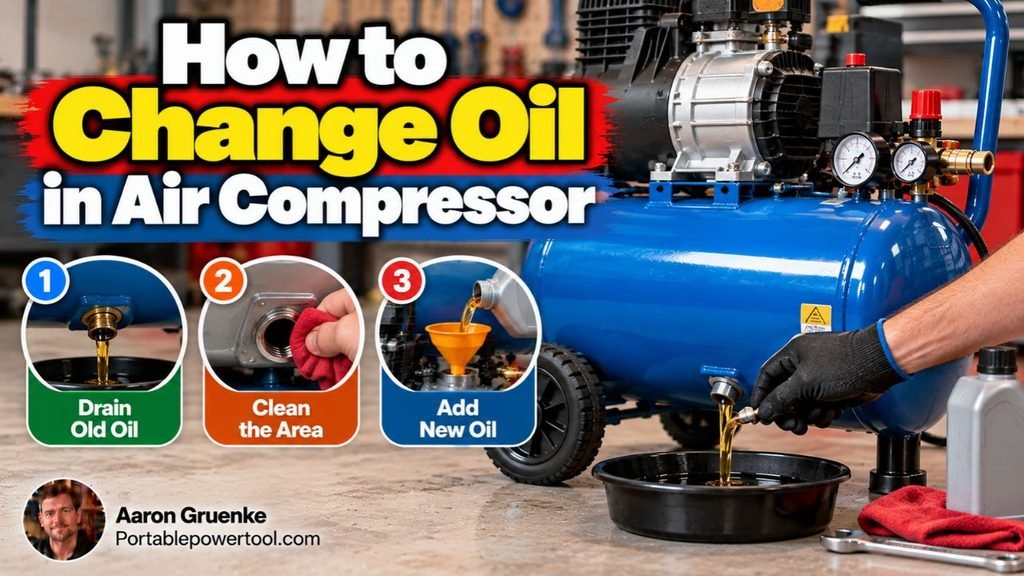
To change the oil in an oil-lubricated air compressor, warm the compressor slightly if appropriate, shut it off, disconnect its power source, release stored tank pressure, place a drain pan beneath the pump, remove the oil drain plug, let the old oil drain completely, reinstall the plug, and refill the crankcase with the correct compressor oil to the specified level.
The general process is:
- Confirm that the compressor actually requires oil.
- Check the required oil type and capacity.
- Run the compressor briefly if the manufacturer permits warming before an oil change.
- Turn the compressor off.
- Disconnect electrical power.
- Release pressure from the air tank.
- Place a drain pan under the pump.
- Remove the oil-fill cap if needed for ventilation.
- Remove the crankcase drain plug.
- Allow the old oil to drain.
- Reinstall and tighten the drain plug.
- Add fresh compressor oil through the oil-fill opening.
- Stop at the specified level.
- Reinstall the fill cap.
- Run the compressor briefly and check for leaks.
- Recheck the oil level after the pump settles.
Do not assume the same procedure applies to every compressor. Some pumps use sight glasses, some use dipsticks, and some have model-specific drain arrangements.
First, Determine Whether Your Air Compressor Needs Oil
Before adding or changing anything, determine whether you own an oil-lubricated or oil-free compressor.
Oil-Lubricated Air Compressor
An oil-lubricated compressor pump usually has one or more of the following:
- Oil sight glass
- Oil-fill cap
- Dipstick
- Crankcase drain plug
- Oil-level markings
These compressors require pump lubrication and periodic oil changes.
Oil-Free Air Compressor
An oil-free compressor uses components designed to operate without routine crankcase oil.
It normally does not have a conventional oil-fill port for the pump.
Do not add oil simply because the compressor makes noise or seems dry. Adding oil to a system that was not designed for it can cause problems.
If you are uncertain, find the compressor’s model number and check its manual.
Where to Put Oil in Compressor Pumps
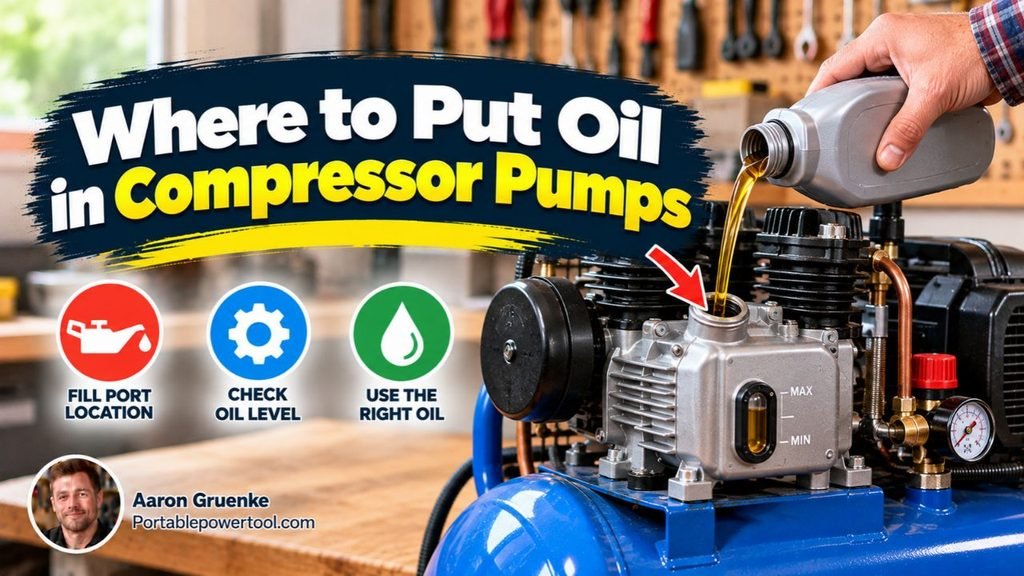
For most oil-lubricated piston compressors, oil goes into the pump crankcase through a dedicated oil-fill opening.
Look around the compressor pump for:
- A threaded oil-fill cap
- A breather cap
- A dipstick
- A plug marked “OIL”
- A fill opening close to the sight glass
The fill opening is generally located on the crankcase below the cylinder head.
Do Not Put Compressor Oil Into the Air Tank
The receiver tank stores compressed air.
It is not an oil reservoir.
Never pour compressor oil into:
- The air receiver tank
- Tank drain valve
- Air outlet
- Regulator
- Quick-connect coupler
- Pressure-switch opening
Oil for pump lubrication belongs only in the compressor pump’s designated crankcase fill opening.
How to Find the Oil Fill Cap
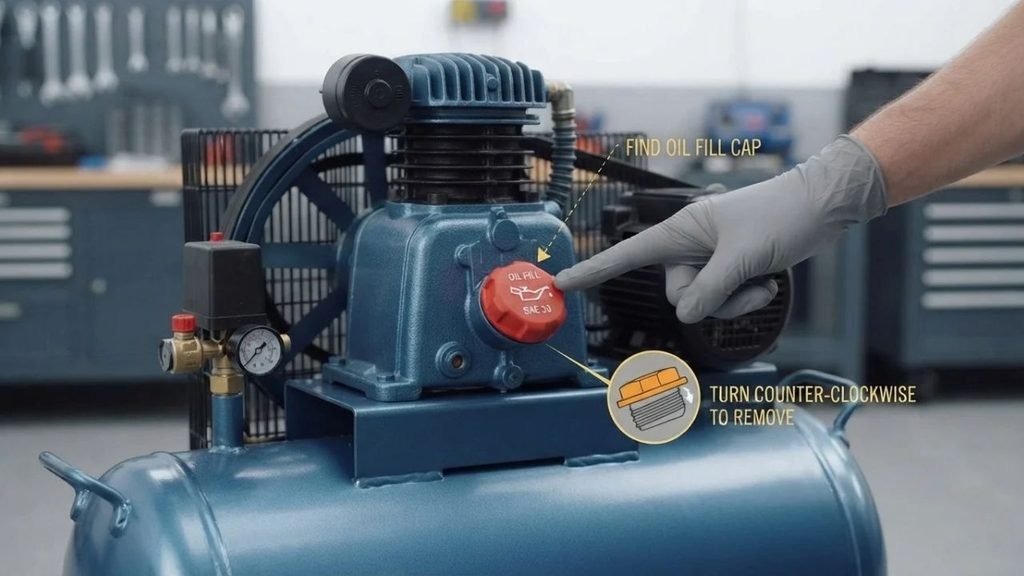
The pump is normally mounted on top of the air receiver tank on traditional horizontal and vertical compressors.
Find the pump’s crankcase—the lower housing beneath the cylinders.
You may see a round sight glass on one side.
The fill cap is commonly positioned somewhat higher on the crankcase.
Depending on the model, the cap may be:
- Plastic
- Metal
- Threaded
- Vented
- Combined with a dipstick
Never remove random plugs from the pump simply because they look like a possible fill port.
Use the manual or labeling if there is any uncertainty.
What Is the Sight Glass on an Air Compressor?
A sight glass is a transparent window that lets you check the compressor’s crankcase oil level without removing a plug.
Many sight glasses have:
- A center dot
- A red circle
- Minimum and maximum marks
On many compressors, the correct oil level is approximately near the center of the sight glass when the machine is level and turned off.
However, use the manufacturer’s specified level rather than assuming the center is correct for every design.
How to Read the Sight Glass
Place the compressor on level ground.
Turn it off and allow the oil to settle.
Look directly at the sight glass.
The level should fall within the manufacturer’s acceptable range.
If the sight glass appears completely full, the compressor may be overfilled.
If no oil is visible, the level may be too low—or the glass may simply be dirty, so investigate before operating the compressor.
How to Check Oil With a Dipstick
Some compressors use a dipstick instead of a sight glass.
The exact checking procedure may vary.
A typical process is:
- Turn the compressor off.
- Place it on a level surface.
- Allow the oil to settle.
- Remove the dipstick.
- Wipe it clean.
- Reinsert it according to the manufacturer’s checking method.
- Remove it again and inspect the level.
Some dipsticks are measured after being threaded fully in, while others are checked without screwing them down.
Follow the manual for your particular compressor.
What Type of Oil Should You Use?
Use the oil type specified by the compressor manufacturer.
Many reciprocating air compressors use a dedicated air compressor oil, often a non-detergent formulation, but viscosity requirements differ among pumps and operating temperatures.
Commonly encountered compressor oils include viscosity grades such as:
- SAE 20
- SAE 30
- ISO VG 68
- ISO VG 100
These are not interchangeable recommendations for every compressor.
The correct choice depends on the pump design and manufacturer’s specification.
Can You Use Motor Oil in an Air Compressor?
Do not automatically substitute automotive motor oil.
Engine oil and compressor oil are formulated for different operating environments.
Some specific compressor manufacturers may allow certain motor oils, while others explicitly specify non-detergent compressor lubricant or a synthetic compressor oil.
If the manual specifies a particular product or viscosity, use it.
Do not assume that an oil is suitable merely because its SAE viscosity number seems correct.
Synthetic vs. Conventional Air Compressor Oil
Both conventional and synthetic compressor lubricants are available.
Conventional Compressor Oil
Conventional mineral oil may be suitable for many standard reciprocating compressors.
Advantages can include:
- Lower purchase price
- Wide availability
- Good performance under normal conditions
Synthetic Compressor Oil
A manufacturer-approved synthetic lubricant may provide:
- Better performance at temperature extremes
- Improved oxidation resistance
- Longer oil life in some applications
- Better cold-start characteristics
Do not switch lubricants solely for a longer service interval unless the compressor manufacturer allows it.
How to Prepare the Compressor for an Oil Change
A little preparation makes draining cleaner and safer.
Place the Compressor on Level Ground
An uneven compressor can give you an inaccurate oil-level reading.
Choose a stable, level work surface.
Disconnect Power
For an electric compressor:
- Switch it off.
- Unplug it from the outlet.
For a hardwired unit:
- Follow the proper electrical isolation procedure.
For an engine-driven compressor:
- Shut down the engine.
- Prevent accidental starting.
Release Tank Pressure
The crankcase oil system and air receiver are separate, but depressurizing the machine provides a safer maintenance environment.
Use the manufacturer’s procedure to release compressed air.
Do not remove pressurized air-system components.
Allow Hot Components to Cool
The pump, discharge tube, and compressor head can become extremely hot.
Warm oil can drain faster than cold oil, but you should not work around surfaces hot enough to burn you.
If you warmed the compressor before servicing, shut it down and allow it to reach a safe handling temperature.
How to Drain Oil From an Air Compressor
Find the crankcase oil drain plug.
It is usually located near the lowest part of the pump crankcase.
Place a suitable container underneath it.
Step 1: Remove the Oil-Fill Cap
If appropriate for your pump, removing or loosening the fill cap can allow air into the crankcase and help the oil drain more freely.
Step 2: Remove the Drain Plug
Use the correct wrench or socket.
Turn carefully to avoid rounding the plug.
Once loosened, remove it by hand if possible.
Be prepared for oil to begin flowing immediately.
Step 3: Let the Oil Drain
Allow gravity to empty the crankcase.
Do not insert tools into the drain opening or attempt to scrape the inside of the crankcase.
Tilting the compressor is generally unnecessary unless the manufacturer specifically instructs you to do so.
Step 4: Inspect the Old Oil
Used compressor oil can provide clues about pump condition.
Oil that looks slightly darker than new oil can be normal.
More concerning findings include:
- Metallic particles
- Milky appearance
- Heavy sludge
- Burnt odor
- Unusual debris
Milky oil can indicate moisture contamination.
Metal debris may suggest internal wear.
If the oil contains significant metal particles or the compressor is making abnormal mechanical noise, further inspection may be appropriate.
Reinstall the Oil Drain Plug
Clean around the drain opening.
Inspect the plug and sealing surface.
If your compressor uses a sealing washer, gasket, or specified thread sealant, follow the manufacturer’s requirements.
Reinstall the plug and tighten it securely to the specified torque if one is provided.
Do not overtighten it.
A stripped crankcase thread can turn a routine oil change into a major repair.
How to Oil an Air Compressor After Draining
Once the drain plug is installed, add the correct fresh oil through the oil-fill opening.
A small funnel can help prevent spills.
Pour slowly.
If the compressor has a sight glass, pause periodically and allow the oil level to settle.
Stop adding oil when it reaches the correct mark.
If it uses a dipstick, add some oil, wait briefly, and check the dipstick.
It is easier to add a small amount later than to remove excess oil after overfilling.
How Much Oil Does an Air Compressor Need?
There is no single oil capacity for all compressors.
Pump crankcases may hold anything from a relatively small amount on compact compressors to several quarts on large industrial models.
Capacity depends on:
- Pump size
- Crankcase design
- Number of cylinders
- Compressor model
- Manufacturer
The sight glass or dipstick is generally more useful than guessing from tank size.
A 60-gallon compressor does not necessarily use a certain amount of oil simply because it has a 60-gallon tank.
Tank capacity and pump oil capacity are separate specifications.
Can You Overfill an Air Compressor With Oil?
Yes.
More oil is not better.
An overfilled crankcase can create problems such as:
- Oil foaming
- Excess crankcase pressure
- Oil being pushed through the breather
- Increased oil carryover
- Leaks
- Poor compressor operation
If you accidentally overfill the pump, drain enough oil to return the level to the correct mark before operating it.
What Happens if the Compressor Oil Is Too Low?
Too little oil reduces lubrication.
Possible consequences include:
- Increased friction
- Higher pump temperature
- Accelerated bearing wear
- Cylinder and piston wear
- Scoring
- Premature pump failure
Some compressors include low-oil protection, but you should not rely on that system as a substitute for checking the level.
How Often Should You Change Air Compressor Oil?
Oil-change intervals vary substantially among manufacturers and compressor designs.
Your owner’s manual should be the primary reference.
Manufacturers may specify oil changes based on:
- Operating hours
- Calendar time
- First break-in service
- Severe-duty operation
A new compressor may require an early initial oil change after its break-in period, followed by longer regular intervals.
Compressors used heavily in:
- Hot environments
- Dusty shops
- High humidity
- Continuous-duty applications
may require more frequent maintenance.
Do not rely on a universal “every X hours” rule without checking the specific machine.
When Should You Check the Oil Level?
Checking the level regularly is good preventive maintenance.
Consider checking it:
- Before extended operation
- During routine shop maintenance
- After moving the compressor
- After finding an oil leak
- After an oil change
- Before using a compressor that has been stored for a long period
If the compressor suddenly begins using much more oil than usual, investigate the cause rather than repeatedly topping it up.
Why Is My Air Compressor Losing Oil?
Some oil consumption can occur in oil-lubricated compressors, but rapid loss requires investigation.
Possible causes include:
- Loose drain plug
- Crankcase gasket leak
- Sight-glass leak
- Fill-cap or breather problem
- Worn piston rings
- Excessive blow-by
- Overfilled crankcase
- Worn pump components
Oil may also enter the compressed air if internal wear becomes excessive.
Why Is Oil Coming Out of the Compressor Breather?
A small amount of oily residue around a crankcase breather may not always indicate major failure.
Significant oil discharge, however, can result from:
- Overfilling
- Excessive crankcase pressure
- Worn piston rings
- Incorrect oil
- Restricted breather
- Internal pump wear
Check the oil level first.
If the level is correct and oil continues coming from the breather, the pump may require further inspection.
Why Is My Compressor Oil Milky?
Milky or cloudy oil often indicates water contamination.
Air compressors handle large amounts of atmospheric air, which naturally contains moisture.
Temperature changes can contribute to condensation.
If moisture gets into the crankcase, it may mix with oil and create a milky appearance.
Frequent moisture problems can be influenced by:
- High humidity
- Short operating cycles
- Temperature changes
- Long storage periods
If the oil is contaminated, change it and investigate why moisture is accumulating.
Do You Need to Change the Oil Filter?
Many small and medium reciprocating air compressors do not have a replaceable crankcase oil filter like an automotive engine.
Larger industrial compressors may have oil filters as part of their lubrication system.
If your compressor has one, follow the manufacturer’s specified replacement schedule and procedure.
Do not confuse the compressor’s air-intake filter with an oil filter.
The air filter cleans incoming air and is a separate maintenance item.
Air Compressor Oil Change vs. Tank Draining
These are two completely different maintenance tasks.
Compressor Oil Change
Removes used lubricant from the pump crankcase.
Air Tank Draining
Removes condensed water from the compressed-air receiver tank.
An oil-lubricated compressor may need both tasks performed regularly.
Changing the pump oil does not remove water from the receiver.
Draining the receiver does not change the pump oil.
How to Drain Water From the Air Tank
While servicing your compressor, check the receiver tank as recommended by the manufacturer.
Condensation naturally forms inside compressed-air tanks.
Most tanks have a drain valve near the lowest point.
Follow the compressor’s instructions for safely releasing pressure and draining accumulated moisture.
Keeping the receiver drained helps reduce internal corrosion.
Never pour pump oil into this drain opening.
Common Mistakes When Changing Compressor Oil
Several mistakes can shorten compressor life or create leaks.
Adding Oil to an Oil-Free Compressor
Confirm the pump type before servicing.
Oil-free compressors do not receive routine crankcase oil.
Putting Oil in the Air Tank
Pump oil belongs in the crankcase, not the receiver.
Using the Wrong Oil
Use the manufacturer’s recommended lubricant and viscosity.
Overfilling the Crankcase
Stop at the specified sight-glass or dipstick level.
Checking the Level on Uneven Ground
A tilted compressor can produce a misleading oil reading.
Forgetting the Drain Plug
Make sure the drain plug is installed and secure before adding new oil.
Overtightening the Drain Plug
Excessive torque can damage threads or crack components.
Mixing Unknown Oils
Avoid mixing lubricant types or viscosities unless the manufacturer specifically permits it.
Ignoring Oil Leaks
Repeatedly topping up a leaking compressor treats the symptom rather than the cause.
Find and repair the leak.
What to Do After Changing the Oil
Before restarting the compressor:
- Confirm the drain plug is secure.
- Confirm the fill cap is installed.
- Wipe away spilled oil.
- Verify the level.
- Check that tools have been removed from the machine.
Then restore power and run the compressor according to the manufacturer’s procedure.
Watch for:
- Oil leaks
- Unusual vibration
- Abnormal noises
- Oil escaping from the breather
After shutting down and allowing the oil to settle, check the level again.
Add a small amount if necessary.
How to Dispose of Used Compressor Oil
Used compressor oil should not be poured:
- On the ground
- Into storm drains
- Into household plumbing
- Into the air compressor tank
Collect the oil in a clean, leak-resistant container.
In the United States, many automotive service centers, recycling locations, and municipal household hazardous-waste programs accept used lubricating oil.
Local rules vary, so follow your city or state’s requirements.
Basic Air Compressor Oil Maintenance Schedule
A simple maintenance routine can help prevent lubrication problems.
Before Regular Use
Check:
- Oil level
- Visible leaks
- Unusual pump noise
Periodically
Inspect:
- Oil color
- Fill cap
- Drain plug
- Sight glass
- Crankcase seals
At the Manufacturer’s Specified Interval
Replace:
- Pump oil
- Any applicable oil filter
Also service the air-intake filter and drain receiver moisture according to the compressor manufacturer’s schedule.
FAQs About How to Change Oil in Air Compressor
Where do you put oil in an air compressor?
On an oil-lubricated compressor, oil normally goes through the oil-fill opening on the pump crankcase.
The fill cap is often located near the sight glass or dipstick.
Never pour pump oil into the air receiver tank.
How do you know if an air compressor needs oil?
Look for a sight glass, dipstick, fill cap, or oil-drain plug on the pump.
You can also check the model’s owner’s manual.
If the compressor is labeled oil-free, it generally does not require routine pump oil.
How full should compressor oil be?
Fill the crankcase to the level specified by the manufacturer.
On many sight-glass-equipped pumps, the correct level is around the center mark, but this is not universal.
Do not fill the entire sight glass unless the manufacturer specifically requires it.
Can you add oil without draining the old oil?
Yes, you can top up the oil if the existing lubricant is still within its service interval and is simply slightly low.
If the oil is due for replacement, contaminated, or heavily degraded, drain and replace it instead of continuously topping it off.
Should an air compressor be warm before changing oil?
Slightly warm oil often drains more easily.
If the manufacturer allows it, the compressor can be operated briefly before the oil change.
Shut it off, disconnect power, and allow hot components to cool enough for safe service before draining.
What happens if you put too much oil in a compressor?
Overfilling can lead to foaming, leaks, increased crankcase pressure, oil discharge from the breather, and excessive oil carryover.
Drain the excess before normal operation.
Can I use SAE 30 oil in my air compressor?
Only if SAE 30 or an equivalent lubricant is approved for your specific compressor.
Some compressors use SAE 30 non-detergent oil, while others specify a different viscosity or synthetic compressor lubricant.
Check the manual.
How often should I oil an air compressor?
An oil-lubricated compressor does not normally require oil to be added on a fixed schedule unless the level drops.
Check the level regularly and change the oil at the manufacturer’s recommended operating-hour or time interval.
If the compressor loses enough oil to require frequent topping up, inspect it for leaks or internal wear.
Conclusion
Learning how to change oil in air compressor pumps is an important part of maintaining an oil-lubricated machine. Disconnect the compressor from power, release stored pressure, drain the old lubricant from the crankcase, reinstall the drain plug, and refill the pump with the manufacturer-approved oil to the specified level.
If you are unsure where to put oil in compressor equipment, look for the dedicated fill cap, breather plug, dipstick, or sight glass on the pump crankcase. Never put compressor oil into the air receiver tank or outlet fittings.
Knowing how to oil an air compressor also means avoiding two common mistakes: using the wrong lubricant and adding too much. Follow the model-specific oil specification, keep the machine level while checking it, and use the sight glass or dipstick rather than guessing by tank size. Regular oil checks and timely changes help reduce heat, friction, and premature wear in the compressor pump.